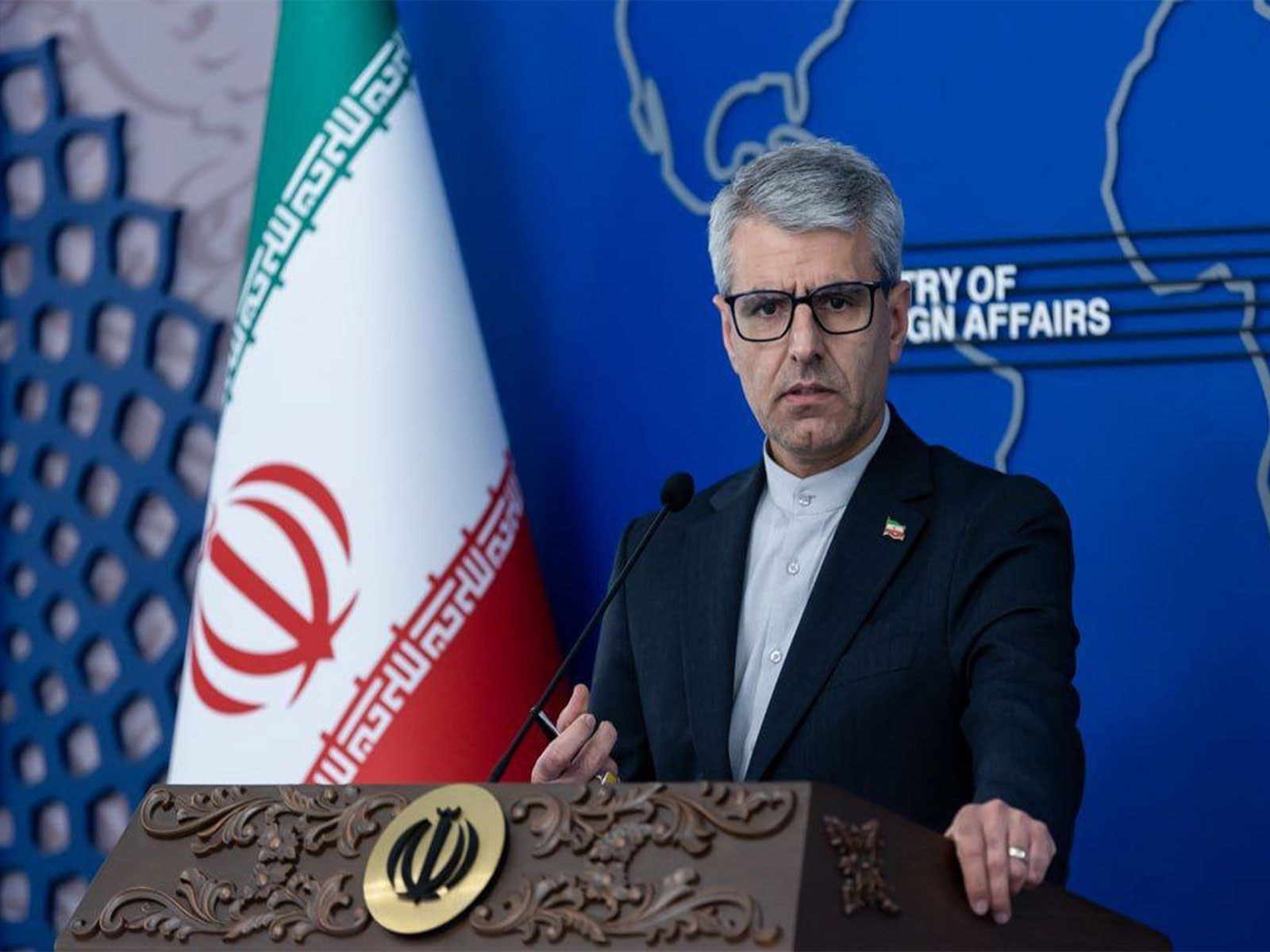
Tehran [Iran], August 13 (ANI): Iranian Foreign Ministry spokesperson Esmaeil Baqaei on Thursday called for environmental protection to be made a core part of any future administration of the Strait of Hormuz, citing recent oil pollution along Iran’s coast.
In a post on X, Baqaei referred to videos that circulated in recent days showing oil pollution along the shores of Qeshm Island.
https://x.com/IRIMFA_SPOX/status/2087641049858465917
“Why must addressing the environmental condition of the Strait of Hormuz and its surrounding waters form an integral part of any future administration of the Strait? In recent days, videos have circulated showing oil pollution along the shores of Qeshm Island. This pollution drifted toward the coast from the Persian Gulf, and preliminary evidence indicates a foreign bulk carrier as the source. Contamination has been documented at three coastal sites and across portions of the sea surface,” Baqaei wrote.
He added, “This incident is only one visible example of the extensive pollution both overt and concealed that has degraded the waters of the Persian Gulf and the Sea of Oman, as well as the region’s marine ecosystem, over recent decades, imposing trillions of dollars in damage on Iran’s coastal areas. Who bears responsibility for compensating these damages?”
He asked who should bear responsibility for compensating the damage, saying that Iran can’t remain indifferent as the country with the longest coastline along the Persian Gulf and the Sea of Oman.
“Is it the nations that consume the inexpensive energy exported from our region, the shipping insurers, or the aggressors and their partners who have transformed the Persian Gulf and the Sea of Oman into a theatre for military operations and the testing of highly destructive weaponry? As the country with the longest coastline along the Persian Gulf and the Sea of Oman, Iran cannot remain indifferent,” Baqaei added.
He further said, “Every party that benefits from commercial shipping through the Strait of Hormuz carries both a legal and a moral obligation to remediate the environmental harm inflicted upon the Persian Gulf and the Sea of Oman.”
Earlier, Iran’s newly appointed head of the Supreme National Security Council (SNSC) Mohsen Rezaei warned that Tehran will not fully reopen the strategic Strait of Hormuz until the United States meets “all the conditions.”
In a message posted on X, Rezaei outlined Iran’s position on the Persian Gulf shipping route and clarified the required conditions for the opening of the Strait of Hormuz.
“IRAN’s message is clear: the Strait of Hormuz will not reopen until the U.S. ends the war and blockade, releases Iran’s frozen assets, and agrees to a region-wide ceasefire, including in Lebanon and Gaza,” he wrote in the post.
Rezaei added, “Until all conditions are met, the Strait will remain closed.”
The Strait of Hormuz remains one of the world’s most sensitive geopolitical chokepoints, where past military standoffs have routinely triggered spikes in international crude prices and fears of broader conflict. The current escalation has already prompted expanded naval patrols, adjustments to shipping routes by commercial carriers, and renewed international calls for diplomatic restraint.
Commercial shipping through the vital corridor currently continues under tight security oversight, though the environment remains highly volatile. Immediate diplomatic attention remains centred on whether negotiations can yield a temporary truce to mitigate the likelihood of armed conflict while keeping maritime trade routes open. (ANI)
Related reading