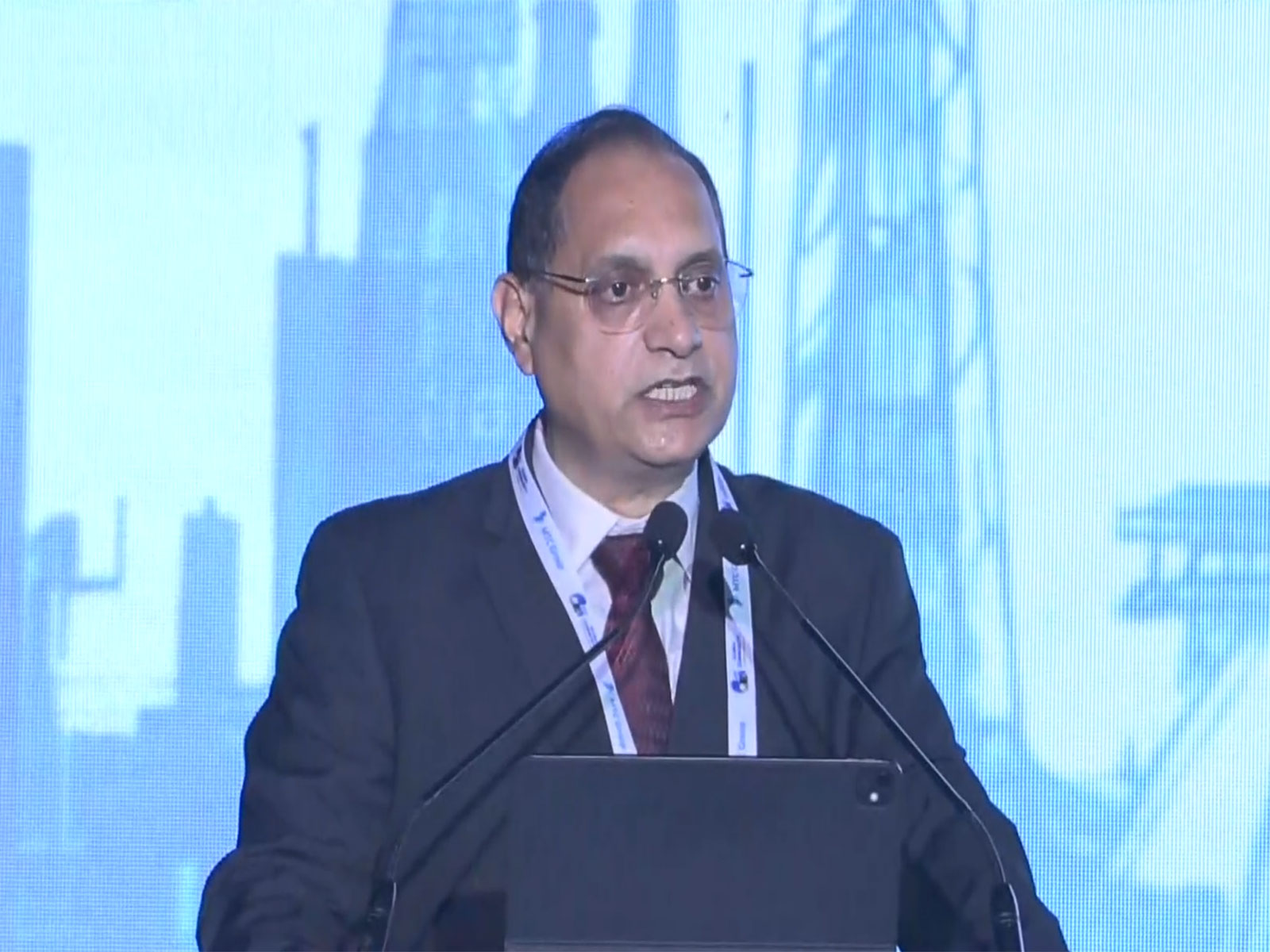
Mumbai (Maharashtra) [India], August 12 (ANI): Securities and Exchange Board of India (SEBI) Chairman Tuhin Kanta Pandey encouraged the commodity markets’ ecosystem to develop localized standards that reflect domestic market fundamentals rather than relying solely on international indices.
Speaking at the Global Commodity Conclave 2026, SEBI Chairman Tuhin Kanta Pandey said, “I would like to encourage the commodity market ecosystem to explore whether we can progressively move from global benchmarks towards Indian good delivery standards. The objective should be to develop credible Indian benchmarks that reflect our own market realities.”
In his remarks, Pandey emphasized that the ultimate measure of success for the derivative market lies in its ability to shield the broader economy against price volatility.
“The next stage of India’s commodity derivatives market should be defined not by turnover alone, not by utility, but how effectively these markets help the real economy discover prices and manage risk,” Pandey said.
The SEBI chief also outlined four major priorities for the commodity derivatives market to enhance market efficiency, broaden participation, strengthen ties with the physical market, and investing in market education.
“Going forward, I see four priorities. First, make participation easier and more efficient. We are looking at streamlining position limit and margin framework to lower avoidable cost while preserving risk controls,” he said.
The SEBI chief noted that consultation on position limits for agriculture commodities had been completed and guidelines would be issued shortly. He further highlighted ongoing discussions with the tax authorities to address operational friction for participants.
“We will continue our engagement with the GST Council on issues affecting participants who wish to give or receive commodities through the exchange mechanism. We have tax issues there which need to be resolved,” Pandey said.
The regulator also mentioned plans to widen the scope for foreign portfolio investors (FPIs) across select segments through a calibrated framework.
“Second, broaden the participant base. A deeper mix of commercial and institutional participants will strengthen liquidity, price discovery, and the effectiveness of hedging. We are examining wider FPI access to commodity indices and physically settled non-agricultural contracts through a calibrated framework,” Pandey explained.
For the third objective, Pandey stressed the need to build stronger linkages between paper trading and physical supply chains.
“Third, strengthen the connection with the physical market. We have completed our consultation on a phased physical settlement architecture for agri commodities. The objective is to help liquidity develop alongside the delivery ecosystem,” Pandey added. “Warehousing, assaying, quality standards, and credible delivery systems are essential for effective convergence between the derivatives and physical market.”
On the fourth priority, market education and research, the SEBI Chairman announced targeted capacity-building programs for stakeholders and supported new research initiatives.
“Fourth, invest in knowledge. Markets cannot deepen sustainably merely because more contracts are introduced. Participants must understand both their utility and their risks,” Pandey said.
He said, “Under Project Jagrook, we will strengthen commodity market awareness among farmers, FPOs, MSMEs, hedgers and other market users. Education must promote informed participation.”
Pandey highlighted that “a successful commodity derivative market is one in which the real economy is better able to manage risk.” (ANI)
Related reading