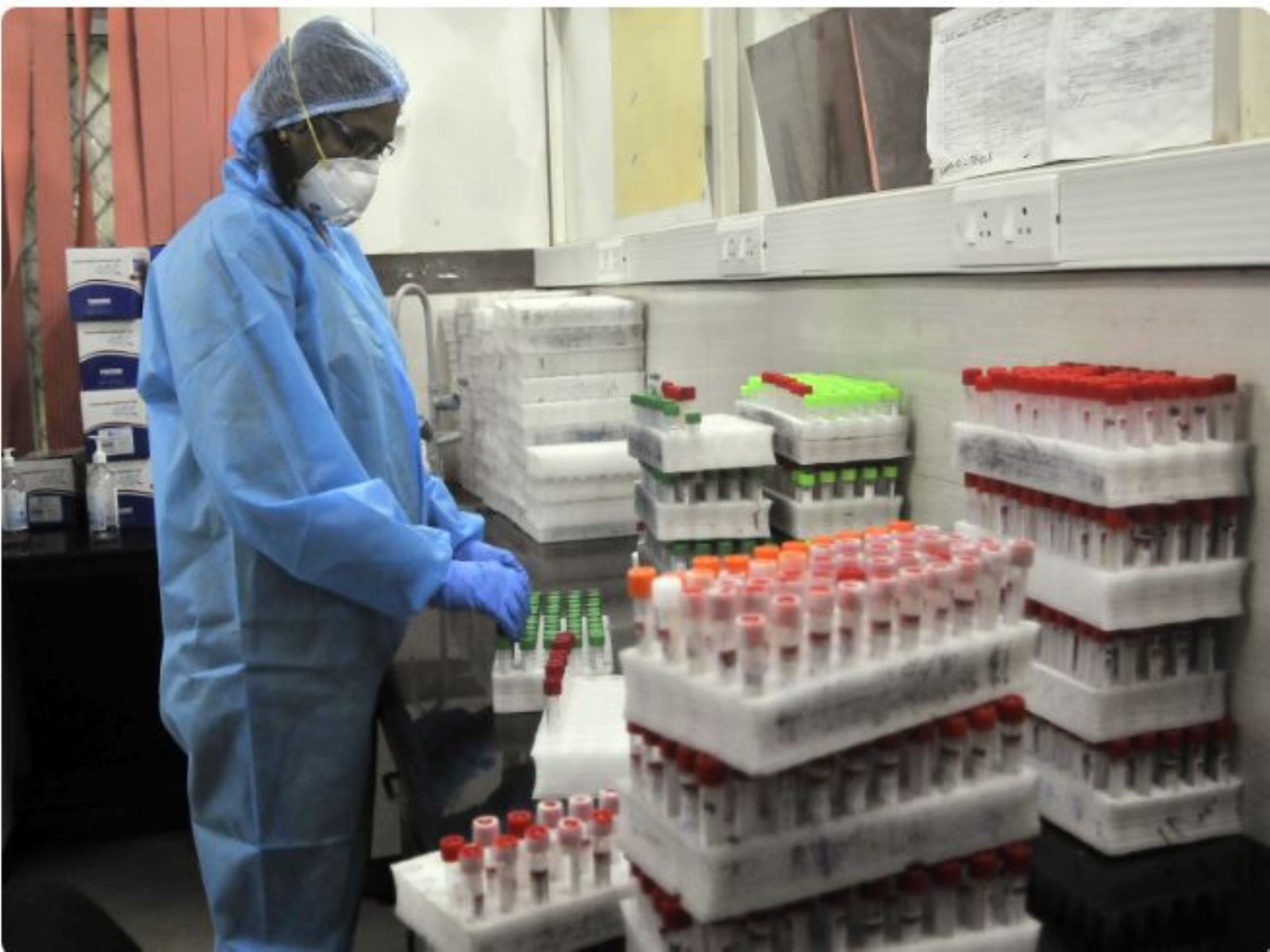
New Delhi [India], August 12 (ANI): A national team comprising experts from the Indian Council of Medical Research (ICMR) has been deputed to Gujarat to investigate and strengthen the response to Chandipura virus disease.
Speaking to ANI, Indian Council of Medical Research (ICMR) Director General Dr. Rajiv Bahl said that the team is working with state authorities and other experts to understand the disease, control its spread and explore treatment approaches.
“Chandipura virus outbreak occurred several times before, but the latest one was about two years ago. There is also one that is going on now. There is a Special Task Force there working in Gujarat,” Bahl said.
He said that ICMR teams had already been working in Gujarat for the past two years to investigate the disease and understand why outbreaks occur.
“In fact, the ICMR team has been working along with others on this Chandipura disease to try and understand where it is coming from, why it is happening, and we have been investigating it for the past two years,” Bahl said.
He added that teams were already active in affected areas of Gujarat, but a national team has now also been deployed to strengthen the response.
“Several new things are being done there to understand, control and then eventually even treat the disease,” he said.
The Union Ministry of Health and Family Welfare has also deployed a National Joint Outbreak Response Team (NJORT) to Gujarat and Rajasthan to strengthen the response to the Chandipura virus disease outbreak.
The response is being supported by disease surveillance under the Integrated Disease Surveillance Programme (IDSP), coordinated by the National Centre for Disease Control (NCDC), in coordination with state surveillance units. The NCDC Public Health Emergency Operations Centre has also been activated to support the NJORT.
According to the World Health Organisation, Chandipura virus (CHPV) is a member of the Rhabdoviridae family and is associated with acute encephalitis syndrome (AES), particularly among children. The virus is transmitted by vectors, including sandflies, mosquitoes and ticks. In Gujarat, Phlebotomus papatasi, a sandfly, has been reported as a vector.
The disease can begin with fever and may progress to convulsions, coma and, in severe cases, death. WHO has reported a case-fatality ratio of 56 to 75 per cent in previous Chandipura outbreaks in India. (ANI)
Related reading