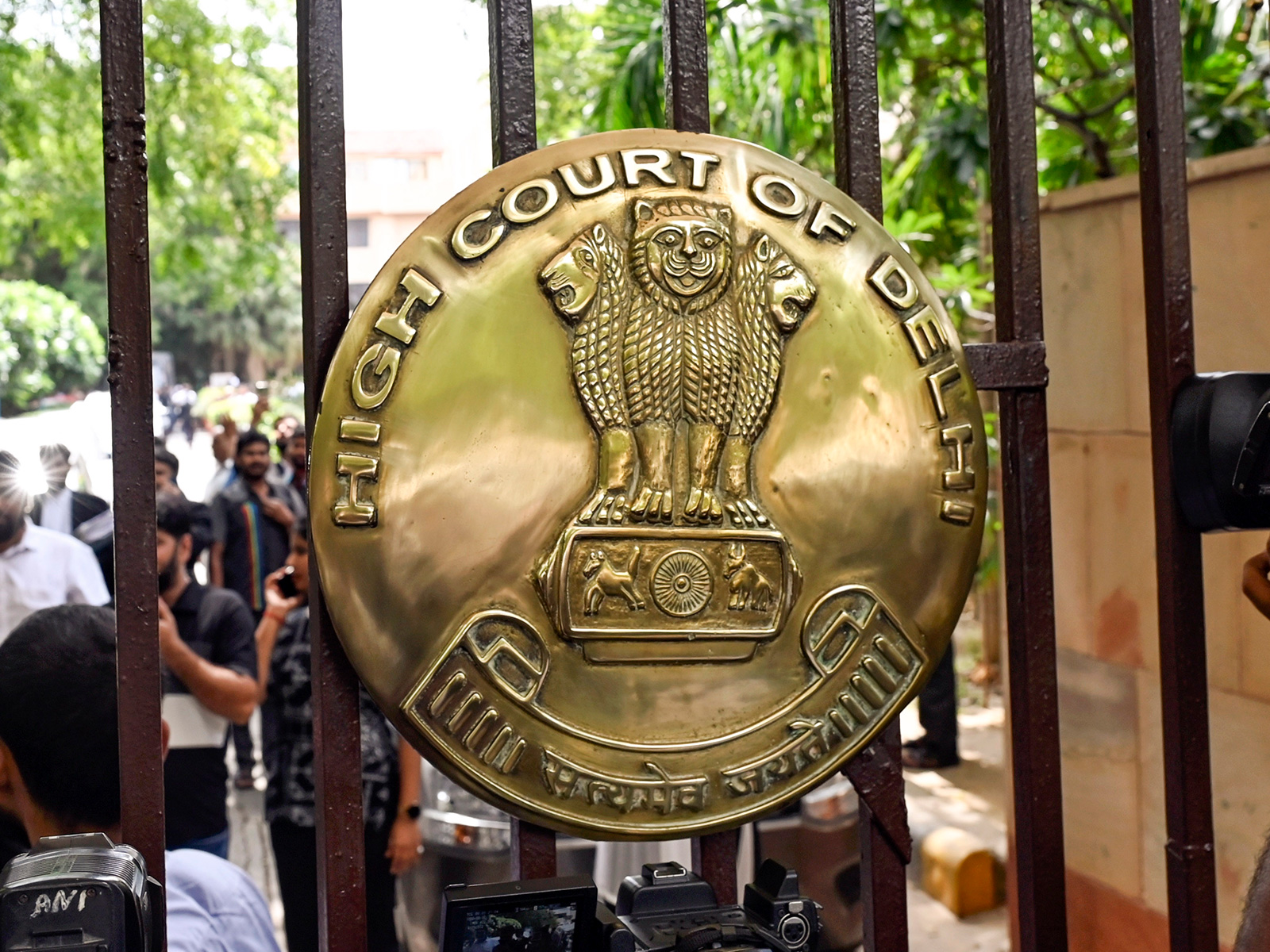
New Delhi [India], August 11 (ANI): Two life convicts in the 2020 Intelligence Bureau (IB) official Ankit Sharma murder case, Nazim and Kasim, have moved the Delhi High Court to challenge their conviction and life imprisonment.
The appeals were filed through advocate Bilal Anwar Khan and listed before a division bench of Justices Prathiba M. Singh and Vikas Mahajan. Their appeals are listed for hearing before a Delhi High Court division bench of Justices Prathiba Singh and Vikas Mahajan. Nazim and Kasim have moved their appeals through advocate Bilal Anwar Khan.
Ankit Sharma was murdered during the North East Delhi riots in February 2020 in the Dayalpur area. His mutilated body was later recovered from a drain.
Nazim and Kasim were convicted alongside former MCD councillor Tahir Hussain and two others (Javed and Anas) by Delhi’s Karkardooma Court on July 13, 2026, and sentenced to life imprisonment on July 31, 2026.
The case pertains to the brutal killing of Ankit Sharma during the February 2020 North East Delhi communal violence in the Dayalpur area, where his mutilated body bearing 51 injuries was recovered from a drain.
Special Public Prosecutor (SPP) Madhukar Pandey strongly argued for the death penalty, describing the murder as “anti-social, abhorrent, cold-blooded, and deliberate” and sought capital punishment.
Pointing out that 51 injuries were inflicted using heavy cutting weapons, the SPP stated that the convicts acted with utter savagery and “did not remain human while committing the offence.”
The prosecution urged the court not to view the incident in isolation, emphasising that 53 lives were lost during the North East Delhi riots and that the unprovoked conduct of the rioters placed the crime in the “rarest of rare” category.
Meanwhile, Defence for Tahir Hussain, advocates Rajiv Mohan and Tara Narula stressed that capital punishment cannot be awarded in every murder case without assessing mitigating factors, pointing out that those accused of actually inflicting the physical injuries had been acquitted.
Advocate Rajiv Mohan argued that the prosecution failed to prove any conspiracy during the trial and that Tahir Hussain was convicted solely based on vicarious liability for being present as part of an unlawful assembly.
The defence cited Tahir Hussain’s satisfactory conduct in custody, his primary role as sole breadwinner for his homemaker wife, three children, and elderly father, and his former public standing as an MCD councillor.
Kasim and Nazim’s defence advocate, Abdul Gaffar Khan, argued that the incident occurred in the heat of a widespread riot involving both communities, lacking pre-planned conspiracy.
It was submitted that Ankit Sharma was accompanied by two or three people and carried a stick, which the defence argued amounted to sudden provocation. (This argument was explicitly rejected by the trial court during sentencing).
Additional Sessions Judge (ASJ) awarded life sentences to all five convicts–Tahir Hussain, Nazim, Kasim, Javed, and Anas–under IPC Section 302 read with Section 149, alongside additional 7-year terms for kidnapping, rioting, and unlawful assembly.
The court observed that while the crime was “heinous, barbaric, and nauseatingly sickening,” it fell short of the “rarest of rare” standard.
The prosecution could not attribute specific, fatal individual roles to any of the convicts. Furthermore, the court held that the convicts were not beyond the possibility of reformation.
The court levied a fine of ₹5 lakh on Tahir Hussain and ₹25,000 each on the other four convicts, with additional fines for kidnapping.
Upon exiting the courtroom after his sentencing, Tahir Hussain publicly expressed dissatisfaction with the judgment, stating that “the score will be settled at the High Court”. (ANI)
Related reading