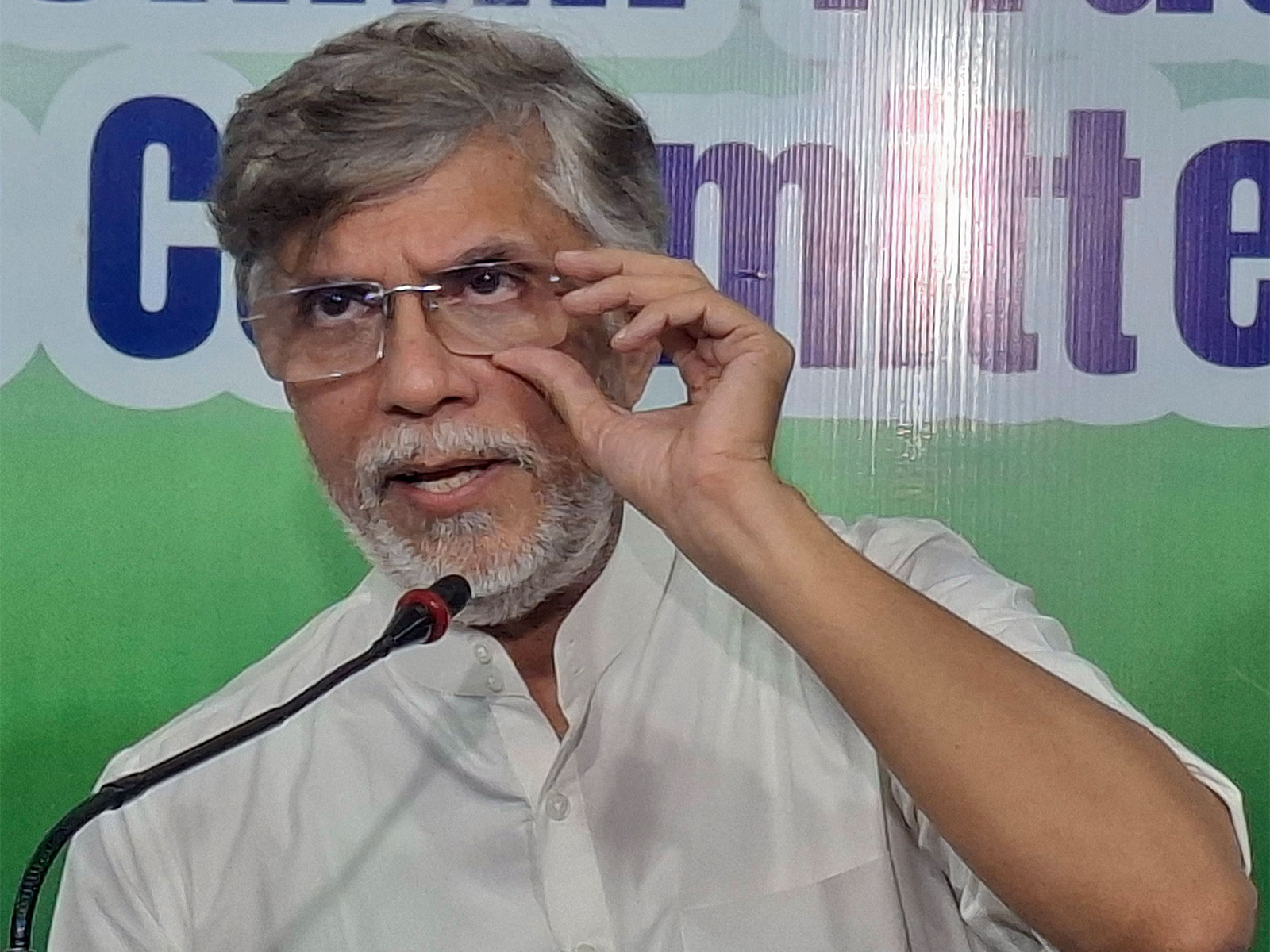

New Delhi [India], August 10 (ANI): The Supreme Court on Monday allowed Trinamool Congress leader Abhishek Banerjee to travel abroad for three weeks in September for eye treatment. Banerjee had moved a plea seeking lifting of conditions being imposed upon him by the Calcutta High Court in an alleged hate speech case.
A bench of Chief Justice of India Surya Kant and Justices Joymalya Bagchi and V Mohana permitted Banerjee to travel subject to conditions. The Court directed him to travel only on his diplomatic passport and furnish details of his itinerary, place of residence abroad, doctors or hospital where he proposes to undergo treatment, period of stay and flight details.
The Court said the investigating agencies can use the details furnished by Banerjee for their purposes but must maintain confidentiality of the information.
Banerjee had moved the Supreme Court against a Calcutta High Court order refusing to lift the travel restriction imposed on him in connection with a hate speech FIR. The High Court had directed him to cooperate with the investigation while restraining him from travelling abroad.
This was the second time Banerjee approached the Supreme Court seeking permission to travel abroad. On his earlier plea, the top court had asked the Calcutta High Court to decide his request to travel abroad.
The High Court subsequently declined to lift the travel restriction, prompting Banerjee to approach the Supreme Court again.
The Supreme Court, after considering his plea, has now permitted him to travel abroad for three weeks in September for his eye treatment, subject to the conditions laid down by the Court.
On the other hand, earlier in July, the Calcutta High Court directed police authorities not to take any coercive action against Trinamool Congress (TMC) MP Abhishek Banerjee in connection with three FIRs registered against him, till the next hearing on August 6.
The court also directed the police authorities to provide a list containing details of all FIRs registered against Abhishek Banerjee as of date.
During the hearing, Additional Solicitor General SV Raju, appearing for the state, argued that the petition was not maintainable and that blanket protection could not be granted to the petitioner.
“This kind of blanket protection cannot be given. You need to file multiple petitions one by one for multiple FIRs,” Raju submitted.
Advocate Shankar Narayan, appearing for Abhishek Banerjee, argued that several complaints and FIRs had been filed against his client, with some of them being registered after the election results were declared.
The counsel also referred to a case related to alleged siphoning of funds in the name of ‘Sebashroy’, stating that the project was undertaken by Abhishek Banerjee for elderly people in Diamond Harbour in his personal capacity and did not involve government funds.
During the hearing, the court questioned the delay in filing some of the complaints. Referring to one complaint, Justice Bhattacharya asked why there was a gap of 25 days between the alleged incident and the complaint.
The court also noted that one of the complainants had allegedly contested against Abhishek Banerjee twice and lost both times.
The state, however, opposed the plea for protection. SV Raju argued that where only complaints had been filed and no FIR registered, quashing proceedings could not be sought under law. He also submitted that if the petitioner sought relief from an FIR, the appropriate remedy was to approach the court under Section 438.
The court observed that interim orders passed in other matters, including the case of BJP leader Suvendu Adhikari, could not be treated as binding precedent, though multiple FIRs had been considered in that matter. (ANI)
Related reading