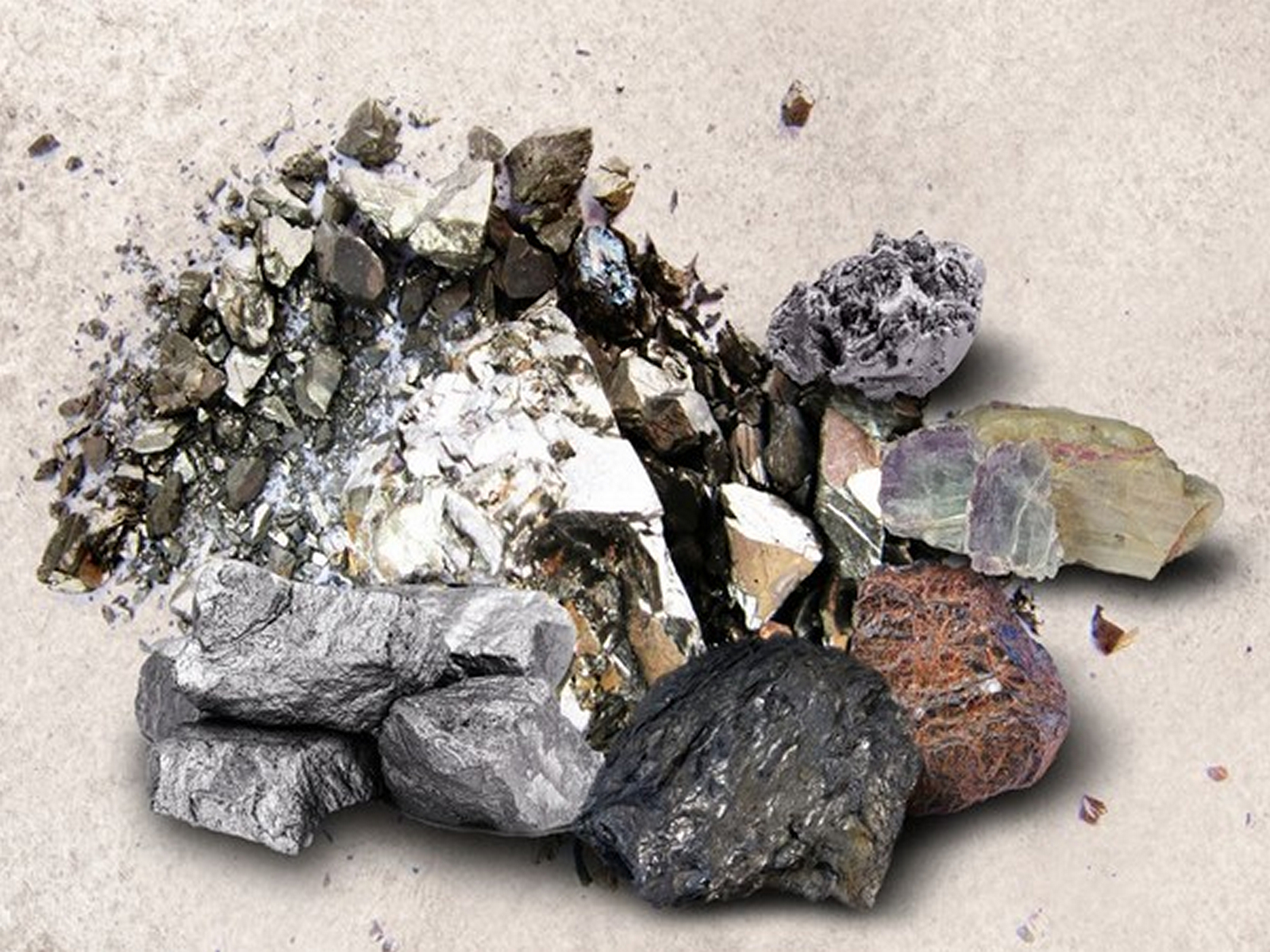
New Delhi [India], August 8 (ANI): India’s shift towards clean energy could create a new layer of import dependence on critical minerals, with the country currently fully dependent on imports for 15 of the 23 critical energy-transition minerals assessed, according to a joint report by the Confederation of Indian Industry (CII) and EY.
The report said the nature of India’s energy-security challenge is changing as renewable energy, battery storage, electric mobility and modern power infrastructure expand.
Critical minerals such as lithium, nickel, cobalt, silicon and rare earth elements will become increasingly important for the clean-energy transition. The report said India will need to strengthen domestic exploration, processing, manufacturing and recycling capabilities to reduce vulnerabilities across these supply chains.
The challenge extends beyond mining, with global refining and processing capacity for several minerals highly concentrated. In 2024, China accounted for 93 per cent of global graphite refining, 85 per cent of rare-earth processing, 79 per cent of cobalt refining, 70 per cent of lithium refining and 44 per cent of nickel refining, the report said.
India’s requirements for critical minerals are also projected to rise substantially between 2025 and 2070 as renewable energy, electric mobility, battery storage, nuclear power and modern electricity infrastructure expand.
Copper alone is projected to account for more than 66 million tonnes of demand over the period, followed by graphite at 46 million tonnes, silicon at 19.5 million tonnes, phosphorus at 16.7 million tonnes and nickel at 11.5 million tonnes, the report said.
The report said India’s energy transition is therefore shifting energy security concerns from traditional fuel availability towards critical minerals, manufacturing capabilities and technology supply chains.
At the same time, electricity is expected to become the primary carrier of energy across the economy, with India’s electricity demand projected to grow rapidly through 2035. This will require investment across generation, storage, transmission and distribution infrastructure.
The report said strengthening domestic capabilities, diversifying supply chains and expanding recycling will be critical to building a more resilient energy system as India moves towards its 2047 energy-security goals. (ANI)
Related reading