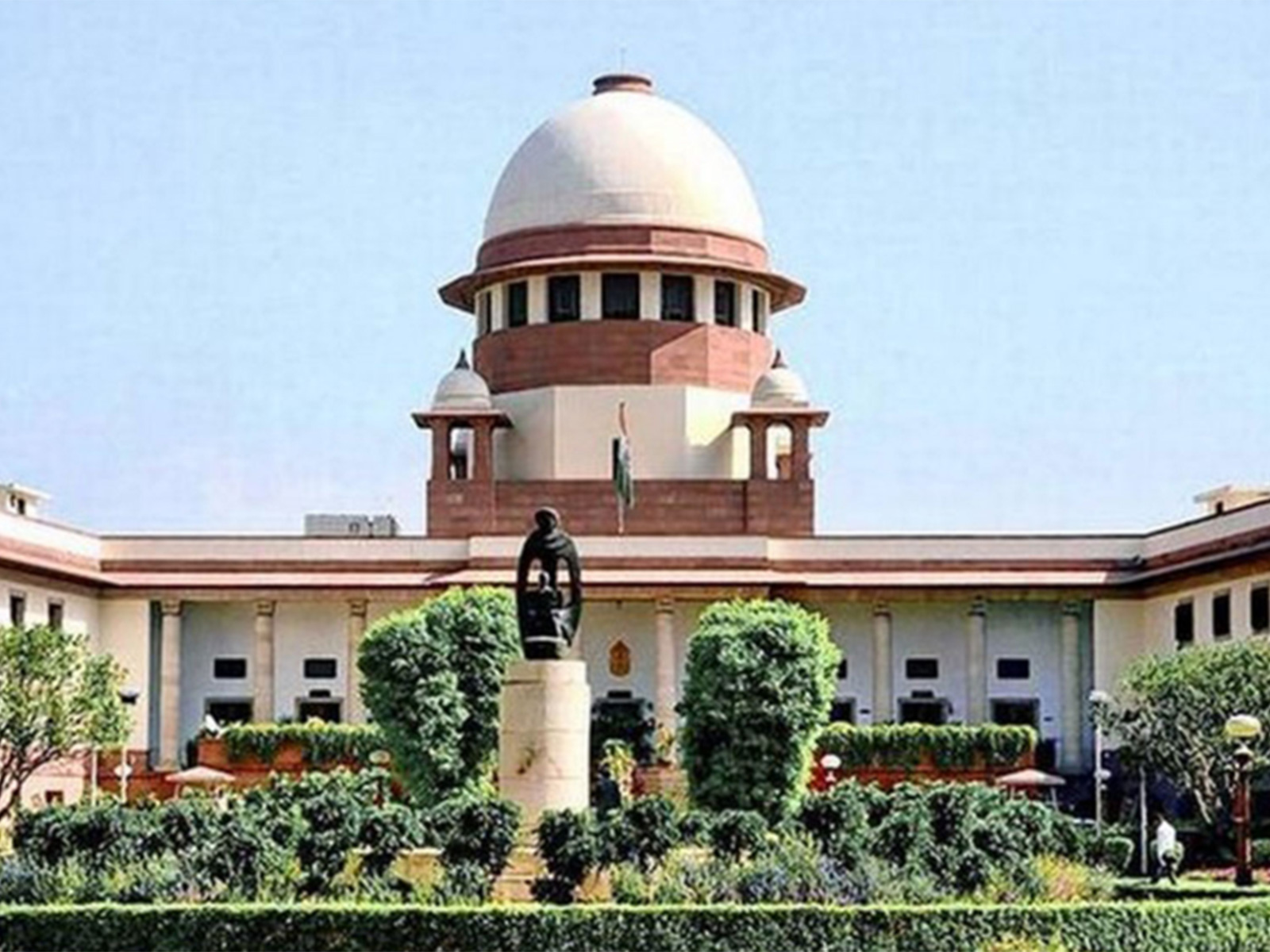
New Delhi [India], August 7 (ANI): The Supreme Court has stayed proceedings before the Karnataka and Bombay High Courts in a batch of petitions challenging the constitutional validity of the Centre’s Sahyog Portal and the legal framework governing online content takedown under the Information Technology (Intermediary Guidelines and Digital Media Ethics Code) Rules, 2021.
The petitions challenge the legality of the Sahyog Portal and question the Central government’s power to direct intermediaries to remove or disable online content under Section 79(3)(b) of the Information Technology Act, 2000, read with Rule 3(1)(d) of the Information Technology (Intermediary Guidelines and Digital Media Ethics Code) Rules, 2021.
A bench of Chief Justice of India Surya Kant, Justices Joymalya Bagchi and Justice V Mohana passed the order while hearing transfer petitions filed by the Central government, which has sought to have all the cases heard together by the apex court.
“Issuing notice on the transfer petitions, returnable on August 10,” the bench ordered on July 22 while saying that all further proceedings before the concerned High Courts shall remain stayed in the meantime.
The Union government has sought transfer of all four proceedings to the Supreme Court to enable a consolidated adjudication on the common constitutional and legal issues raised in the cases.
The transfer plea covers four cases pending before the Karnataka and Bombay High Courts.
These include petitions filed by X Corp (formerly Twitter) and the DigiPub News India Foundation before the Karnataka High Court, as well as separate petitions instituted by comedian Kunal Kamra and senior advocate Haresh Jagtiani before the Bombay High Court.
The litigation originated with X Corp’s challenge before the Karnataka High Court against the government’s content takedown mechanism.
In September 2025, the Karnataka High Court upheld the validity of the Sahyog Portal and rejected X Corp’s challenge.
Subsequently, in February 2026, Kamra and Jagtiani filed independent petitions before the Bombay High Court questioning the constitutional validity of the Sahyog Portal and the 2025 amendment to Rule 3(1)(d) of the IT Rules.
The petitioners contended that the impugned framework establishes a parallel content-blocking mechanism that bypasses the procedural safeguards prescribed under Section 69A of the IT Act and the Blocking Rules.
According to them, the Sahyog Portal enables online content to be blocked without prior notice to affected users, violating principles of natural justice and the constitutional guarantee of free speech. (ANI)
Related reading