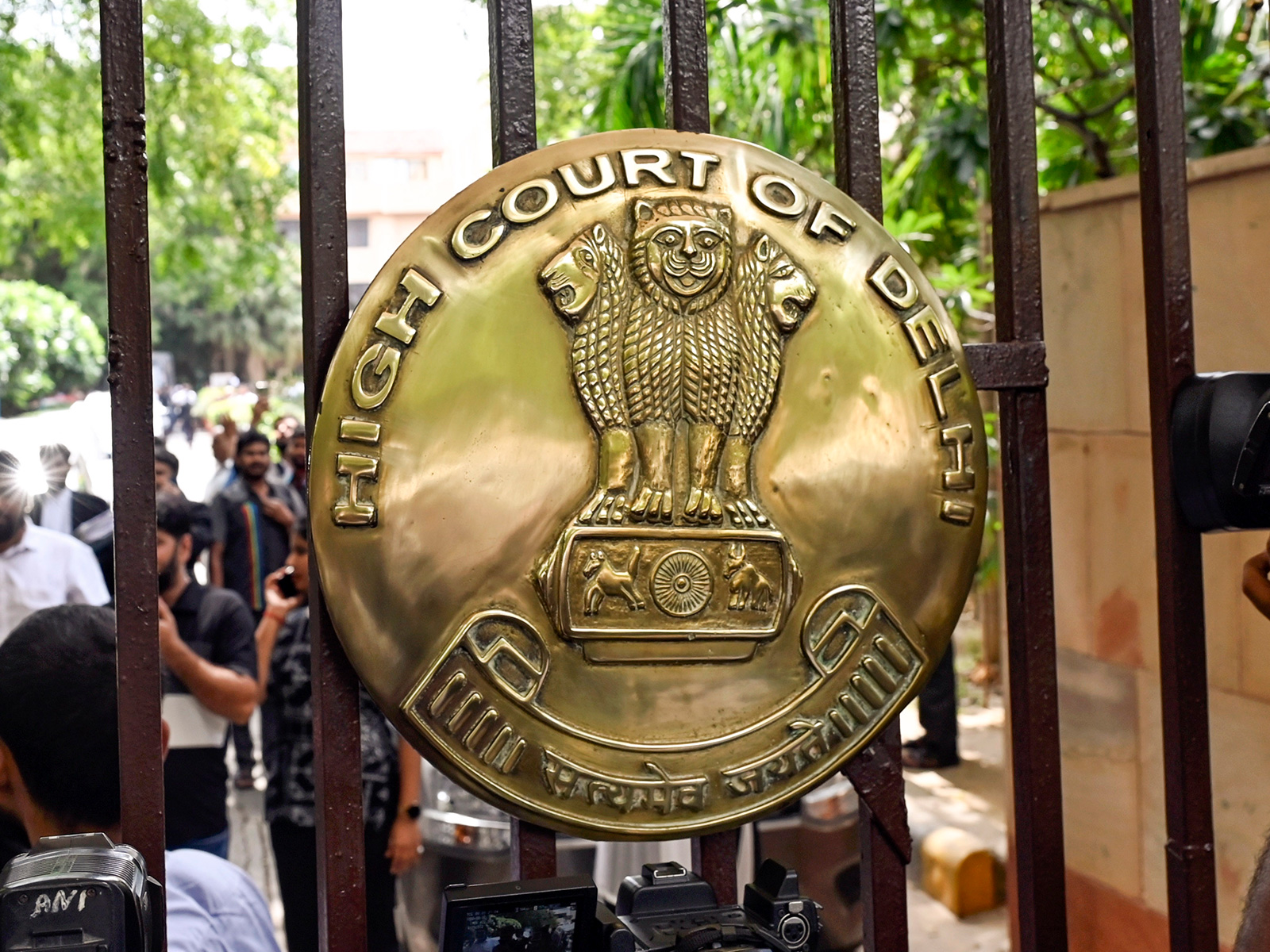
New Delhi [India[, August 5 (ANI): The Delhi High Court on Wednesday directed the Delhi Police to conduct a comprehensive survey of all police stations in the national capital to ascertain the availability of functional sanitary pad vending machines and exclusive washroom facilities for women police personnel, while also seeking a status report from the authorities on a Public Interest Litigation (PIL) highlighting the lack of basic menstrual hygiene infrastructure.
A division bench comprising Chief Justice D K Upadhyaya and Justice Tejas Karia directed the Delhi Police to complete the survey within six weeks.
The High Court also issued notice and sought responses from the Union of India through the Ministry of Home Affairs, Delhi Police and the Government of NCT of Delhi on the issues raised in the petition.
The directions came while hearing a PIL filed by an NGO named Justice for Rights Foundation, which seeks installation of sanitary pad vending machines, sanitary waste disposal incinerators and dedicated hygienic washroom facilities for women police personnel across all Delhi Police stations and police units.
The petition alleges a persistent lack of basic menstrual hygiene infrastructure and dedicated sanitation facilities for female police personnel deployed across police stations and units in Delhi.
It contends that the absence of such facilities violates the fundamental rights of women police personnel under Articles 14, 15 and 21 of the Constitution, arguing that access to menstrual hygiene products, safe disposal facilities and hygienic sanitation forms an integral part of the rights to dignity, health, privacy and humane working conditions.
Filed through advocates Karnika Bahuguna, Pooja Kushwah and Adarsh Singh, the petition is based on a series of Right to Information (RTI) applications filed before the Delhi Police in 2025 seeking district-wise information on the availability of sanitary pad vending machines, sanitary waste disposal facilities and dedicated washrooms for women personnel.
According to the petition, RTI replies received from all 18 districts and police units allegedly revealed that sanitary pad vending machines were available only in a small fraction of police stations despite several thousand women police personnel serving across the force.
The RTI replies are also stated to show the absence of any dedicated budgetary allocation, policy, circular, standard operating procedure or institutional mechanism governing menstrual hygiene infrastructure.
The petition submits that women police personnel are routinely deployed for prolonged law-and-order, investigation, emergency and field duties, making it difficult for them to leave their place of posting to procure sanitary products. It argues that the lack of basic menstrual hygiene facilities compromises their dignity, health, privacy and safe working conditions. It also states that women complainants, victims and witnesses visiting police stations are similarly affected by the absence of adequate sanitation facilities.
The PIL relies on Articles 14, 21, 42 and 47 of the Constitution, contending that the State is obligated to ensure humane working conditions and protect the health and dignity of women employees. It also cites the Ministry of Home Affairs’ allocation of funds for sanitary pad vending machines and incinerators for women personnel of the Central Reserve Police Force (CRPF), along with initiatives undertaken by the Mumbai Police under the ‘Smart Maitrin’ project and the Ladakh Police, to argue that similar facilities can be implemented in Delhi Police establishments.
Among the reliefs sought, the petition requests directions for installation of sanitary pad vending machines and sanitary waste disposal incinerators in all Delhi Police stations within a time-bound period, provision of exclusive hygienic washrooms for women police personnel, earmarked budgetary allocation, formulation of standard operating procedures for installation and maintenance of the facilities, and creation of an institutional mechanism to ensure their continuous functionality. (ANI)
Related reading