
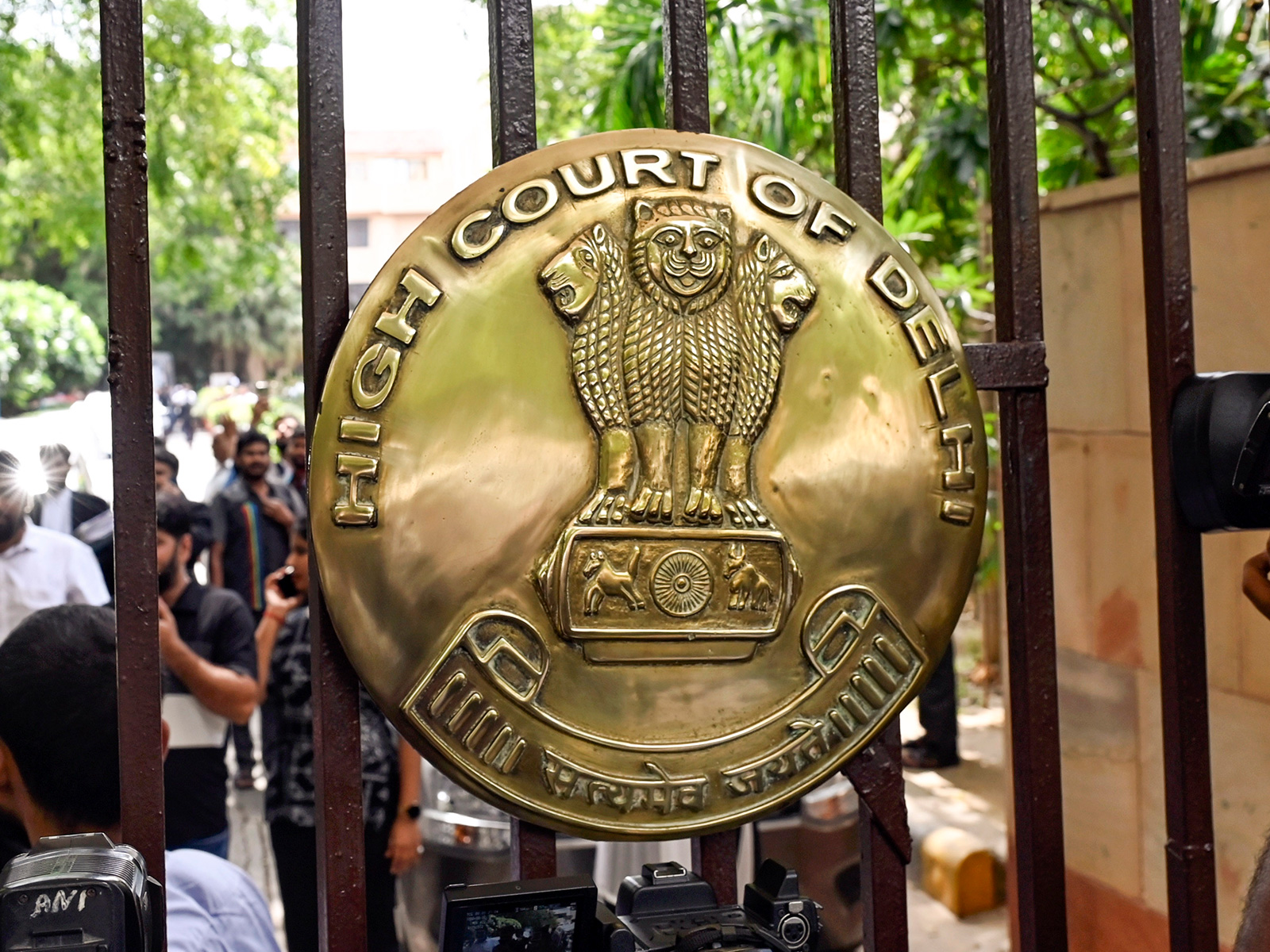
New Delhi [India], August 5 (ANI): The Delhi High Court on Wednesday refused to entertain a Public Interest Litigation (PIL) seeking directions for a comprehensive review of the existing institutional framework governing the safety, security, resilience and uninterrupted constitutional functioning of the Parliament of India, observing that such matters fall exclusively within the domain of the government and Parliament.
Dismissing the petition, a division bench comprising Chief Justice DK Upadhyaya and Justice Tejas Karia held that the safety and security of Parliament is to be looked into by the government and that the Court cannot issue directions requiring Parliament to periodically review its security framework.
The Court observed that “how can such a direction be issued as it is for the Parliament to review the same from time to time.”
The PIL had sought directions to the Centre to undertake a comprehensive review of Parliament’s administrative, institutional, operational, technological and cyber-security mechanisms in view of evolving security challenges.
The petitioner had also sought a direction to the authorities to examine a concept note prepared by him titled “Proposed Outline of the Parliament of India (Security, Sanctity and Protection) Act, 2026.”
During the hearing, the bench questioned the very maintainability of the PIL.
“Don’t ask the court to enter into all these things… Why only Parliament? What is this? There is no extraordinary circumstance. Everybody is into PIL. Just for publicity,” Chief Justice Upadhyaya remarked.
The Court further observed that there are several equally important public safety issues.
“Stampede at the railway station you don’t see. You don’t see security issues at the airport. You don’t see security of the pedestrians,” the Chief Justice said.
When the petitioner submitted that the security of Parliament is paramount in a parliamentary democracy, the bench responded:
“Everything is paramount. Every individual’s security is paramount. We don’t need a lecture from you on parliamentary democracy.”
The petitioner told the Court that he had undertaken research on the subject and prepared a concept note proposing a legislative framework for Parliament’s security.
The Chief Justice, however, questioned whether the Court could direct the government to examine an individual’s proposal.
“You have prepared a note, and you want us to issue directions to the government to consider this?” the Court asked.
The bench added that academic discussions on the subject were welcome, but such issues could not be pursued through a PIL.
“We will not entertain any such petition. We will provide you space in S Block to hold discussions. I will be happy to participate in that, but not a PIL, please. How much will you stretch the Court?” the Chief Justice remarked.
The Court also questioned the premise of the petition.
“What kind of a petition is this? You think Parliament is incapable of taking care of its own security? Now we are going to issue directions as to how this is to be done? Whatever comes to your mind, you may carry a very good suggestion but that cannot become a matter of PIL,” the bench observed.
In its order, the High Court noted that the petitioner claims to be an academic working in the areas of public policy, constitutional governance and institutional reforms and had undertaken research on issues relating to Parliament’s security.
Rejecting the principal prayer, the Court held that no direction of the nature sought could be issued.
“The safety and security of Parliament is to be looked into by the Government. So far as the direction sought in relation to reviewing its administrative, institutional, operational, technological and cyber-security mechanisms in light of evolving security challenges and emerging threats is concerned, we again find ourselves at a loss of words as to how such directions can be issued because it is for Parliament to consider these issues and review the mechanism,” the order states.
The High Court also rejected the petitioner’s request for a direction to the authorities to examine his concept note proposing a Parliament security law.
“As regards the second prayer, it is again very difficult for the Court to grant the same. Some concept paper has been prepared by the petitioner on some proposed legislation. He is seeking a direction to the respondents to examine the concept note prepared by an individual. Such direction, in our opinion, also cannot be issued by the Court under Article 226,” the bench observed.
Holding that none of the reliefs sought were legally maintainable, the Court dismissed the PIL. The petition had sought directions to the Union Government, the Ministry of Home Affairs, the Ministry of Parliamentary Affairs, and the Lok Sabha and Rajya Sabha Secretariats to review Parliament’s existing security framework and consider the petitioner’s concept note proposing the Parliament of India (Security, Sanctity and Protection) Act, 2026. (ANI)
Related reading