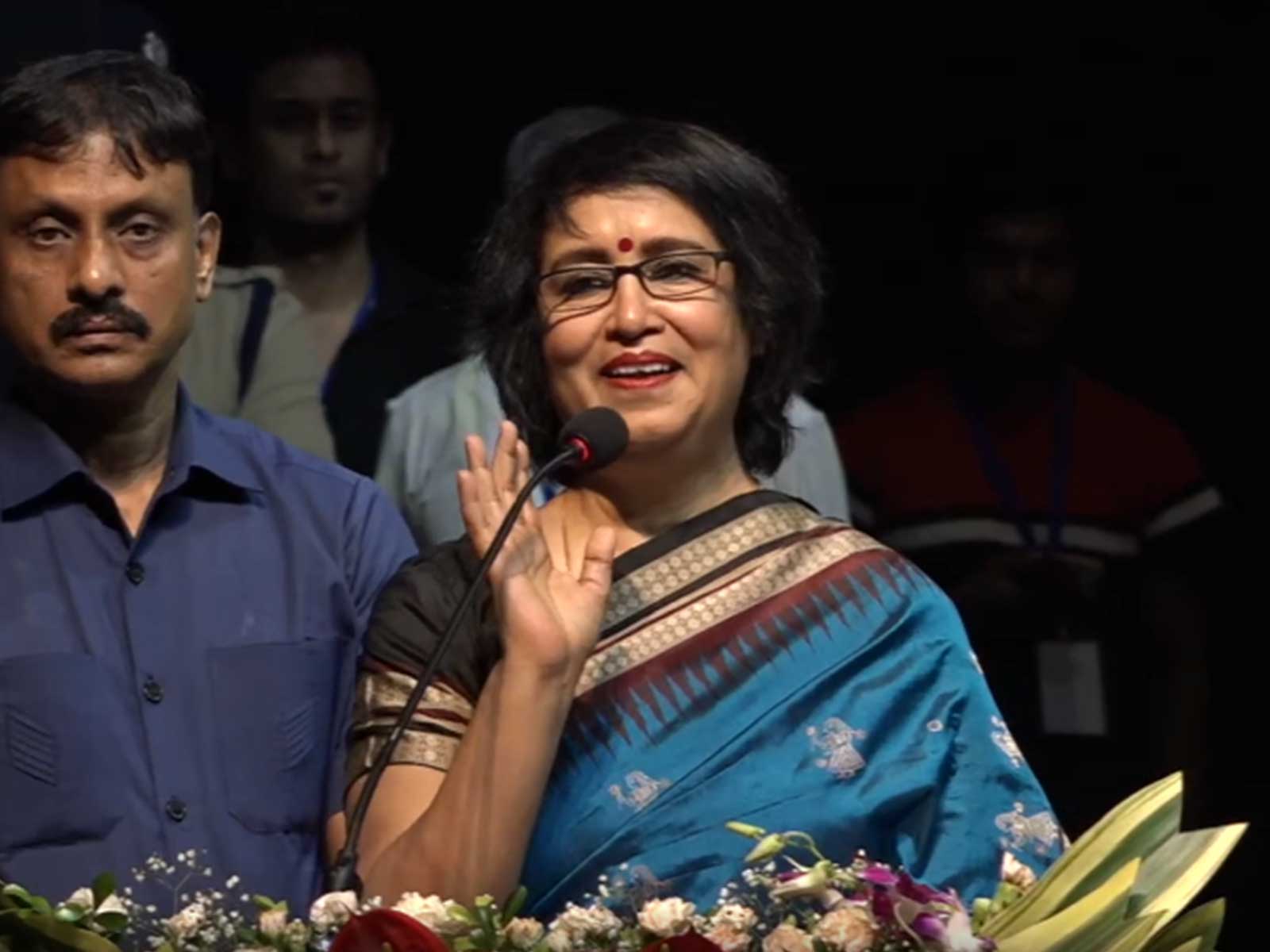
Kolkata (West Bengal) [India], August 1 (ANI): Bangladeshi writer and activist Taslima Nasreen has returned to Kolkata after nearly two decades, marking her first public visit to the city since she was forced to leave in 2007 amid intense protests over her memoirs.
Speaking at a felicitation event, Nasreen emphasised that safeguarding a writer is synonymous with protecting freedom of speech and expression.
She expressed heartfelt thanks to the West Bengal government and Chief Minister Suvendu Adhikari for providing robust security and personally welcoming her back, noting, “For this one line, I have waited for many years.”
“Today, I came back to Kolkata. For this one line, I have waited for many years. Thanks to the Chief Minister. Despite his busy schedule, he came and wished me on my return. Security of a writer is not just the security of a writer; it is the security of his/her freedom of speech and freedom of expression. For providing me security, I thank the government,” she said.
Nasreen clarified that her return is entirely non-political, stating she is back purely to advocate for women’s freedom rather than to support any political party.
“I have not come back here for any political party or to deliver my speech for any political party. I am here to speak for women’s freedom,” she said.
Recalling her long association with West Bengal, Nasreen said she had been writing for publications in the state since 1978 and had regularly visited Kolkata from the 1980s.
“I was forced to leave Bangladesh, but I found a home here. My relationship with West Bengal is not new. In 1978, I wrote in a magazine. From 1980, I started coming to Kolkata, and in the 1990s, my book was launched here,” she said.
The writer also recalled how she had to leave Kolkata in 2007 and said, “In 2007, the government ordered me to leave Kolkata. What was my crime? I did not murder anyone. Even Bangladesh banned me from entering the country. If you do not agree, raise your voice against it, but trying to ban someone’s freedom is not right,” she said.
Highlighting her lifelong opposition to gender discrimination and violence, she remarked, “I have seen many things against women, and I have always raised my voice against them. Islam does not mean forcefully ruling over others. Those who want to control people in the name of Islam are actually enemies of Muslims. Those who speak for Islam should first focus on themselves; they talk about education but do not prioritise their own daughters’ education,” she said.
Underscoring the necessity of equal opportunities and fundamental human rights, she delivered her defining message, “A nation has no religion; a nation means equal opportunities for everyone. Humanity and human dignity are more important than religious honour.”
During the joint event organised by the Secular Mission, the Human Rights and Bangladesh Freedom Fighters Foundation (HRBFF), and Poschimbonger Jonno, Chief Minister Suvendu Adhikari formally welcomed Nasreen.
Adhikari asserted that her return proves the administration’s firm dedication to democracy, the Constitution, and free speech, assuring that threats and intimidation toward intellectuals are firmly a thing of the past.
Speaking at a joint event organised by the Secular Mission, West Bengal Chief Minister Suvendu Adhikari asserted, “Through this, it has been proven that under a new government, Bengal’s democracy, Constitution, freedom of speech, and fundamental rights are protected here. There is no way anyone will threaten, catch, or stop us; all these things are a thing of the past. You are a writer; everyone reads your writings, and your readership is huge. You speak well here, and you have certainly seen the change in the system of West Bengal through your experience. Whenever you think you can come, always come to safe West Bengal. To provide you safety is the responsibility of the state’s Chief Minister, Suvendu Adhikari.”
Echoing the vital importance of open discourse, Taslima Nasreen added, “Freedom of expression is very important for democracy. Without freedom of expression, there is no democracy. India is a democratic country, and I think freedom of speech must be restored. No writer or artist should be forced to leave their country because of their different opinions or ideas.” (ANI)
Related reading