New Delhi [India], July 30 (ANI): The ninth day of the Monsoon Session of Parliament was yet again full of disruptions and uproar, but also witnessed significant legislative business as the Public Examinations (Prevention of Unfair Means) Amendment Bill, 2026, was passed in the Rajya Sabha.
The Public Examinations (Prevention of Unfair Means) Amendment Bill, 2026, which was passed by the Lok Sabha on Wednesday, was cleared by the Rajya Sabha today, with Opposition members staging a walkout during the voting.
The legislation triggered a sharp political divide, with Opposition parties accusing the Centre of rushing the amendments and failing to address the root causes of recurring examination paper leaks. They alleged that the Bill was brought to defuse widespread student protests rather than introduce systemic reforms to prevent future irregularities.
The Centre, however, defended the amendments, saying they reflected the government’s willingness to “learn from experience” following the implementation of the Public Examinations (Prevention of Unfair Means) Act, 2024, and were aimed at further strengthening the legal framework to curb examination malpractices.
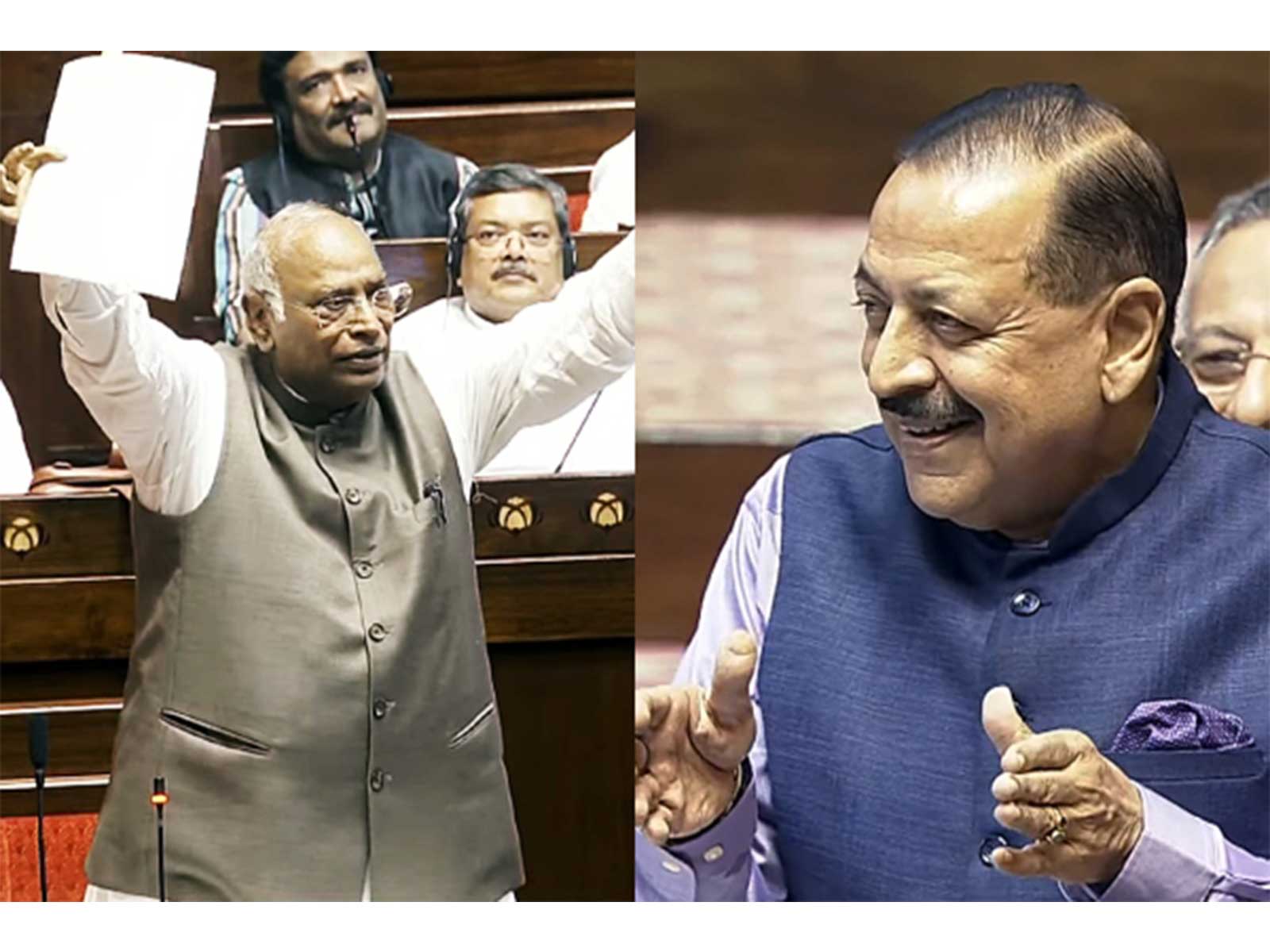
Speaking in the Rajya Sabha after tabling the Bill, Union Minister Jitendra Singh said the Bill is an extension of the earlier legislation. He said there is a deep sense of sensitivity and concern that Prime Minister Narendra Modi has time and again expressed for the youth of the country.
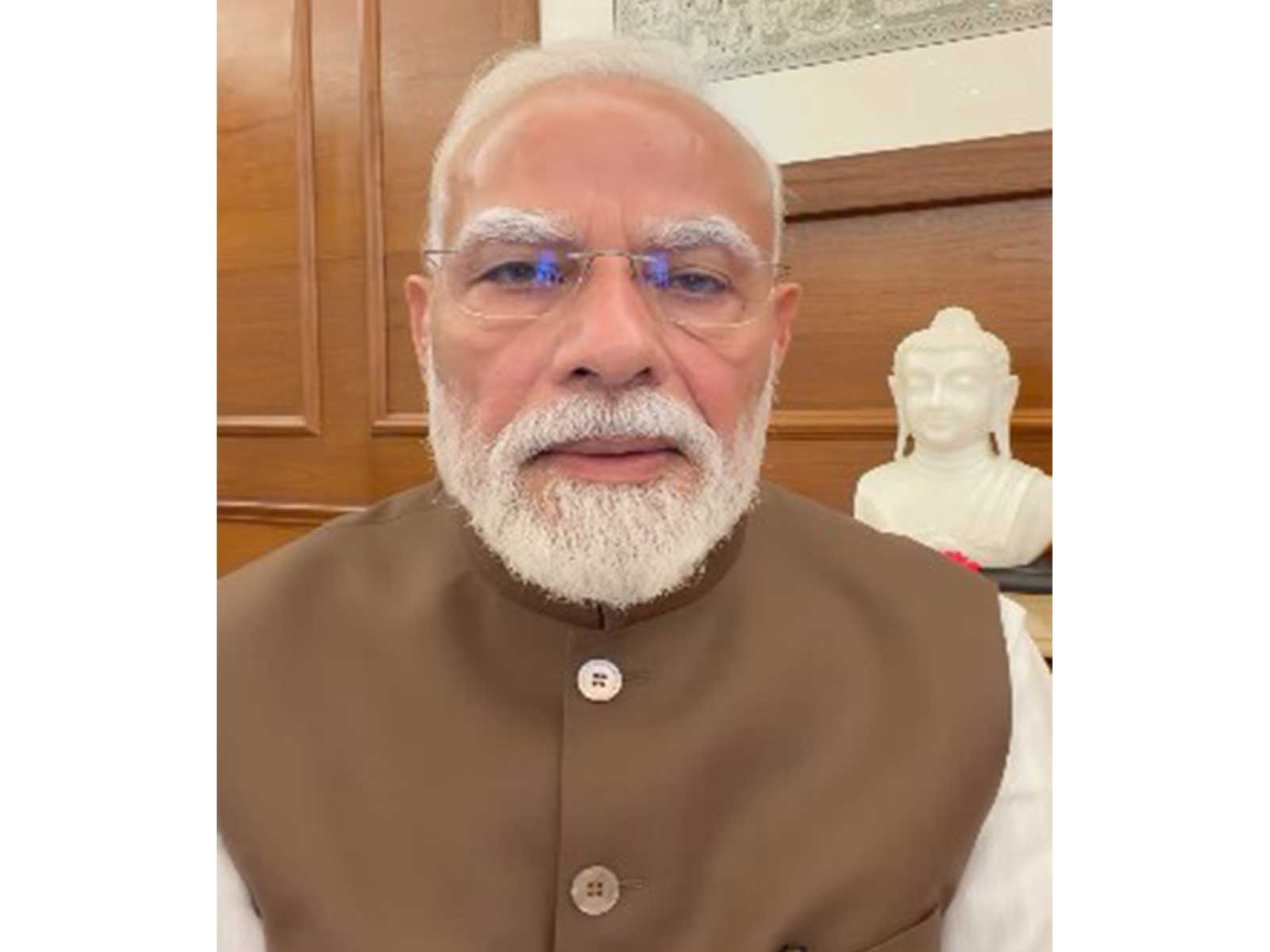
“In the wake of the recent sequence of events, PM Modi lost no time in declaring that nobody will be allowed to jeopardise the future of students. There is a zero-tolerance policy. This legislation seeks to make the law more stringent. It is my humble request to all leaders in the House to help pass the Bill. I know that by now most of the contents of the Bill are known to you,” the minister said.
Highlighting the key provisions of the Amendment Bill, Jitendra Singh said the punishment for persons resorting to unfair means has been enhanced from imprisonment of three to five years to five to ten years, while the maximum fine has been increased from Rs 10 lakh to Rs 50 lakh. For service providers involved in such offences, the maximum fine has been enhanced from Rs 1 crore to Rs 5 crore, and the period of debarment from conducting public examinations has been increased from four years to eight years.
On the other hand, Rajya Sabha Leader of Opposition Mallikarjun Kharge stated that the government moved the Bill only after widespread student protests over examination irregularities and had not explained how it proposed to prevent similar paper leaks in the future.
Kharge launched the debate in the Upper House on behalf of the Opposition on the Public Examinations (Prevention of Unfair Means) Amendment Bill, 2026.
Beginning his remarks with a poem, Kharge said, “Paper churane wale bachte rahe, mehnat karne wale pit te rahe. Ye kaisa nyay?” (Those who stole the papers kept getting away with it, while those who worked hard kept suffering. What kind of justice is this?) and alleged that the government had ignored demands for a strong law against paper leaks in 2024.
Kharge demanded a ‘National Youth Employment Strategy’ and a fixed annual examination calendar as reforms for youth.
Calling for an employment strategy, he said, “Investment will only be meaningful for youth when it generates quality employment on a large scale. That is why we demand that the government present a ‘National Youth Employment Strategy’ before Parliament, clearly outlining how a policy and business environment oriented towards investment should be shaped in India, and incorporating all these aspects.”
The Congress leader also sought the filling of the vacancies in public sector jobs, especially the seats reserved for the Scheduled Castes and OBC candidates. His demands also included a High Court-monitored probe into police action against protesters.
“My demands are straightforward: First, there should be a fixed annual examination calendar in the country so that students do not have to face uncertainty. Second, an investigation into this matter should be conducted by a Supreme Court-appointed high-powered committee so that the truth comes to light and accountability is fixed. Third, all vacant positions in the public sector and government institutions should be filled through recruitment. Fourth, incidents related to law and order–such as lathi charges, dragging women, and beating up people and children–all these incidents should be inquired into under the supervision of the High Court,” he said.
Mallikarjun Kharge also slammed the Centre over the police action against protesters demanding the resignation of former Education Minister Dharmendra Pradhan, and asked Home Minister Amit Shah to resign.
Speaking to reporters outside Parliament, BJP MP Sudhanshu Trivedi said, “Leader of the Opposition Mallikarjun Kharge used very objectionable language regarding the Home Minister, and we all strongly objected to it. He later withdrew his words, but his true mindset has been revealed. Earlier, the Leader of the Opposition in the Lok Sabha had used similar language, and now Kharge is doing the same. Attempts to avenge an electoral defeat by using such abusive language against the Home Minister will not succeed.”
Meanwhile, JMM MP Mahua Maji told ANI, “Merely enacting a law will not suffice; accountability must be fixed. There is a need for transparency and oversight. The Opposition has offered suggestions to the government, and I, too, have put forward several proposals today. If the government is serious and pays heed to the Opposition’s suggestions, the country’s students will certainly get justice.”
In the Lok Sabha, the Prevention of Insults to National Honour (Amendment) Bill, 2026 was passed by voice vote.
The Bill, which seeks to make any obstruction or insult to the National Song, ‘Vande Mataram’, a criminal offence, was passed after a brief discussion amid uproar by Opposition MPs. The Bill was cleared by the Rajya Sabha a day earlier.
The proposed legislation faced sharp opposition from the DMK in the Lok Sabha, with the party accusing the government of using it to push a “Hindutva” agenda.
Minister of State for Home Affairs Nityanand Rai moved the Bill in the Lok Sabha for consideration and passage. Replying to the discussion, Rai asserted that the Union government respects all states and their linguistic pride and also advocates that the National Song be sung alongside the National Anthem.
“This Bill is for Indian pride, not against any state or ideology. The BJP-led NDA government under Prime Minister Narendra Modi respects state songs. We only ask that when the National Anthem is sung, the National Song should also be sung alongside it,” he said.
Meanwhile, DMK MP Kanimozhi accused the government of using the legislation to advance a political agenda under the guise of “nationalism.”
“We oppose this Bill. This is a Hindutva agenda being brought in under the guise of nationalism. You cannot impose nationalism by bringing a law. This song goes against the secularism of this country,” she said.
She pointed to the decision of the country’s founding leaders to adopt only the first two stanzas of the song for official use, arguing that making all six stanzas compulsory under the threat of criminal prosecution was an attempt to “polarise” the country.
“The greatest leaders, the founding fathers, had the wisdom to stop with only two stanzas. Today, you are trying to polarise this country by making it compulsory and by making it a criminal offence if we don’t sing all six stanzas,” she said.
Following the passage of both legislations, the Rajya Sabha and Lok Sabha were adjourned till 11 am on July 31. (ANI)
Related reading