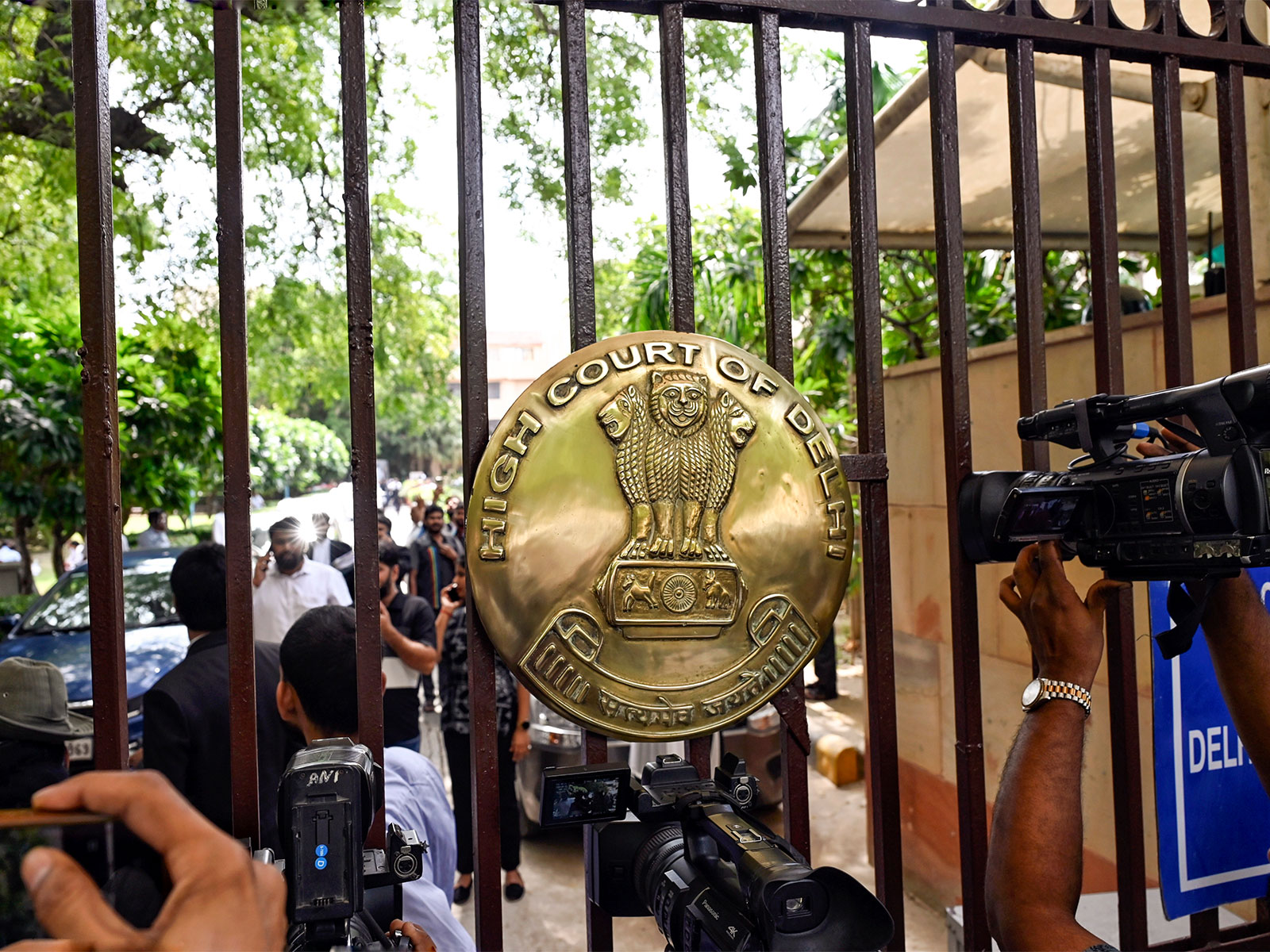
New Delhi [India], July 28 (ANI): A Public Interest Litigation (PIL) has been moved before the Delhi High Court seeking directions to the Union Government and the Lok Sabha and Rajya Sabha Secretariats to comprehensively review the existing institutional framework governing the safety and security of Parliament in view of evolving security challenges.
The petition has been filed by Raj Singh against the Union of India, the Ministry of Home Affairs, the Ministry of Parliamentary Affairs, the Lok Sabha Secretariat and the Rajya Sabha Secretariat.
The plea states that it does not seek a direction to enact a new law but asks the authorities to examine a concept note prepared by the petitioner titled “Proposed Outline of the Parliament of India (Security, Sanctity and Protection) Act, 2026” and take an informed decision on whether any reforms are required.
The petitioner has also sought a direction to the respondents to complete the review exercise within a time frame fixed by the Court and place the outcome before it by way of an appropriate decision or status report.
According to the petition, Parliament is not merely a physical building but a constitutional institution whose uninterrupted functioning is essential for representative democracy, executive accountability and constitutional governance.
It contends that the nature of threats to legislatures has changed significantly over the years and now includes cyber attacks, artificial intelligence-enabled misinformation, drone technology, insider threats and coordinated digital interference, in addition to traditional physical attacks.
The plea refers to the 2001 terrorist attack on Parliament and the 2023 security breach inside the Lok Sabha, arguing that these incidents demonstrate the need for periodic assessment and modernisation of Parliament’s security architecture.
It also cites recent calls for “Sansad Chalo” marches, stating that while peaceful protests are constitutionally protected, authorities must ensure an institutional framework that balances democratic freedoms with Parliament’s security.
The petitioner states that after studying the existing legal and institutional framework and international practices, he prepared a concept note proposing measures for strengthening Parliament’s security.
However, he clarifies that the document is only a policy proposal and that the Court is not being asked to direct Parliament to enact any legislation or adopt any specific policy. Instead, the request is limited to asking the competent authorities to consider the proposal and take a reasoned decision in accordance with law.
The petition further relies on developments in countries such as the United States, Canada, the United Kingdom and Germany, stating that several democracies have reviewed and strengthened parliamentary security following major security incidents. It argues that India should similarly undertake a comprehensive review to address present and future risks to the country’s highest legislative institution. (ANI)
Related reading