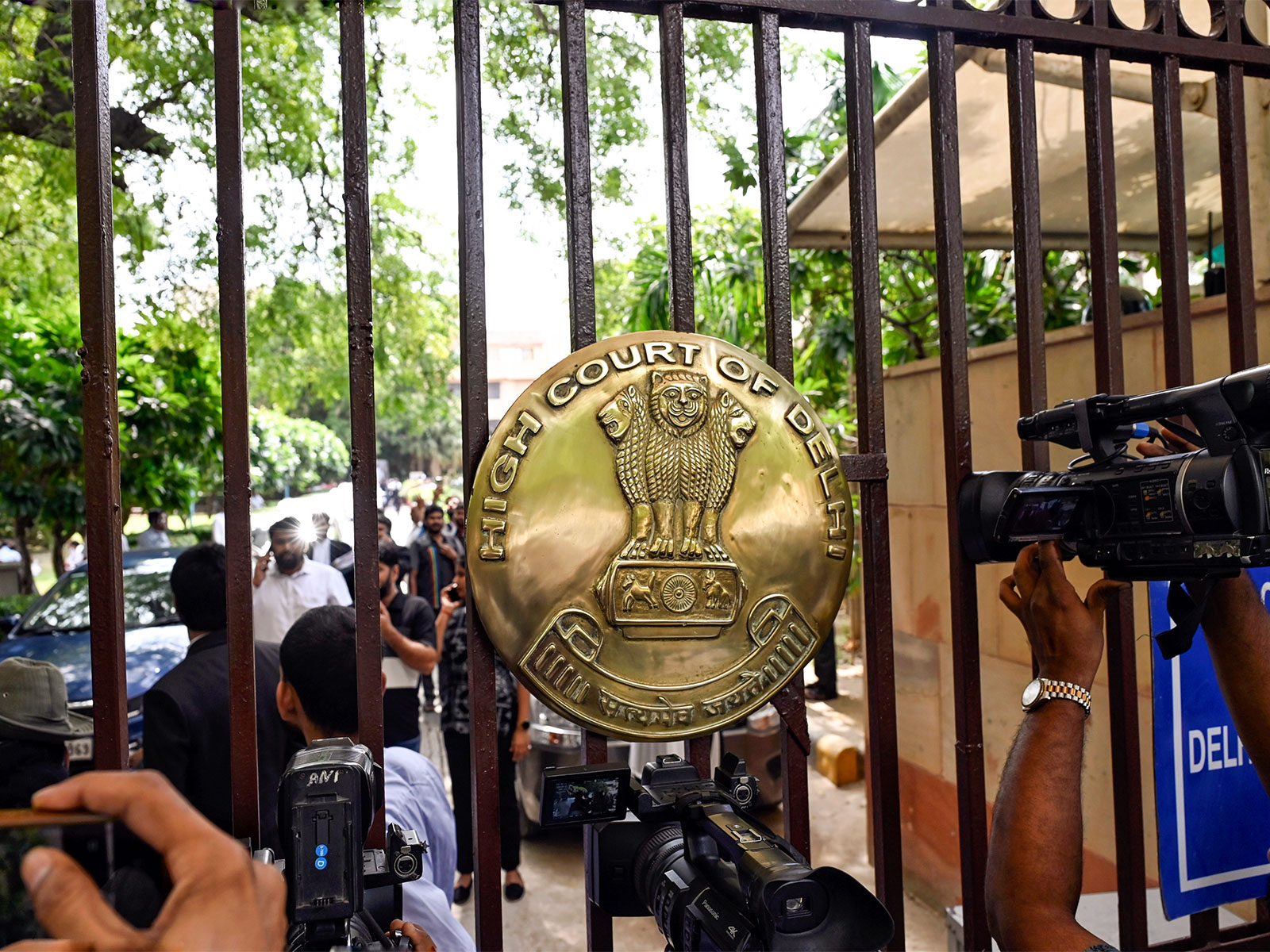
New Delhi [India], July 28 (ANI): The Delhi High Court on Tuesday observed that while the Election Commission of India (ECI) has the constitutional authority to requisition government school teachers for election-related work, it must ensure that such duties do not impose “unbearable” stress on them or adversely affect classroom teaching.
A Division Bench of Chief Justice DK Upadhyaya and Justice Tushar Rao Gedela made the observations while hearing a public interest litigation (PIL) filed by Advocates Rajesh Kumar Gogna and Ashok Agarwal, challenging the large-scale deployment of government, municipal and government-aided school teachers as Booth Level Officers (BLOs) and enumeration staff for the ongoing Special Intensive Revision (SIR) of electoral rolls in Delhi.
At the outset, the ECI informed the Court that it had filed a detailed affidavit and maintained that no teachers are being engaged in election-related work during school hours, in compliance with the Supreme Court’s decision in Election Commission of India v. St. Mary’s School.
Taking note of the Commission’s stand, the Bench observed that although there is no dispute regarding the ECI’s power to requisition teachers under Article 324 of the Constitution, the mandate of Section 27 of the Right of Children to Free and Compulsory Education Act, 2009, which regulates the deployment of teachers for non-educational purposes, “cannot be lost sight of by all concerned.”
The Court stressed that teachers should not be overburdened with election work after spending long hours in classrooms.
“After working in a school for 6-8 hours teaching, performing election duty may cause stress. Therefore, it is expected of ECI to be mindful of stress teachers undergo while performing election duty after school hours. They shall take all adequate steps so that election-related work does not cause so much stress on teachers which may be unbearable,” the Bench observed.
During the hearing, counsel for the ECI submitted that teachers perform BLO duties only after school hours, volunteers have also been deployed for the exercise, and every effort is being made to ensure that regular teaching is not disrupted.
The petitioner, however, disputed these submissions, calling them a “100 percent lie.” It was argued that only after the PIL was filed did the authorities issue circulars directing around 10,000 teachers back to schools, which, according to the petitioner, amounted to an acknowledgement that teachers had earlier been deployed contrary to the Supreme Court’s directions.
The petitioner also contended that teachers were receiving conflicting instructions from school principals and election authorities regarding whether they should report to schools or perform election duties.
The High Court noted that the ECI had placed a fact sheet on record indicating the number of BLOs and volunteers deployed for the exercise. It observed that if the petitioner disputed those figures, the allegations would have to be supported with evidence.
“They have filed a fact sheet along with the affidavit. They have given numbers. If you have anything contrary to this, you give an affidavit,” the Bench told the petitioner.
The Court also questioned the wording of certain ECI circulars. Referring to a clause stating that no action should be taken by school principals against teachers engaged in election work, the Bench asked why such a direction was necessary if teachers were indeed being assigned duties only after school hours.
“If they are engaged after school hours, where is the question of any unauthorised leave?” the Court asked.
When the ECI submitted that teachers may have to spend around five hours after school performing BLO duties, the Bench remarked that teachers who already spend six to eight hours teaching should not be made to work excessively, particularly since many are women with family responsibilities.
“We are not curtailing the rights [of the ECI], but we are also conscious of the conditions of teachers. Asking teachers to work for 11 hours… You have to humanise,” the Court orally observed.
In response, the ECI submitted that efforts were being made to ensure that no teacher was overworked, refreshments were being provided during the exercise, and the Special Intensive Revision was nearing completion.
Granting liberty to the petitioner to file a rebuttal affidavit to the Commission’s response, the High Court listed the matter for further hearing on August 20.
The PIL seeks the quashing of orders requisitioning more than 10 per cent of the regular teachers of any government, municipal or government-aided school for BLO and SIR duties or requiring teachers to perform election-related work during school hours.
The petition also seeks directions to the Election Commission of India and other authorities to ensure that election duties are assigned without disrupting classroom teaching and that the available pool of non-teaching staff is exhausted before teachers are deployed.
According to the petitioners, the large-scale deployment of teachers has severely disrupted education in government and municipal schools, with some schools allegedly losing their entire regular teaching staff to election work, while private unaided schools continue functioning normally. It is contended that this disproportionately affects children studying in government schools and violates their fundamental rights under Articles 14, 21 and 21A of the Constitution.
The petition further argues that the mass deployment of teachers is contrary to the Supreme Court’s judgment in Election Commission of India v. St. Mary’s School and violates the provisions of the Right of Children to Free and Compulsory Education Act, 2009, which mandate maintenance of the prescribed pupil-teacher ratio and protect instructional hours.
The petition also refers to representations submitted by the Vice and Principals’ Association of Delhi and by the petitioners to the Election Commission and other authorities, alleging that despite repeated requests for rationalisation of teacher deployment, no effective corrective action was taken. It further claims that the indiscriminate deployment of teachers for election work undermines students’ right to uninterrupted education, particularly in government schools catering to economically weaker sections. (ANI)
Related reading