New Delhi [India], July 28 (ANI): The Aam Aadmi Party (AAP) on Monday alleged large-scale irregularities in the ongoing Special Intensive Revision (SIR) exercise in the national capital, claiming that nearly 50 per cent of residents in Delhi’s villages and unauthorised colonies have not received enumeration forms, despite the Election Commission’s claim that more than 99% have been distributed.
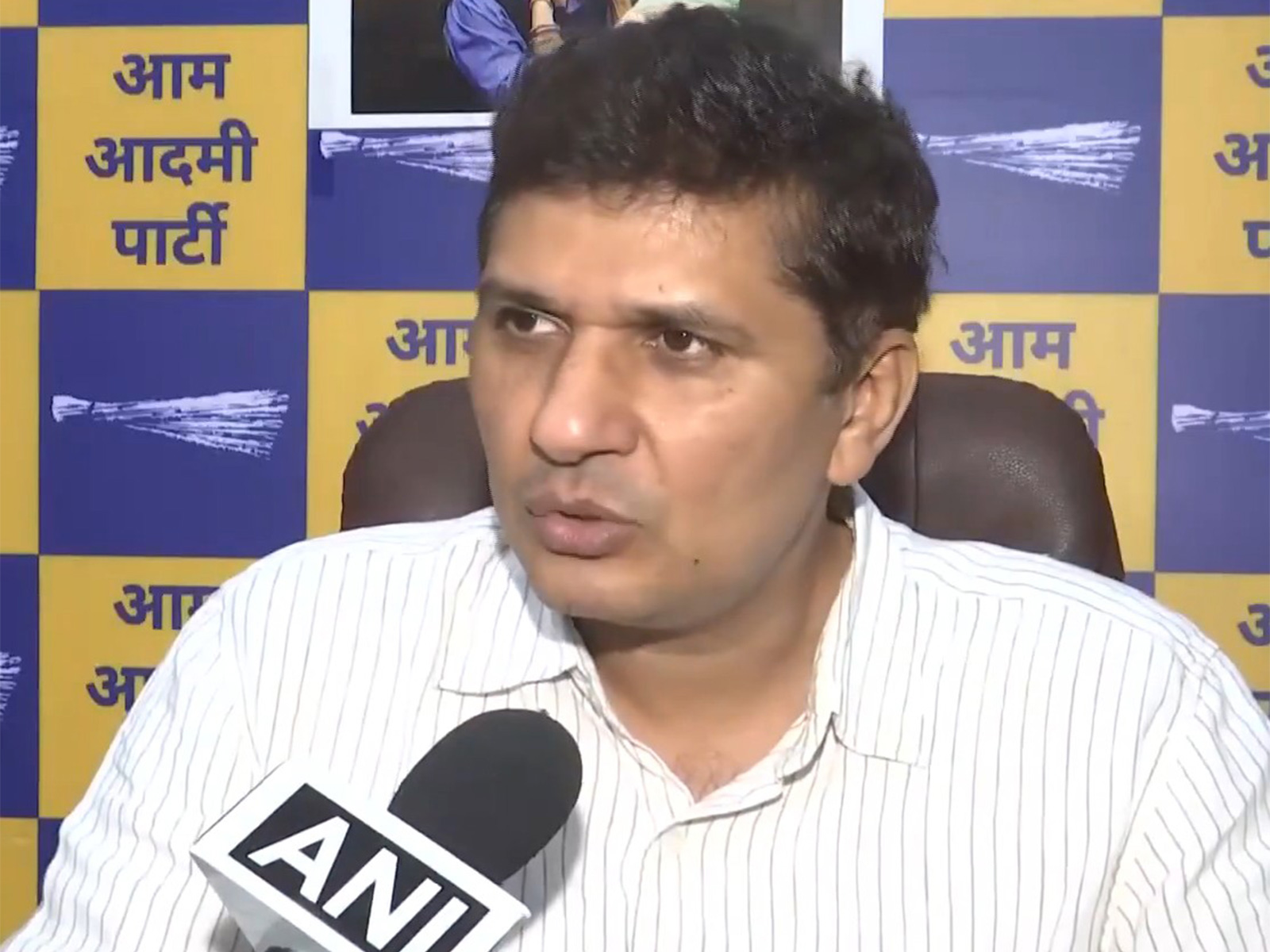
Noting the large-scale irregularities in the process, AAP Delhi President Saurabh Bharadwaj said that if people do not even receive the enumeration forms, they cannot be expected to fill and return them, making their SIR verification impossible.
Addressing a press conference at the AAP headquarters on Monday, Bharadwaj said, “The Election Commission claims that more than 99% of enumeration forms have been distributed in Delhi, but reports from the ground show that this is completely false. I appeal to the media to visit any village or unauthorised colony and ask residents whether they have actually received the enumeration forms.”
Nearly 50% of them, Saurabh Bharadwaj said, would state that the forms had never reached them.
He stated, “BLOs are sitting on large numbers of enumeration forms instead of distributing them. While forms have been delivered door-to-door in affluent neighbourhoods and DDA flats, they have not been distributed in villages and unauthorised colonies, which together account for nearly 70% of Delhi’s population.”
Meanwhile, Burari MLA Sanjeev Jha said, “Votes are being deleted on such a massive scale in the name of the SIR exercise that its magnitude is difficult to imagine. The BLOs entrusted with this responsibility are simply not reaching the people. In my Burari constituency, Polling Booth No. 64 has 1,670 registered voters, but only 510 forms have been submitted. At Booth No. 158, only 427 forms have been submitted out of 1,460 voters, while at Booth No. 160, only 280 forms have been submitted out of 1,041 registered voters.”
He further said, “Only about 30-35% of forms have been submitted at each polling booth. When BLOs are asked about the next step, they say they have been instructed by higher authorities to mark everyone else as ‘shifted,’ which effectively means their names will be deleted from the electoral rolls.”
Giving an example, Sanjeev Jha said that one individual tracked down a BLO, only to be told that his SIR verification had already been completed in Uttarakhand, even though he had been living in Delhi for the past 30 to 40 years. When the matter was verified, it was found that no SIR verification had taken place anywhere. “BLOs are merely completing formalities and deleting votes by matching similar names in the system without carrying out proper verification,” he said.
The AAP MLA said that many residents of unauthorised colonies were not highly educated, and this was being exploited to carelessly delete their votes. During the pre-SIR exercise conducted over the summer vacation in June, around 1.3 to 1.4 million votes had already been deleted. “Now, even people who had voted in the previous election were complaining that their names no longer appeared on the electoral rolls,” he stated.
On behalf of the AAP, Sanjeev Jha appealed to the Election Commission to either extend the timeline for the SIR process or provide a solution regarding the votes deleted during the pre-SIR exercise. He warned that if the SIR continued in Delhi in its present form, only 30-40% of the existing votes in unauthorised colonies and villages would remain, reducing the voter base to nearly half of what it had been in the previous election. “It is the EC’s responsibility to ensure that not a single eligible voter is left out. But if the Commission instead decides to find ways to delete the maximum number of votes, democracy itself will be undermined,” he said.
Senior AAP leader and former MLA Durgesh Pathak said that the SIR exercise had already become the subject of widespread discussion across the country. He referred to a viral video of a BJP leader from Punjab released a few days ago, in which the leader said that if 25,000 to 30,000 votes were deleted in an Assembly constituency, the election could easily be won.
“It would not be an exaggeration to say that the BJP has now completely taken control of the SIR process in Delhi. BLOs, who are junior-level officials, are being pressured, called to MLAs’ offices, and handed lists, resulting in large-scale manipulation of the electoral rolls,” he added.
Referring to the issue of tenants living in Delhi, Durgesh Pathak said that both he and Sanjeev Jha themselves lived in rented accommodation and changed houses every six months or every year. “I live in Rajendra Nagar and have changed houses three times, because of which my voter registration has also shifted several times. After recently moving to a new residence, I had not yet been able to get my name added to the electoral roll, so the BLO went to my old address instead. Since people there knew me, they were able to get in touch with me. But ordinary citizens do not have that advantage,” he said.
Durgesh Pathak said that nearly 60-70% of Delhi’s residents, who come from Uttar Pradesh, Bihar, Haryana, Punjab and other parts of the country, live in rented accommodation and frequently change houses. As a result, all such tenants now faced the risk of having their votes deleted. He appealed to the Election Commission to treat Delhi’s SIR exercise differently from that of other states.
He continued, “Unlike most states, where nearly 80% of the population lives in rural areas, and tenancy is uncommon because homeowners themselves reside in their houses, Delhi presents unique circumstances.” He therefore urged the Election Commission to treat Delhi as a special case.
Durgesh Pathak further said, “Polling officials themselves have been raising these concerns at multiple levels, but senior officials are under pressure to complete the process quickly, finish deleting votes, and satisfy the BJP. The BJP has deployed party workers and paid individuals at every polling booth to manage the electoral rolls.”
He appealed to the Election Commission to adopt a more sensitive approach towards tenants, who constitute a very large section of Delhi’s population, and to reform the entire process accordingly. (ANI)
Related reading