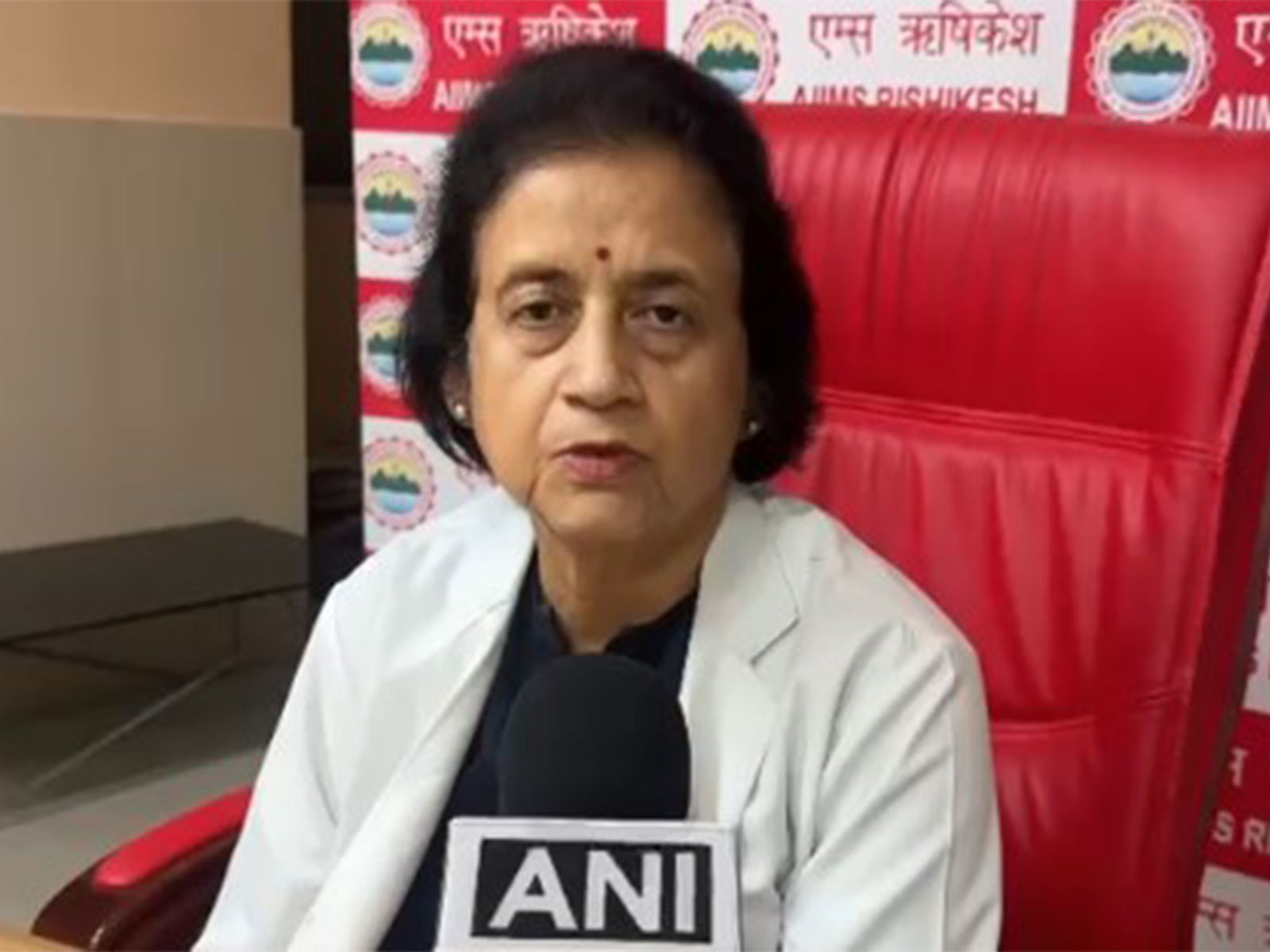
Rishikesh (Uttarakhand) [India], July 25 (ANI): With the Kanwar Yatra in Uttarakhand set to begin amid the ongoing monsoon season, All India Institute of Medical Sciences (AIIMS) Rishikesh Executive Director Doctor Meenu Singh on Saturday urged pilgrims to stay hydrated, maintain hygiene and consume clean food to prevent monsoon-related illnesses during the journey.
Speaking to ANI about the health challenges associated with the monsoon season, Dr Singh said rain often leads to road congestion and travel difficulties, while also increasing the risk of gastrointestinal illnesses such as indigestion, diarrhoea and gastroenteritis.
“Due to rain, there are a lot of problems. There is congestion on the roads. Travel is affected a lot. Along with this, some diseases come to notice a lot. One is related to our gastrointestinal system. There are problems related to our digestive system, like indigestion, diarrhoea, gastroenteritis. There is also dehydration. It is important to use oral rehydration. Antibiotics are not required. But if someone has typhoid or diarrhoea, antibiotics are also required, which we should take after doing the investigation,” she said.
Dr Singh also warned that stagnant water following the monsoon can increase the risk of mosquito-borne diseases such as dengue.
“After this season, when the water starts accumulating, the diseases that spread from mosquitoes, like dengue fever, which is very prominent, also start. But it starts after the fall, when the rains stop. Mosquitoes breed in the water that accumulates. Or mosquitoes breed in the water that accumulates inside the houses. This causes fever and other problems,” she said.
She also highlighted the prevalence of scrub typhus and viral hepatitis during the season, saying these illnesses can cause fever, shock and liver-related complications, including jaundice.
“Then there is scrub typhus, which is a disease that comes to notice in these seasons. Patients also have fever. Along with that, sometimes patients go into shock. It also affects the liver. Sometimes there is jaundice. Especially, hepatitis is also prevalent in this season. Viral hepatitis, as we call it. The disease of hepatitis A affects our liver. It also affects children. It also affects adults, which causes jaundice. Treatment is also necessary for that,” Dr Singh said.
Emphasising the importance of prevention, she advised pilgrims to wash their hands with soap before eating and maintain food hygiene. “It is also important to take care of food hygiene. If the food is not kept clean, it can affect the stomach. It is better to eat home-made food. We have to take care of all these things,” she added.
Dr Singh said Uttarakhand witnesses significant spiritual tourism, with the Char Dham Yatra underway and the Kanwar Yatra also attracting a large number of devotees who collect Ganga water and offer it at temples dedicated to Lord Shiva.
The AIIMS Rishikesh Director also cautioned young pilgrims travelling on motorcycles and cars, saying the risk of accidents increases during the monsoon due to damaged roads, congestion and speeding.
“But a lot of young people who come on motorbikes or cars. The problem with them is that the chances of accidents increase a lot. In the monsoon, the roads get damaged. On top of that, if there is a rush and if people drive faster, there are more accidents,” she said.
She recalled that AIIMS Rishikesh had treated a Kanwar pilgrim who lost his life in an accident, adding that his family later donated his organs.
“In recent years, there are a lot of accidents in AIIMS. In fact, we had a Kawar Yatri here who had lost his life. But his relatives donated organs to him. And he also donated his life to many people. But still, we have to try to complete our work and go from here,” she said.
Dr Singh further stressed that pilgrims should be careful about the food they consume during the journey to avoid contamination and monsoon-related illnesses.
“The other diseases of the monsoon that I talked to you about, there is a high chance that it will happen to the pilgrims of this journey because they eat food on the road. So we have to ensure that the food they eat is clean and there is no possibility of contamination, so that they don’t get sick along with the journey,” she said.
On preparations at AIIMS Rishikesh to deal with emergencies, Dr Singh said the institute has a Grade 1 trauma centre equipped with facilities for trauma treatment.
“We have a trauma center. As you know, we have a Grade 1 trauma center, in which all kinds of trauma treatment facilities are available. And if it is very necessary, then a heli-ambulance is also used, and patients are brought to our trauma center. So we have all the facilities to give them first aid and other treatments,” she said.
She also called for first-aid posts at different locations along the pilgrimage routes to provide immediate assistance for minor injuries, pain and musculoskeletal problems faced by pilgrims while walking.
“Telemedicine facilities are also available. If you want to call someone and ask, or if you want to ask about yourself by video call, the numbers are available with us in the trauma helpline, where they can do. And their consultation can also be done through video consultation,” Dr Singh said. (ANI)
Related reading