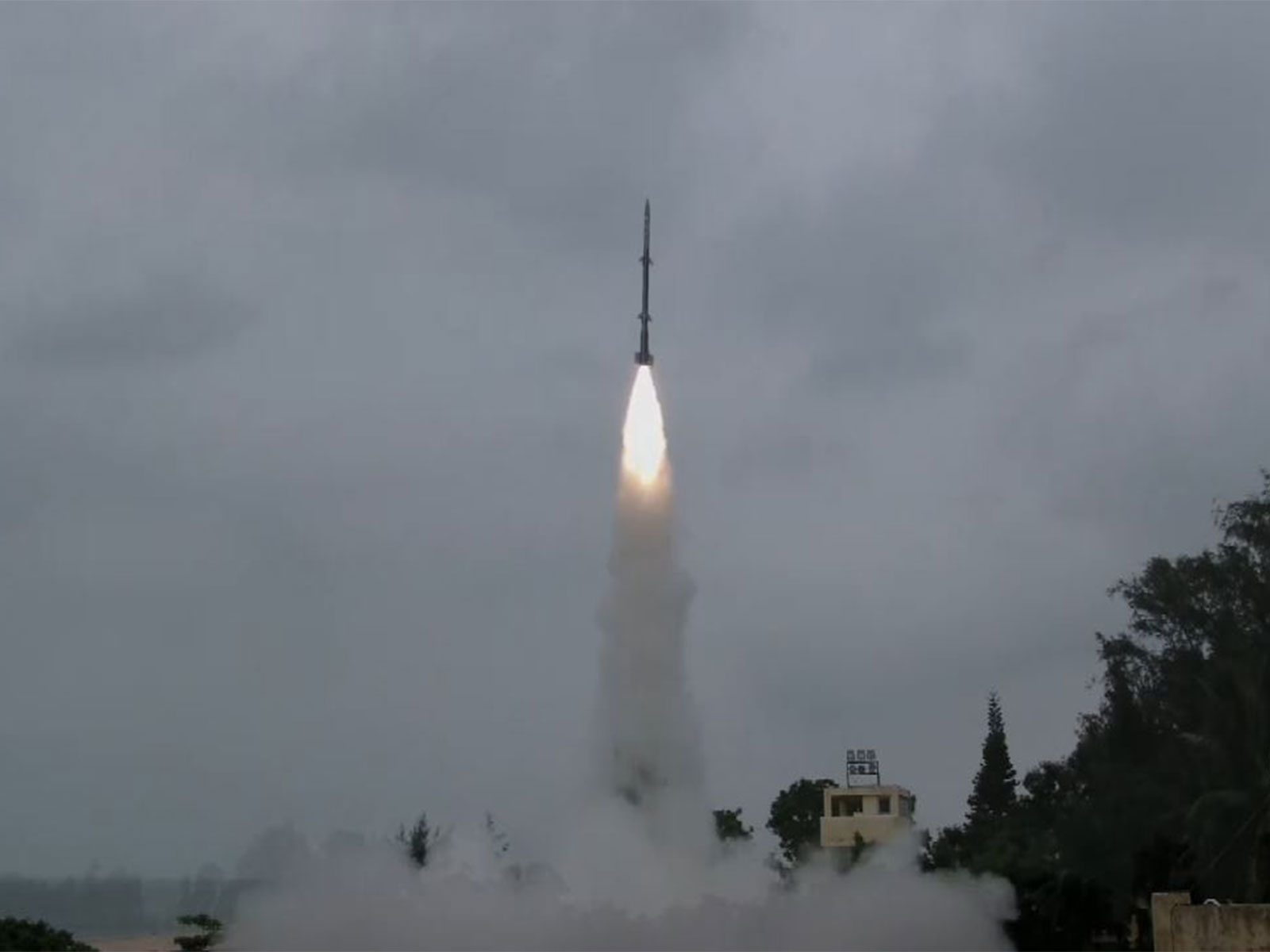
Balasore (Odisha) [India], July 23 (ANI): The Defence Research and Development Organisation (DRDO) on Thursday successfully conducted the maiden flight test of the Long-Range Surface-to-Air Missile (LR-SAM) system ‘Kusha’ from APJ Abdul Kalam Island off the Odisha coast.
The Kusha missile system is designed to destroy various aerial threats, including fighter jets, missiles, drones and large enemy aircraft, across a wide range and altitude.
Union Defence Minister Rajnath Singh congratulated the DRDO on the successful maiden flight test of the system ‘Kusha’, calling it a major milestone in India’s defence research and development.
He said the successful test marked an important milestone in India’s defence R&D and highlighted the country’s capability to develop long-range surface-to-air missile systems.
In a post on X, Singh wrote, “The @DRDO_India has successfully conducted the maiden flight test of Long-Range Surface-to-Air Missile Kusha today from the APJ Abdul Kalam Island off the coast of Odisha. Kusha missile system is capable of neutralising wide variety of aerial threats including fighter jets, missiles, UAVs and large enemy aircraft within a wide range and altitude envelope.”
https://x.com/rajnathsingh/status/2080283808511955422
“Today’s successful test flight of Kusha marks an important milestone in Indian defence R&D. The capability in developing long range surface-to-air missile system is possessed only by a handful of nations. This will also eliminate the import dependency for such systems and signifies a giant leap in air defence capability of the nation,” the post read.
Defence Secretary and Secretary, Department of Defence R&D and Chairman, DRDO Rajesh Kumar Singh monitored all activities during the launch and congratulated all the team members involved in the successful flight-test.
Project Kusha is an indigenous, long-range Surface-to-Air Missile (SAM) defence system being developed by the DRDO. Designed to rival Russia’s S-400, it features three interceptor variants (150 km, 250 km, and 400 km ranges) to protect against stealth aircraft, drones, and hypersonic weapons. It is slated for operational deployment around 2028-2030. (ANI)
Related reading