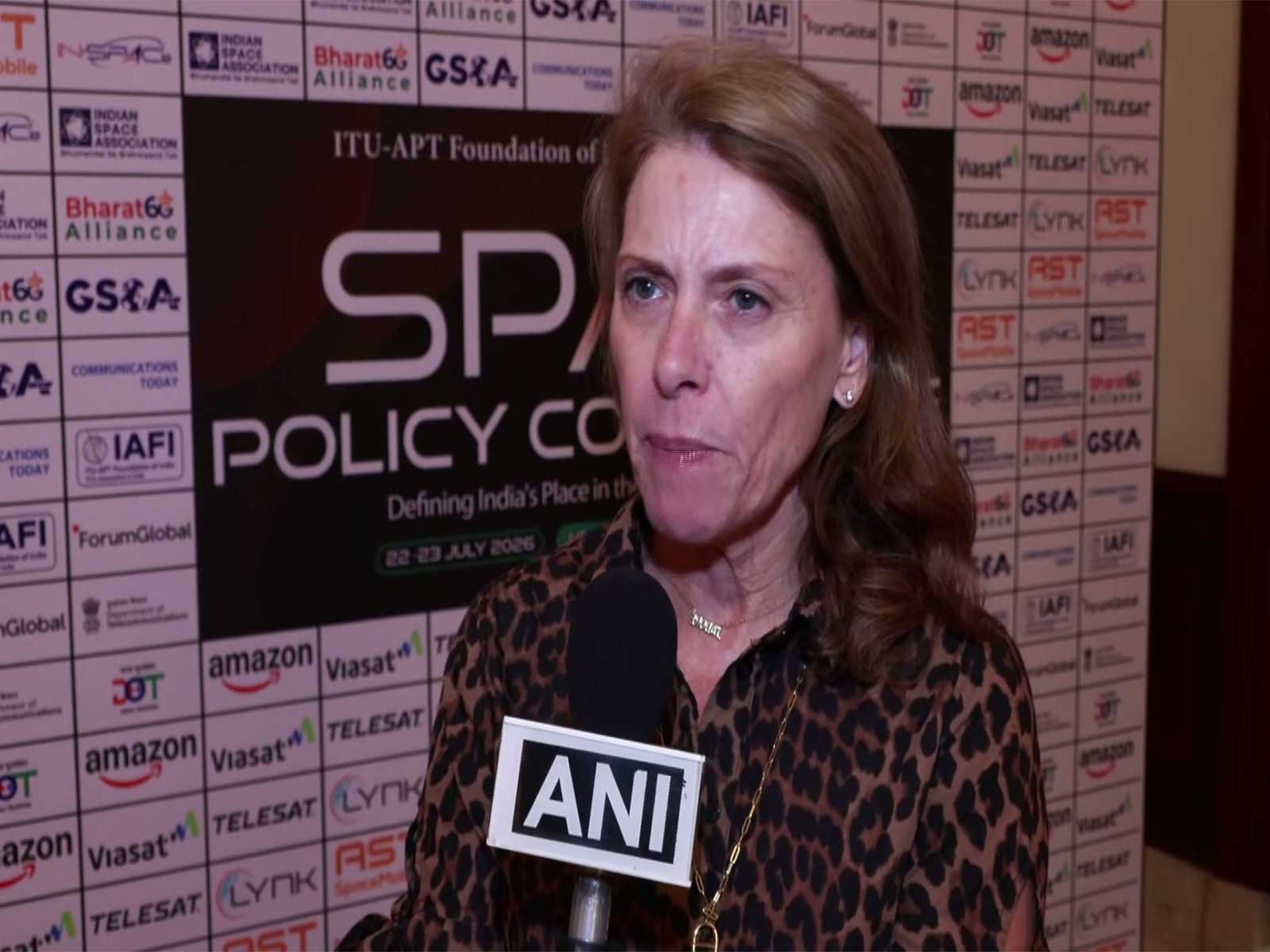
Sriharikota [Andhra Pradesh] (India), July 23 (ANI): India is set to emerge as a crucial market for satellite economy, with broadband connectivity in rural areas expected to drive demand, however, structural predictability will be essential to unlock the sector’s full potential, said Isabelle Mauro, Director General of the Global Satellite Operators Association (GSOA).
Speaking to ANI on the sidelines of Skyroot Aerospace’s ‘Mission Aagaman’ orbital launch, she said India is among the world’s fastest-growing markets, and its space sector is following the same growth trajectory that the country previously witnessed in the traditional telecommunications ecosystem.
Mauro noted that India’s vast geography and large number of rural areas make satellite and space technologies crucial for expanding connectivity.
“A lot of rural areas where terrestrial doesn’t make economic sense to roll out…I think satellite and space is going to be absolutely crucial.”
She further added, satellite broadband could play a particularly important role in connecting the large parts of the country that remain underserved by existing terrestrial networks. “There is so much of a vast landscape, a landmass that still needs to be covered in this country, and that will be done by satellite. So absolutely, the broadband market is going to be crucial,” she said.
However, she stressed that India would need structural predictability to accelerate the growth of its satellite communications ecosystem. In her recommendations to the government, she called for future-proof regulatory frameworks that take into account the longer investment cycles and operational lifecycles of satellites, particularly in areas such as licensing.
She stressed,”We need structural predictability,” adding “We really need to look at frameworks that are going to be future-proof, that really need to look at what is needed now, but what is going to be needed in five years’ time, so that we have flexibility to adapt as well.”
Mauro also cautioned against applying regulatory frameworks designed for terrestrial telecom networks directly to satellite services, noting that the two sectors have different technologies, infrastructure and business models.
“We need to stay away from regulatory parity with terrestrial…both technologies are very different, the infrastructure, the technology, the business model is different,” she said.
She further recommended cost-recovery economic models that are designed to support the sector’s growth rather than focus solely on revenue generation.
“We need to think of models that are going to be, again, fit for purpose, but are not just there just to generate revenue at all costs, because this is going to have a massive impact on the opportunities we can offer and deliver to consumers and could defeat the purpose of satellite delivering broadband to all the unconnected,” she said. (ANI)
Related reading