
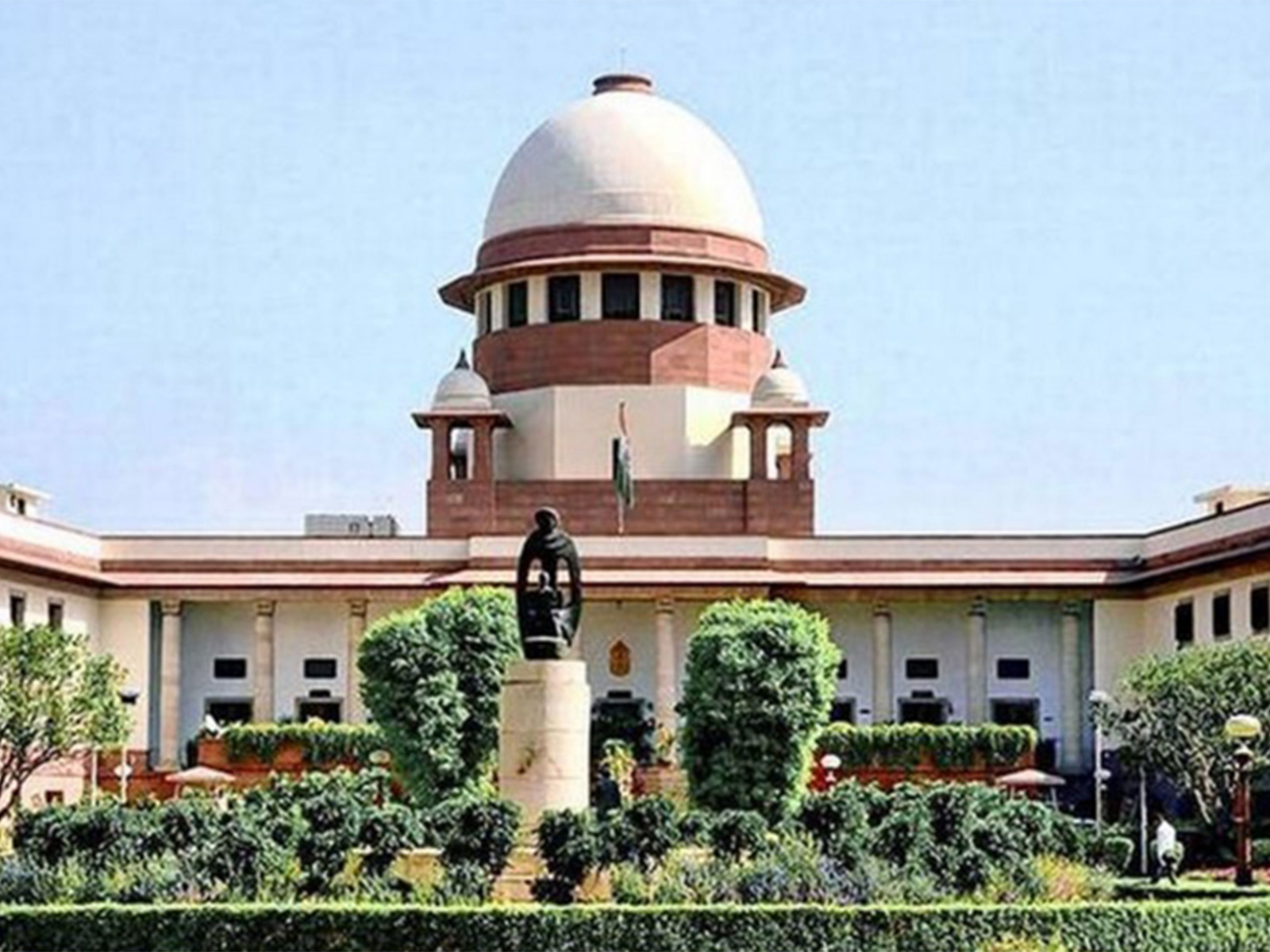
New Delhi [India], July 22 (ANI): The Supreme Court on Wednesday refused to cancel the bail granted to Chaitanya Baghel, son of former Chhattisgarh Chief Minister Bhupesh Baghel, in two cases linked to the alleged Chhattisgarh liquor scam. However, the Court expunged certain observations made by the Chhattisgarh High Court against the prosecution while granting him bail
A bench led by Chief Justice of India (CJI) Surya Kant and comprising Justices Joymalya Bagchi and V Mohana dismissed the pleas challenging the bail granted by the Chhattisgarh High Court in the cases registered by the Directorate of Enforcement (ED) and the Economic Offences Wing (EOW). The High Court had granted bail to Chaitanya Baghel in January this year.
During the hearing, the Court questioned whether a bail order could be set aside solely because it lacked elaborate reasoning. Justice Joymalya Bagchi repeatedly emphasised that the test in cancellation of bail cases is not the correctness of the order, but whether continuation of liberty would seriously prejudice the administration of justice
“…Can correctness of an order be the sole test to deprive liberty of an accused? When a Court interferes.. it is only when continuation of liberty is so egregious that functioning of administration of justice becomes impossible”, Justice Bagchi said, addressing Senior Advocate Mahesh Jethmalani representing the Chhattisgarh government.
“See, we have held that let reasons be given in an order. But a High Court judge says ‘I grant bail’. Can we just set it aside merely because there are no reasons?” Justice Bagchi asked.
Justice Bagchi raised the issue while explaining that absence of reasons alone cannot justify cancellation of bail.
Senior Advocates Kapil Sibal, Mukul Rohatgi, Siddharth Dave and N. Hariharan, appearing for Chaitanya Baghel, agreed with the Court’s observations and urged it to reiterate settled principles governing bail jurisprudence.
Hariharan also flagged before the Court the issue of “ever-greening” of offences, referring to the recurring invocation of fresh offences under different statutes on substantially the same set of allegations after an accused secures relief in one case. According to the defence, such a practice results in repeated incarceration despite the grant of bail.
“Sometimes it’s necessary for this Court to reinstate the law.”
Rohatgi submitted this while urging the Court to restore clarity in bail jurisprudence.
Justice Bagchi, however, observed that the Court had already laid down sufficient safeguards on personal liberty.
The Court also expressed concern over the increasing tendency to challenge every bail order before the Supreme Court and the impact this has on criminal trials.
“If the prosecutor or investigator is so focused on all this, then the ultimate goal of securing a conviction gets compromised. This is why our jurisprudence in bringing about correctness in granting bail is delaying the further cause of trial. The number of SLPs has increased so much because of this in recent years”, the Court said.
The Court also questioned the necessity of lengthy bail orders, particularly in cases under stringent laws such as the Prevention of Money Laundering Act (PMLA) and the Unlawful Activities (Prevention) Act (UAPA).
“There are 40-50 page bail orders in UAPA and PMLA cases. The judges’ time has to be apportioned in a cautious manner”, it said.
The CJI also remarked that High Courts were increasingly adopting a rigid approach in bail matters.
“HC is also taking a rigid view these days in bail orders. Imagine yesterday there was a case in Allahabad where a lawyer was in jail for two years because of a complaint by another lawyer. This is the condition of a lawyer who is seeking to list his matter on merits”, the CJI said in bemusement.
Senior Advocate Mahesh Jethmalani, appearing for the Chhattisgarh government, argued that apart from granting bail, the High Court had made unnecessary and sweeping observations against the investigating agencies. He submitted that such strictures were unwarranted, particularly when the accused had not remained in custody for a long period.
The Supreme Court agreed on this limited aspect. The Court expunged the part of the High Court’s order which had criticised the ED for continued incarceration of an accused person despite having been granted relief.
In its order granting bail to Baghel, the HC had observed that continued or perpetual incarceration cannot be justified on the sole basis of allegations being serious.
“This Court is conscious of the gravity of offences under the PMLA and the deleterious impact of money laundering on the financial health of the nation. However, severity of allegations cannot, by itself, become a justification for perpetual incarceration, particularly when the adjudicatory process is bound to take years. The criminal justice system does not countenance a regime where detention becomes the rule and trial the exception. Such an approach would reduce the concept of bail to a mere illusion and render Article 21 a dead letter”, the HC has noted.
“The remarks made by the High Court which tend to cast aspersion on the prosecution are completely uncalled for and hereby expunged. All issues are kept open”, the CJI noted.
The Supreme Court, however, declined to interfere with the grant of bail, reiterating during the hearing that the absence of elaborate reasons in a bail order, by itself, cannot be a ground to deprive an accused of liberty. (ANI)
Related reading