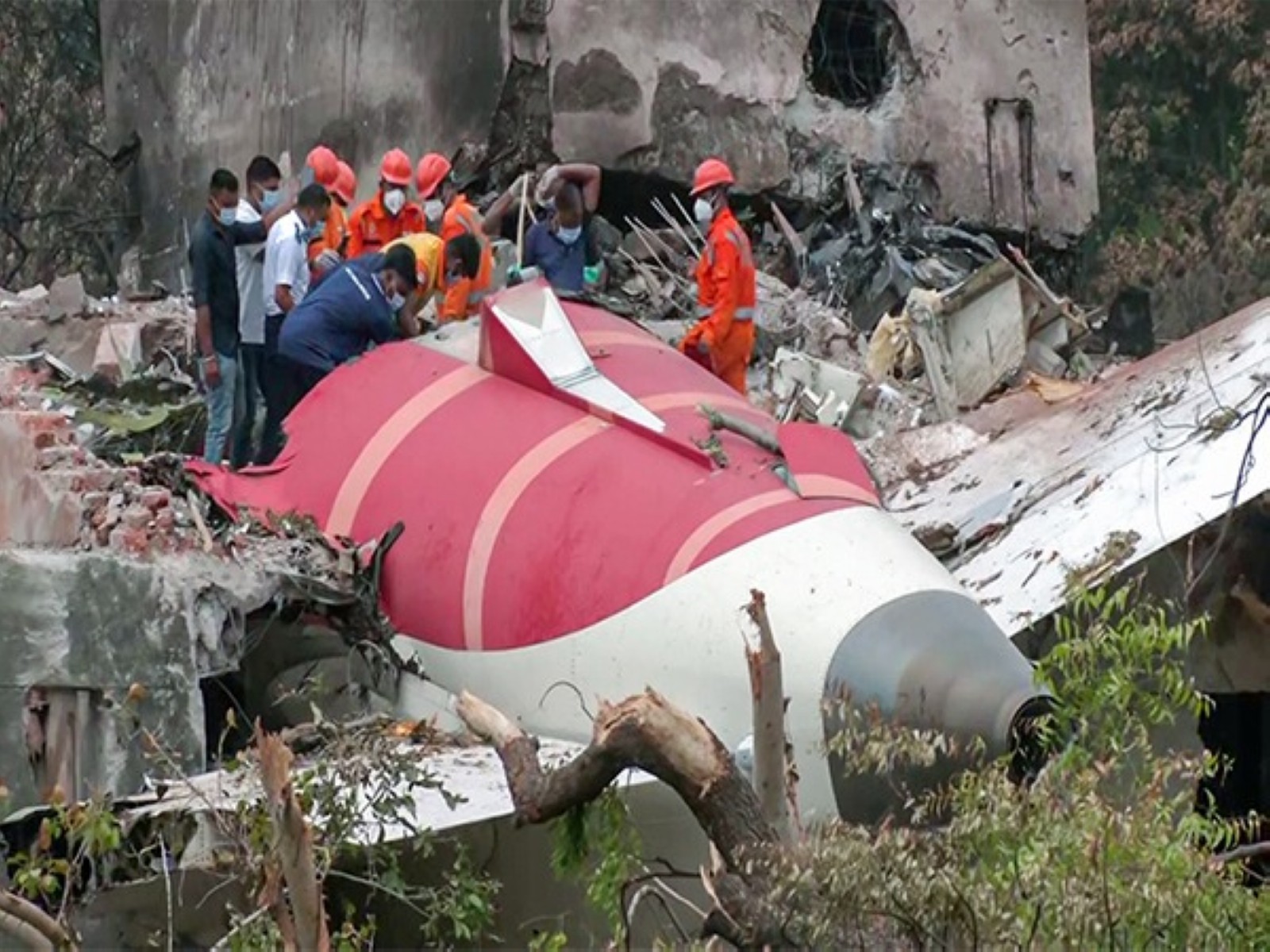
New Delhi [India], July 15 (ANI): The Aircraft Accident Investigation Bureau (AAIB) has opposed pleas before the Supreme Court seeking disclosure of cockpit voice recordings and the setting up of a parallel probe into the Air India Flight AI-171 crash.
In its counter affidavit, the AAIB said the law governing aircraft accident investigations gives the AAIB exclusive authority to investigate such accidents and does not permit disclosure of protected investigation material.
The Bureau also informed the Court that it expects to complete the investigation and submit a final report by October 2026. It said the probe is being conducted under the Aircraft (Investigation of Accidents and Incidents) Rules, 2025 and the international framework under ICAO, with the objective of preventing future accidents and improving aviation safety.
Referring to Rule 17 of the 2025 Rules, the AAIB said witness statements, communications between persons involved in operating the aircraft, medical and private information, cockpit voice recordings and transcripts, air traffic control recordings, cockpit image recordings and investigators’ opinions cannot be disclosed, unless the Central Government decides that disclosure is necessary despite its impact on the investigation or future investigations.
It also argued that the petitioners’ request to provide cockpit voice recordings to an external committee is contrary to the statutory scheme.
“The Rules, 2025 contain crucial and mandatory safeguards relating to the confidentiality and integrity of investigative material. Rule 17(5) specifically and separately provides that the audio content of cockpit voice recordings shall not be disclosed to the public. This is an absolute statutory prohibition”, the affidavit said.
The AAIB said these safeguards are necessary to ensure that witnesses cooperate freely and investigators can carry out an independent safety investigation. It also submitted that only the Central Government can decide whether protected material should be disclosed and that no such decision has been taken in the present case.
“These protections serve a critical purpose: they preserve the candour of witnesses, the independence of investigators, the integrity of the no-blame investigation process. If witnesses know that their statements may be disclosed. They will become guarded or unwilling to cooperate, thereby defeating the very purpose of the safety investigation”, the response added.
The Bureau further contended that the legal framework governing aircraft accident investigations is complete in itself and leaves no scope for the Court to order a parallel investigation. It has urged the Supreme Court to dismiss the writ petition.
The affidavit has been filed after the Supreme Court, while hearing the petition in February this year, sought a progress report and details of the procedure being followed by the AAIB in its investigation. At the time, the Centre had informed the Court that the probe was being conducted in accordance with India’s international obligations and was aimed at determining the cause of the crash, not fixing responsibility.
The petition on which the top court had sought AAIB’s response has been filed by Safety Matters Foundation, which has sought a court-monitored inquiry into the AI-171 crash. The petitioners have argued that international accident investigation norms contemplate a higher-level inquiry in cases involving large-scale loss of life. They have also raised concerns over the composition of the AAIB investigation team, contending that several members are from the Directorate General of Civil Aviation (DGCA), which is itself under scrutiny in relation to the crash. (ANI)
Related reading