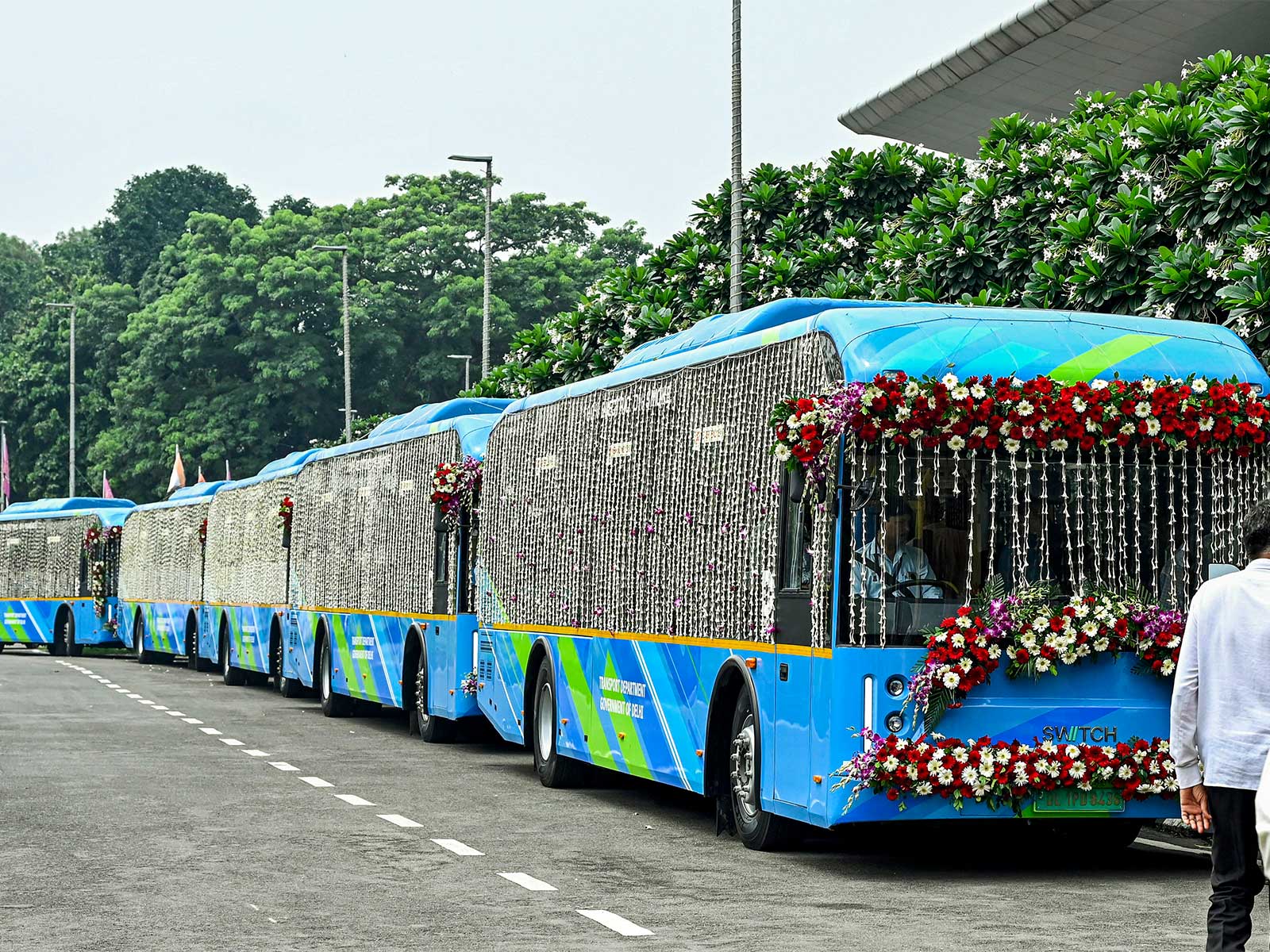
New Delhi [India], July 14 (ANI): As part of the transport push, around 2,800 new electric buses are expected to be added to Delhi’s fleet soon, the Delhi government said on Tuesday.
In a Delhi cabinet meeting, ministers discussed the induction of new electric buses in the capital, along with the startup ecosystem, among other agenda items.
Earlier today, Delhi Chief Minister’s Office also said that the Union Government has sanctioned a Rs 2,403 crore infrastructure boost for Delhi, which will be used to expand metro lines and EV systems among other projects.
“Under the visionary leadership of Hon’ble Prime Minister Shri @narendramodi, the Central Government has sanctioned a Rs 2,403 crore infrastructure boost for Delhi. From Metro expansion and the Barapulla Elevated Corridor to EV infrastructure and 28 major development projects, this landmark support will accelerate Delhi’s transformation into a modern, connected and future-ready capital,” the CMO said.
These projects are part of a broader push by the Delhi Cabinet on the adoption of electric vehicles.
On June 29, the cabinet had approved the Delhi EV Policy 2026, a major initiative aimed at accelerating the adoption of electric vehicles and reducing vehicular pollution in the national capital.
According to the Delhi Chief Minister’s Office (CMO) statement, the policy will come into effect from July 1, 2026 and remain valid till March 31, 2030. It has been designed to promote zero-emission mobility through a mix of financial incentives, infrastructure expansion and phased transition mandates across vehicle categories.
The policy provides 100 per cent exemption on road tax and registration fees for electric vehicles, with the benefit applicable to four-wheelers priced up to Rs 30 lakh (ex-showroom). Purchase incentives include up to Rs 30,000 for electric two-wheelers, up to Rs 50,000 for electric three-wheelers and up to Rs 1 lakh for N1 goods vehicles. In addition, scrapping incentives ranging from Rs 5,000 to Rs 1 lakh will be offered for replacing older, polluting vehicles with electric models.
A key highlight of the policy is the large-scale expansion of EV charging infrastructure, with more than 30,000 charging points proposed across Delhi. The incentives will be directly transferred to beneficiaries through the Direct Benefit Transfer (DBT) system. (ANI)
Related reading