New Delhi, [India] July 8 (ANI): With public capital expenditure creating the base for growth, policymakers and industry on Wednesday stressed that the next phase of India’s expansion will depend on catalyzing private investment through reforms, policy stability and stronger Centre-State coordination.
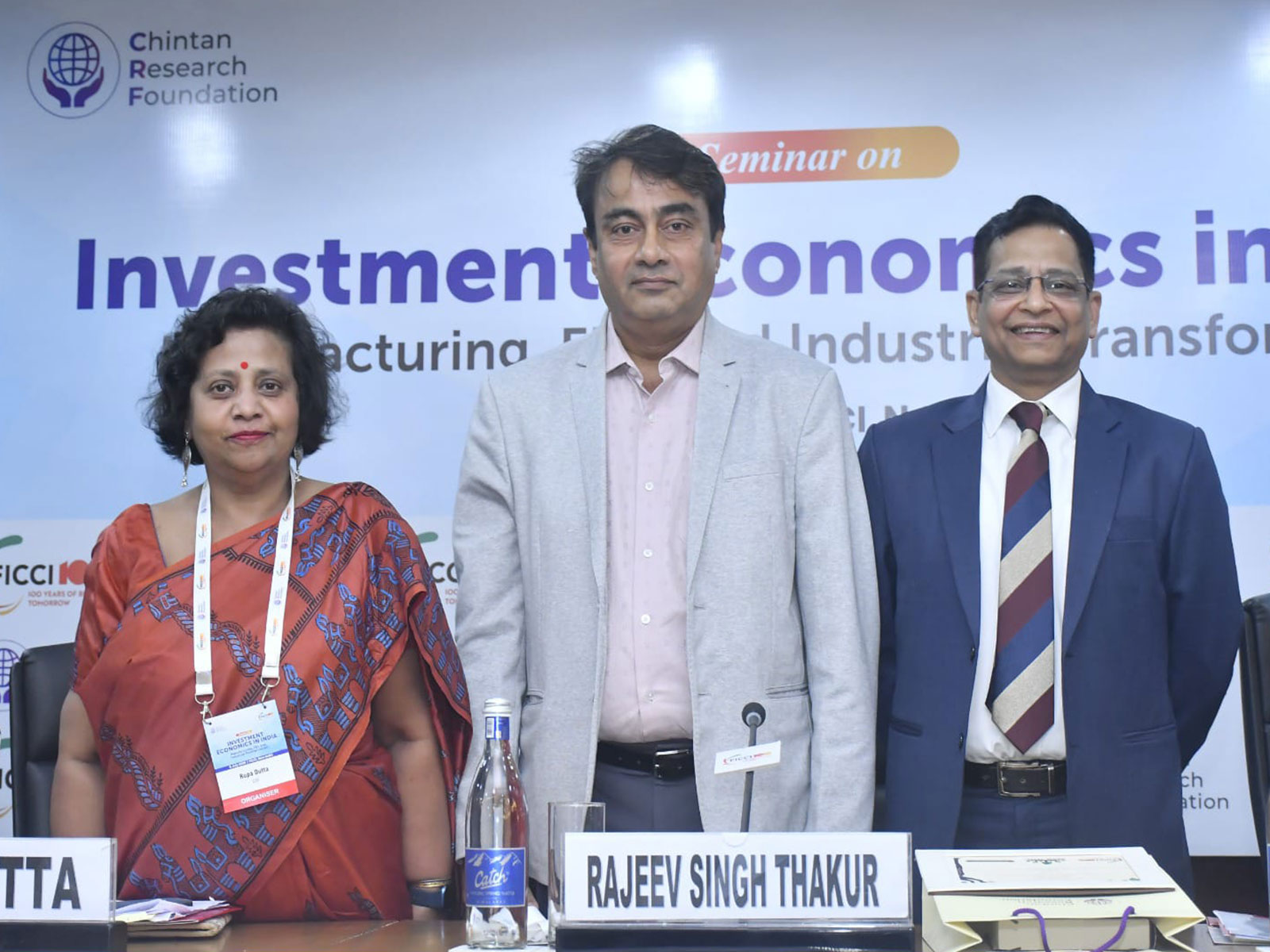
Speaking at a seminar jointly organised by FICCI and Chintan Research Foundation on ‘Investment Economics in India: Manufacturing, FDI and Industrial Transformation’, Rajeev Singh Thakur, Programme Director at NITI Aayog, said public spending had already delivered visible results.
“India’s sustained public capital expenditure has laid a strong foundation for growth, with visible improvements in infrastructure across the country,” he said. “The next phase of India’s growth story lay in catalyzing greater private investment through continued reforms, policy stability and an enabling business environment.”
Thakur pointed to measures like the Production Linked Incentive scheme, decriminalization of business laws and Jan Vishwas reforms. He said boosting private investment remained a priority and that government was working to address compliance bottlenecks at the ground level.
Citing a new institutional mechanism, he noted, “The deregulation cell operating at Cabinet Secretary level, under which government officers are assigned specific states to work with on identifying and removing redundant regulations,” was an example of Centre-State collaboration.
“Stronger Centre-State collaboration and a facilitative regulatory framework were creating the conditions for greater private investment, manufacturing competitiveness and export-led growth as India worked towards its goal of becoming a developed economy by 2047,” he added.
Anant Swarup, Secretary General of FICCI, said investment was now central to the growth narrative. “Investment had emerged as a defining pillar of India’s growth trajectory, and that a deeper understanding of private investment trends, sectoral challenges and the policy measures needed to unlock greater capital flows would be crucial to achieving the vision of Viksit Bharat by 2047.”
Rupa Dutta, Distinguished Fellow at CRF, highlighted the global context. She said the world was seeing “a fundamental reordering of the global economy, with production networks being reshaped and investment flows responding to new geopolitical realities and technological shifts.”
India, she said, was prepared with “a sustained reform agenda anchored in macroeconomic stability, rapid digital transformation and unprecedented investment in infrastructure.” Initiatives like PM Gati Shakti and the National Logistics Policy “had strengthened India’s competitiveness and enhanced investor confidence.”
In the session on domestic investment, Ms. Mercy Epao, Joint Secretary, Ministry of MSME, said MSMEs account for nearly half of India’s exports. The focus now is to help more firms become first-time exporters through certification, capacity building and better access to finance.
Surendra Kumar Ahirwar, Executive Director, Ministry of Railways, said “investment decisions were driven by confidence, informed risk assessment and the assurance of stable returns,” and urged industry to give broader, solution-oriented recommendations.
Panelists also gave detailed suggestions on catalyzing domestic investments and streamlining the FDI environment. (ANI)
Related reading