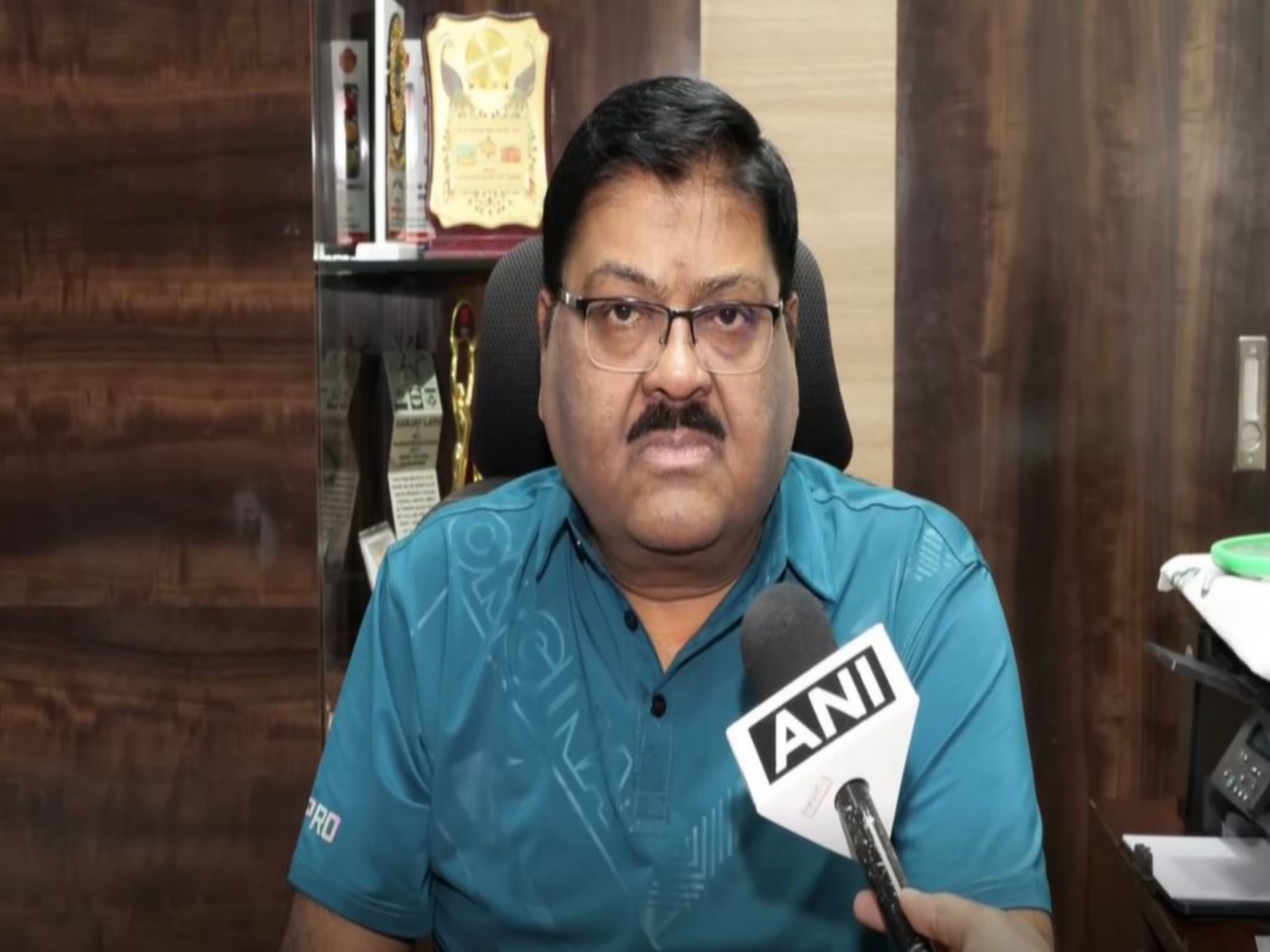
Bhubaneswar (Odisha) [India], July 5 (ANI): Utkal Petroleum Dealers’ Association General Secretary Sanjay Lath quashed the concerns circulating over the ethanol-blended petrol, saying that no customer at their petrol pumps has raised any complaints regarding engine damage due to E20 fuel.
Speaking to ANI on Saturday, he said that those alleging that the ethanol-blended petrol is harmful for vehicles have been unable to produce any proof to support their claims. However, he noted that three institutions produced reports on the long-term effects of E20, which suggests that older vehicles may experience some issues with the rubber parts, but there is no proof of damage as of now.
“E20 fuel began to be supplied fully from October-November 2025, and from 1 April 2026 the government made it mandatory for private players and all oil companies to sell only E20. Since the notification, some people have raised psychological concerns, often posting on social media without evidence,” he said.
Talking about his own experience with customers, he added, “At our own petrol pumps, none of the customers’ vehicles has shown any problems with E20. Those posting online also have no proof that E20 damages engines. Yes, three institutions produced reports on the long-term effects of E20, suggesting that older vehicles might experience problems, particularly on rubber parts. But there is no such proof of damage as of now.”
Earlier on Saturday, prominent energy industry veterans stepped forward to clear up public confusion and address consumer anxieties regarding India’s rapidly expanding E20 (20 per cent ethanol-blended) petrol mandate.
Speaking to ANI on the sidelines of a high-level media briefing in Mumbai, R Ramachandran, retired Director (Refineries) of BPCL, and Raj Kumar Dubey, retired Chairman of IGL and Director of BPCL, systematically dismantled pervasive myths surrounding the fuel by comparing empirical laboratory data against subjective roadside experiences.
Addressing widespread driver complaints of a 10 per cent drop in fuel economy, Ramachandran stated that extensive institutional testing shows only a marginal impact on mileage.
“These are unique cases which may require fixes of a different type,” he explained, pointing out that older vehicles, general wear and tear, or aggressive city driving distort real-world perceptions.
Dubey further added that motorists have already been buying blended fuel like E20 for over a year without realising it.
“Suddenly, you know, if you raise this question that, ‘No, the mileage is dramatically dropping’–now, those things, you know, are not subject to reason,” Dubey stated, urging consumers to trust testing agencies over individual opinions.
On environmental concerns, the veterans dismissed reports claiming that ethanol production wastes up to 10,000 litres of water per litre of fuel.
“Agricultural production water consumption should not be foisted on ethanol,” Ramachandran stated, highlighting that most new-age distilleries operate with 100% water recycling and zero-effluent discharge.
Finally, the experts emphasised the massive macroeconomic benefits of the policy against the government’s expected Rs 1.8 lakh crore to Rs 1.9 lakh crore in foreign exchange savings. Dubey focused on the buffer the policy provides against volatile global crude prices.
“If E20 was not there and 20 per cent of these additional things we had to import from abroad, what would the cost of petrol have been in this country? The prices would have gone up by more than 5 to 7 rupees more,” Dubey argued, concluding that keeping capital within the domestic economy directly enriches local sugarcane farmers. (ANI)
Related reading