
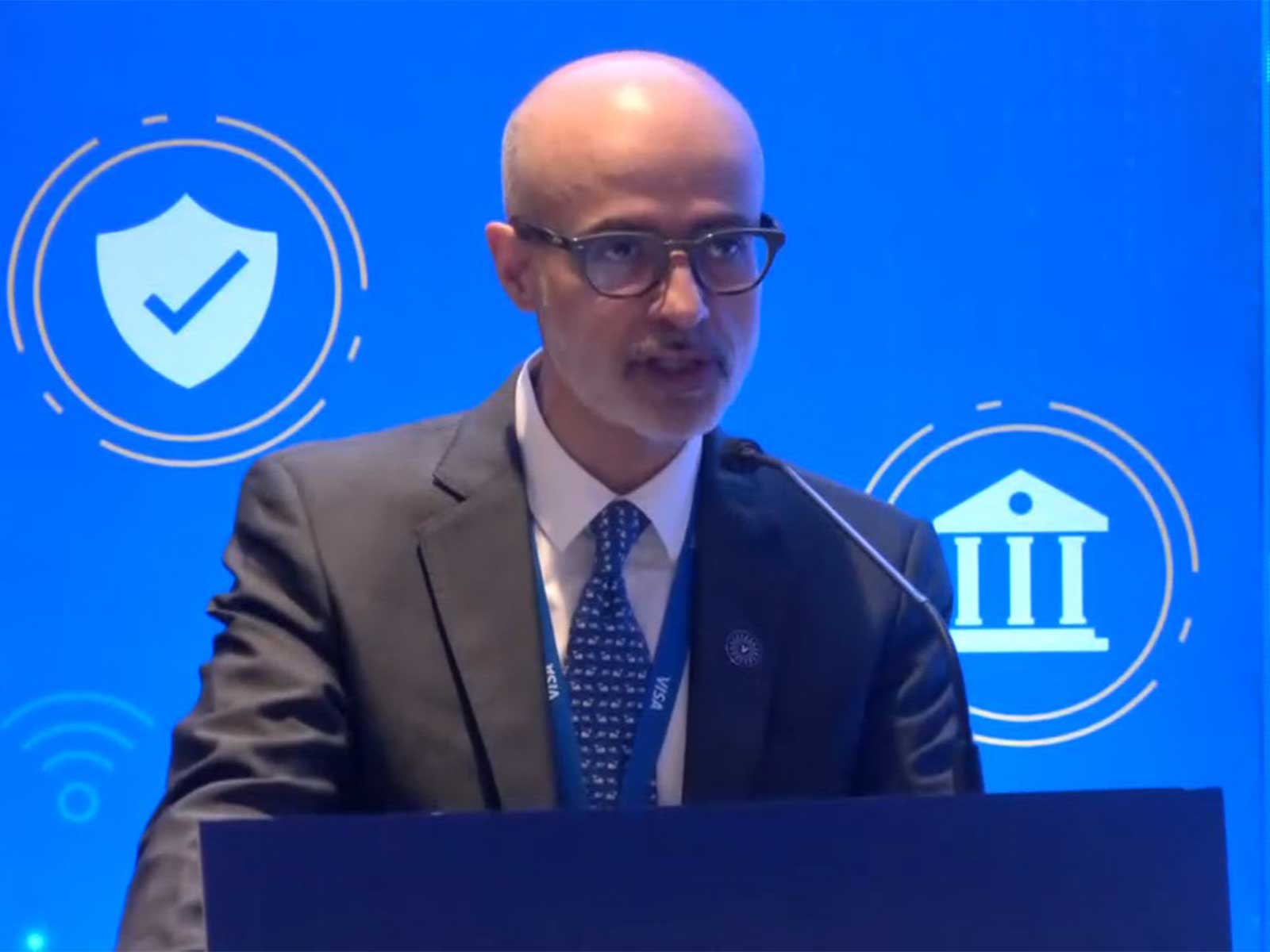
Mumbai (Maharashtra) [India], July 2 (ANI): India has become the world’s most tokenised market for online card payments, with more than 900 million payment tokens in circulation, stated Suresh Sethi, Group Country Manager for India and South Asia at Visa.
Speaking at the launch of Visa Payment Passkey in Mumbai on Thursday, Suresh Sethi said the country’s digital payments ecosystem has evolved significantly and is now entering a new phase focused on trust and security.
He stated, “Today, India is the world’s most tokenised market for online card payments with more than 900 million payment tokens and almost 500 million Visa tokens as part of that”.
He said widespread mobile connectivity has brought hundreds of millions of Indians into the digital economy, with the evolution of digital payments taking place in three distinct phases.
According to Sethi, the first phase focused on financial inclusion through the Jan Dhan-Aadhaar-Mobile (JAM) trinity, while the second phase was driven by scale through initiatives such as UPI, tokenisation and widespread digital acceptance, making electronic payments a mainstream mode of transaction.
He said India is now entering the third phase, where strengthening trust in digital payments has become the key priority.
“The Reserve Bank of India’s progressive regulatory framework has played a very instrumental role in strengthening the security of digital payments. Tokenisation is a very powerful example,” Sethi said.
He added that the RBI’s framework has enabled alternative mechanisms for additional factor authentication beyond one-time passwords (OTP), opening the next chapter in India’s digital payments journey.
He also shared that the newly launched Visa Payment Passkey enables consumers to authenticate online card transactions using biometric methods such as fingerprint or facial recognition, or through a device PIN or pattern instead of OTPs.
Sethi said the technology is built on globally accepted FIDO standards and is designed to strengthen protection against OTP phishing while making digital payments faster and more seamless.
“It enables consumers to authenticate transactions by using the secure capabilities already built into the device they use every day, whether through fingerprint, facial recognition, device PIN or pattern. This strengthens protection against risks arising from OTP phishing while improving the overall user experience,” he said.
Looking ahead, Sethi said artificial intelligence is transforming digital commerce, and authentication systems need to evolve accordingly.
He noted that intelligent assistants and connected devices will increasingly participate in commerce, making secure, seamless and resilient authentication more important than ever. (ANI)
Related reading