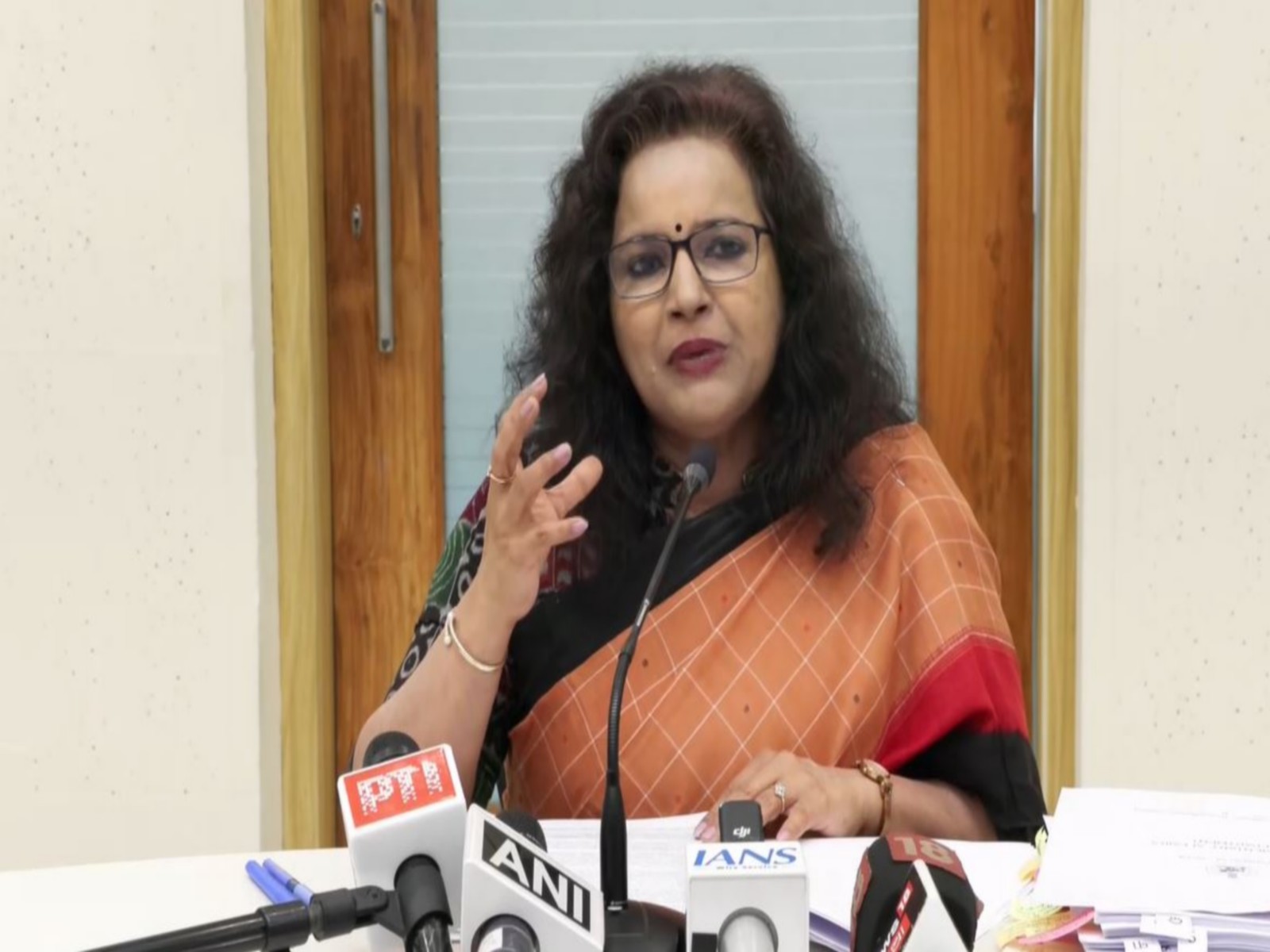
Bhubaneswar (Odisha) [India], July 2 (ANI): Odisha Chief Secretary Anu Garg on Thursday said that the Odisha government has approved 12 major development proposals, including an ambitious Rs 2,295 crore deep-sea fishing mission, a major regulatory shift to scale up shrimp farming, a state-of-the-art Rs 268 crore data centre, and the extension of the midday meal scheme to higher classes.
The landmark decisions were made during the 43rd State Cabinet meeting.
Addressing the media on the approved projects, Garg said that the government approved a comprehensive regulatory framework and operational guidelines to promote white-leg shrimp culture in inland saline waters, brackish waters, and areas beyond the Coastal Aquaculture Authority’s jurisdiction.
“The meeting approved 12 proposals, one of which related to the Fisheries and Animal Husbandry Department. This is a very important project, where a comprehensive regulatory framework and operational guidelines have been approved for the promotion and culture of wild white-leg shrimp in the state,” she said.
She added that the allowed cultivation zone has been extended from 2 km to 10 km beyond the high tide line to facilitate this. The production is projected to surge from 1.6 lakh tonnes to 9 lakh tonnes per annum, expanding cultivation by 25,000 hectares and driving seafood exports to Rs 25,000 crore by 2036, when Odisha marks its centenary.
“This applies to inland saline waters, brackish waters, and areas beyond the jurisdiction of the Coastal Aquaculture Authority. The vision includes setting up a shrimp export mission, and to promote this, it was necessary to increase the area under shrimp cultivation. Previously, cultivation was permitted up to 2 km beyond the high tide line; now this has been extended to 10 km. This regulation will allow more people to take up shrimp farming. It is hoped that brackish water shrimp production will rise from 160,000 tonnes per annum to 900,000 tonnes per annum. The farming area will increase by 25,000 hectares, enhancing seafood exports from Rs 4,000 crore to Rs 25,000 crore by 2036, when Odisha turns 100,” she said.
Further, Garg said that the State government launched a Rs 2,295-Crore Deep-Sea Fishing Mission to introduce modern deep-sea fishing vessels, upgraded trawlers, mother vessels, seafood parks, and cold chain networks.
“Another major proposal approved by the cabinet is the deep-sea fishing mission. Deep-sea fishing has not been widely practised in Odisha, so this mission, worth Rs 2,295 crore, has been launched in a mission mode by combining various central and state schemes. It will provide modern deep-sea fishing vessels, upgraded trawlers, mother vessels, fishing harbours, seafood parks, cold chain infrastructure, value addition facilities, digital fishery governance, vessel monitoring systems, and marine conservation measures,” she said.
Supported by a newly planned Blue Economy Hub (B-Hub) knowledge centre, the mission is expected to create 50,000 jobs, generate an additional 2 lakh metric tonnes of marine fish production, and scale annual marine exports to Rs 5,000 crore by 2036.
“A Blue Economy Hub (B-Hub) will also be set up as a knowledge centre. This mission is expected to generate an additional 2 lakh metric tonnes of marine fish production, create 50,000 jobs, and raise marine exports to around Rs 5,000 crore annually by 2036. The cabinet also approved a new Tier-3 compliant state-owned data centre in Bhubaneswar, called Data Centre 2.0, at a cost of Rs 268 crore. This will support growing government-to-government, government-to-business, and government-to-citizen digital services,” she added.
She added that the State government has approved Two major road projects in Bhubaneswar, including the Kalinga Stadium to Raghunathpur Bridge corridor, and the Jayadev Vihar-Nandankanan Road project costing Rs 579 crore and to be completed in 24 months.
“These will include flyovers, underpasses, parking, subways, and commercial development to decongest traffic and improve connectivity. In Sundargarh district, a 6.8 km diversion road (Dudka-Gopalpur-Topariya) costing Rs 160 crore was approved to support mining, tourism, and local connectivity,” she said.
Two in-stream storage structures were approved by the Water Resources Department, including one in Belgaon, Kesinga block of Kalahandi (Rs 256 crore, 3-year timeline) and another on the River Om at Jamutpalli, Bargarh (Rs 159 crore, 2.5-year timeline) to conserve water, recharge groundwater tables, and supply sustainable drinking water to 41 villages.
The Revenue Department allocated 200 acres of land to facilitate the construction of three massive 765 kV grid substations to strengthen the state’s power network, she said.
She added that the School and Mass Education Department’s midday meal scheme has been extended to include students in classes 9 and 10. The cabinet approved the continuation of this vital nutritional program for the next four years, covering 7.41 lakh children at an estimated cost of Rs 4,224 crore over a five-year period. (ANI)
Related reading