
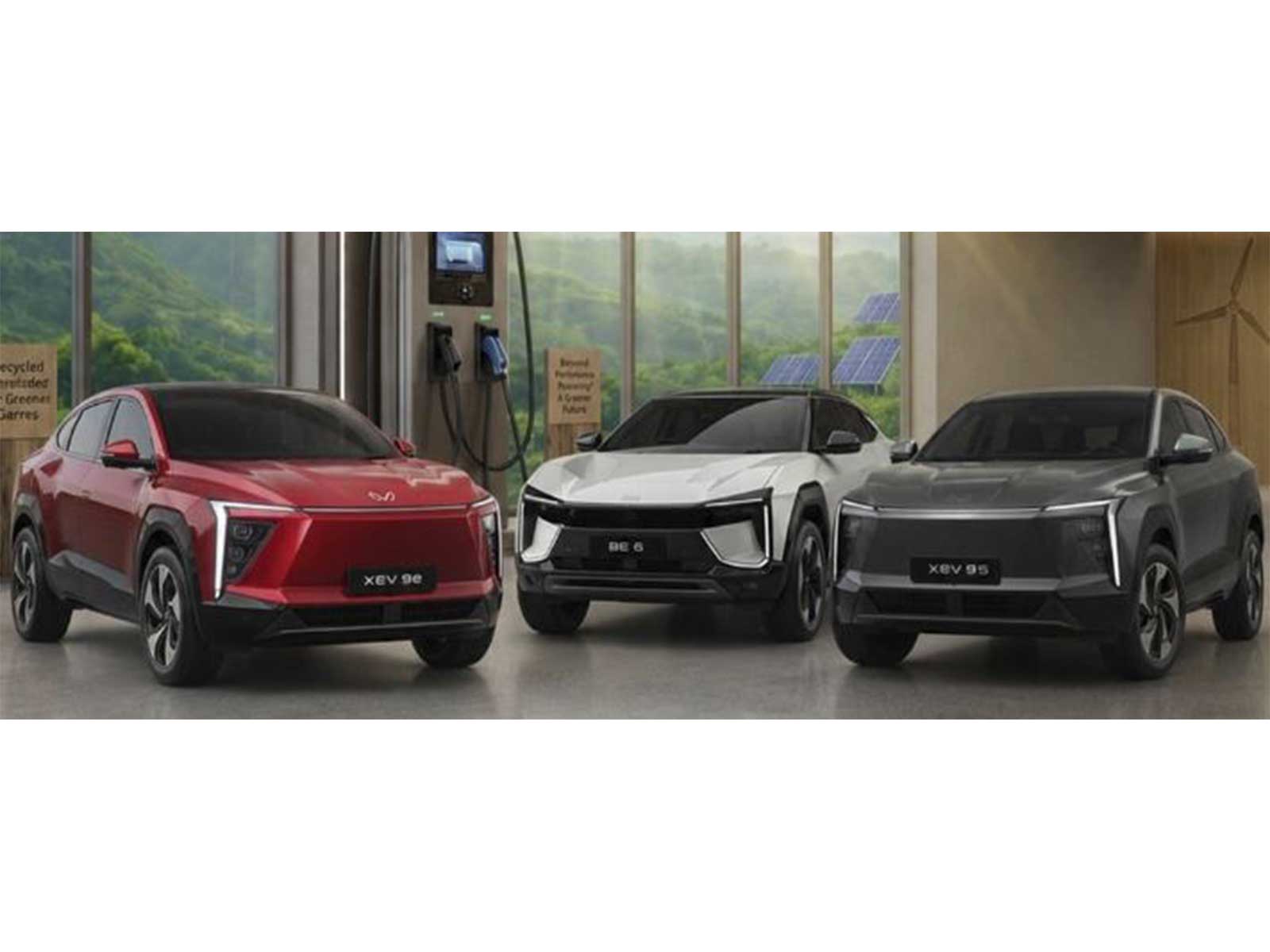
New Delhi [India], July 1 (ANI): Mahindra is steadily narrowing the gap with Tata Motors in India’s electric passenger vehicle market, even as Tata continues to hold a commanding lead, according to Vahan registration data for the first quarter of FY27 (April 2026 to June 2026) released today.
The data shows that Mahindra’s electric vehicle (EV) registrations nearly doubled to 20,112 units in Q1 FY27 from 10,144 units in the same period last year, marking a growth of about 98 per cent.
Tata Motors, meanwhile, retained its position as the country’s largest EV maker, with registrations rising to 32,283 units from 15,794 units a year earlier, reflecting a growth of over 104 per cent.
While Tata remains comfortably ahead in absolute volumes, Mahindra’s strong growth indicates that competition in India’s EV market is becoming more intense, with the gap between the two manufacturers increasingly driven by scale rather than growth momentum.
The Vahan data also suggests that Tata’s overall passenger vehicle growth is no longer being driven by EVs alone.
Tata’s combined passenger vehicle registrations (ICE and EV) rose from 1,24,984 units in Q1 FY26 to 1,74,299 units in Q1 FY27, an increase of 49,315 units. Of this, EVs accounted for 16,489 additional vehicles, meaning nearly two-thirds of Tata’s incremental registrations came from its internal combustion engine (ICE) portfolio i.e. traditional vehicle powered by burning fossil fuels, such as petrol, diesel, or CNG, rather than an electric motor.
The trend suggests Tata’s conventional petrol, diesel and CNG models have played an equally important role in supporting the company’s overall growth, even as it continues to dominate the EV segment.
Among other automakers, MG Motor India remained the third-largest EV player with 16,502 registrations in Q1 FY27, up from 13,499 units a year earlier. However, its growth of around 22 per cent lagged significantly behind both Tata and Mahindra.
The data also highlights the rapid emergence of new competitors.
Maruti Suzuki, which had no electric passenger vehicle registrations in the corresponding quarter last year, recorded 4,894 EV registrations in Q1 FY27 following the launch of its first electric model. Monthly registrations also showed a steady increase from 1,335 units in April to 1,896 units in June, indicating a gradual ramp-up in deliveries.
Vietnamese automaker VinFast, another new entrant, registered 3,973 electric passenger vehicles during the quarter, while BYD recorded 2,173 units in registrations.
In contrast, Hyundai emerged as the only major passenger vehicle manufacturer to report a decline in EV registrations.
Its EV registrations fell to 1,386 units in Q1 FY27 from 2,142 units a year earlier, a decline of about 35 per cent. Monthly registrations also slipped consistently through the quarter, falling from 565 units in April to 347 units in June.
The broader passenger vehicle market also saw strong growth during the quarter.
Maruti Suzuki remained the country’s largest passenger vehicle manufacturer with 4,98,632 registrations in Q1 FY27, followed by Tata Motors at 1,74,299 units, Mahindra at 1,65,402 units, Hyundai at 1,40,552 units, Toyota at 84,474 units and Kia at 75,122 units, according to the Vahan registration data. (ANI)
Related reading