India PR Distribution
New Delhi [India], June 29: Built without venture capital, powered by indigenous engineering and validated through two successful rocket launches, Chennai-based Space Zone India is emerging as one of India’s most promising private aerospace companies.
While much of India’s startup ecosystem has been driven by venture capital and rapid scaling, Space Zone India (SZI) has followed a distinctly different path–one centred on engineering excellence, sustained research and technological validation before seeking external investment.
Founded in 2018 by aerospace technologist Anand Megalingam, the company has remained entirely bootstrapped, reinvesting revenue generated through engineering services, technology programmes and space education initiatives into research and development. Over the past seven years, this disciplined approach has enabled the company to develop indigenous hybrid rocket technologies, establish advanced research infrastructure and build a strong portfolio of intellectual property–all without diluting equity or relying on institutional funding.
Today, Space Zone India stands at a pivotal stage in its journey. Having successfully demonstrated its capabilities through two hybrid rocket missions and built an integrated aerospace research ecosystem, the company has entered formal discussions with investors to accelerate manufacturing, expand commercial launch capabilities and scale its next generation of indigenous space technologies.
International Recognition
The company’s recent momentum follows an important international milestone.
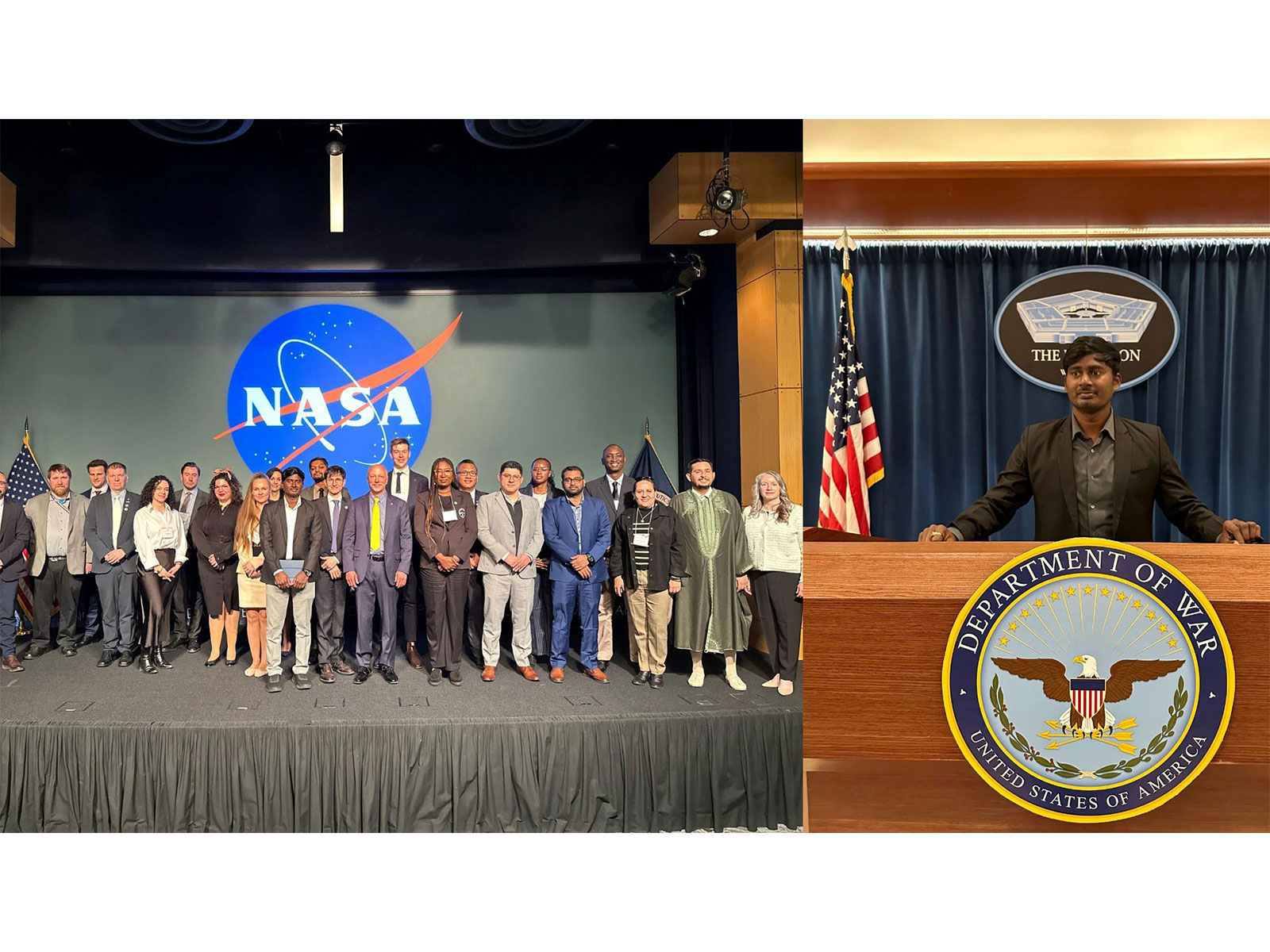
Founder and Chief Executive Officer Anand Megalingam was selected by the Department of State, United States for the prestigious International Visitor Leadership Program (IVLP), one of the U.S. Government’s flagship professional exchange programmes.
During the month-long programme, with all expenses borne by the U.S. Government, Megalingam interacted with scientists, researchers and senior officials from NASA, the U.S. Space Force, the U.S. Navy, the U.S. Air Force, national laboratories and leading aerospace organisations. The programme provided first-hand exposure to advanced propulsion systems, commercial launch infrastructure, aerospace innovation ecosystems and emerging defence technologies.
Following the visit, he returned to India to continue expanding the company’s indigenous technology programmes while preparing for its next phase of commercial operations and for our nation.
Building Technology Before Raising Capital
What distinguishes Space Zone India is its philosophy of proving technology before pursuing investment.
Rather than raising capital during its formative years, the company concentrated on building engineering capability, validating hardware and developing indigenous intellectual property. Every profitable project funded the next phase of research, enabling the organisation to establish laboratories, recruit specialised engineers and develop advanced testing infrastructure.
Today, the organisation employs more than 30 engineers and researchers working across propulsion systems, avionics, embedded electronics, structural engineering, satellite technology, software development, systems integration and launch operations.
According to Anand Megalingam, the strategy has always been simple:
“From day one, every rupee we spent went into building and proving the technology–not into fundraising. We wanted to own the proof before inviting investors into the conversation.”
Why Hybrid Propulsion?
At the heart of the company’s technology is its indigenous hybrid propulsion system, which combines operational simplicity with lower lifecycle costs.
Unlike liquid propulsion systems that require expensive turbomachinery and complex cryogenic infrastructure, hybrid propulsion eliminates many of those cost drivers. Compared with solid propulsion, it offers improved operational flexibility without many of the regulatory constraints associated with pyrotechnic systems.
“Our oxidiser is semi-cryogenic, which significantly simplifies ground operations,” explains Anand Megalingam.
“More importantly, the vehicle is designed for recovery, refurbishment and reuse. After the first flight, subsequent missions require refurbishment rather than building an entirely new rocket.”
This approach has the potential to improve mission economics by reducing recurring launch costs while increasing operational efficiency.
Research Infrastructure
A visit to the company’s facility reveals an engineering ecosystem rarely seen in a young private aerospace organisation.
The campus houses dedicated laboratories for hybrid propulsion, avionics, embedded electronics, satellite integration, guidance and navigation systems, software development and systems engineering.
Alongside these laboratories are assembly facilities where propulsion hardware, structural components and flight systems are integrated.
One of the facility’s most notable assets is its indigenous hybrid rocket static fire testing facility, where propulsion systems undergo extensive qualification before flight.
Engineers conduct combustion analysis, injector optimisation, thrust characterisation and propulsion validation through repeated static-fire campaigns before integrating motors into flight vehicles.
Industry experts note that developing such testing infrastructure independently represents a significant achievement for a privately funded aerospace company.
Learning Through Engineering
The journey, however, was far from straightforward. Early development presented numerous technical challenges, including combustion pressure anomalies, injector redesigns, recovery-system optimisation and avionics refinement.
Rather than viewing setbacks as failures, the engineering team treated them as essential components of the development process.
“We redesigned injector heads multiple times, refined combustion performance and extensively tested recovery systems before committing to flight,” says Anand Megalingam.
“Every anomaly was identified during ground testing, documented and resolved before flight.”
The result was a disciplined engineering programme that evolved steadily from laboratory research to successful launch demonstrations.
Two Successful Rocket Missions
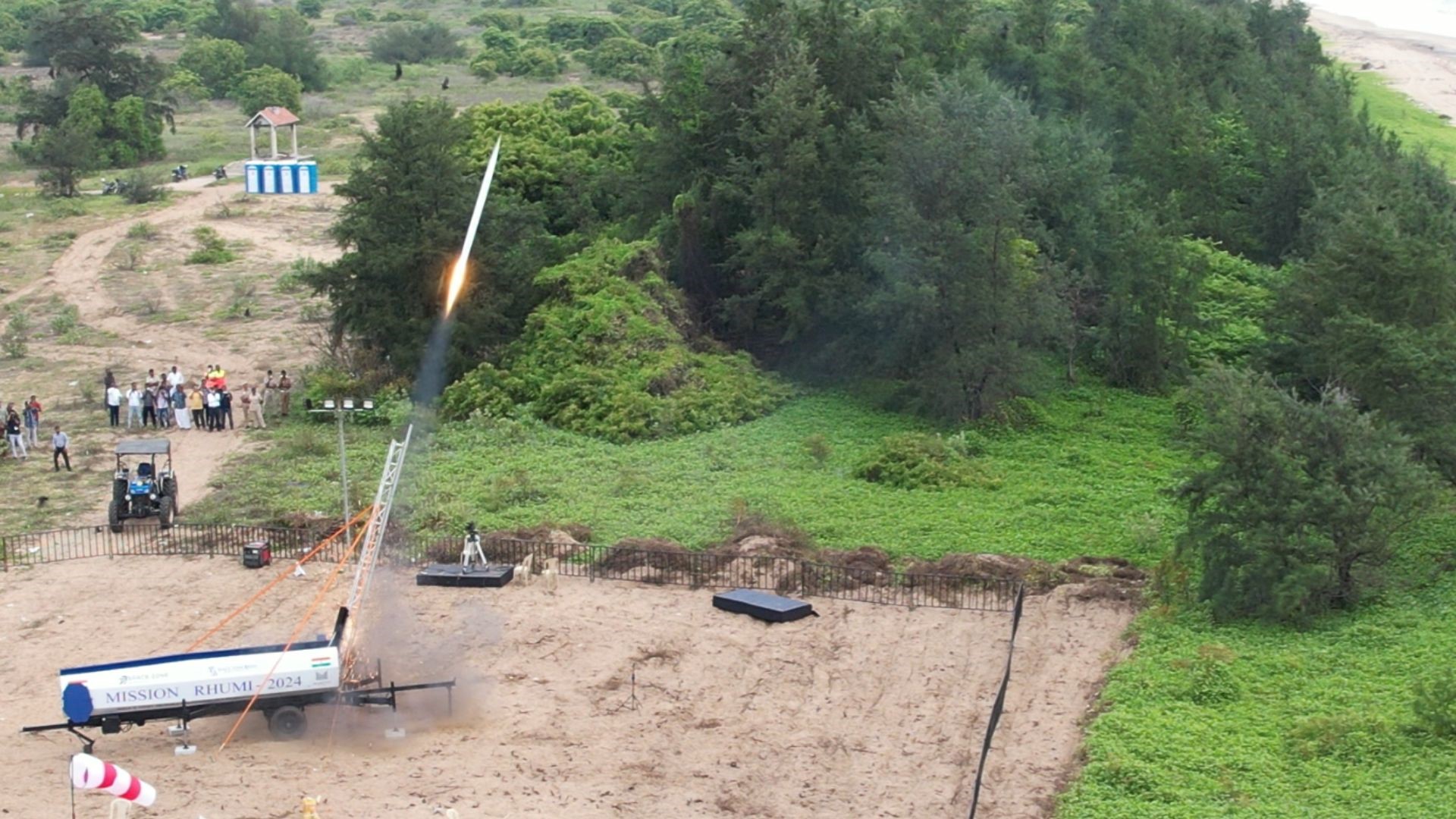
Years of engineering culminated in two successful hybrid rocket launches from the Chennai coast.
The company’s first milestone came with the AKSLV (Dr. APJ Abdul Kalam Satellite Launch Vehicle), recognised as India’s first privately developed hybrid rocket.
This was followed by RHUMI-1, India’s first reusable hybrid rocket launched from a mobile hydraulic platform.
The mission successfully demonstrated indigenous hybrid propulsion, reusable recovery technology, mobile launch capability and atmospheric research payload deployment. Together, the two missions validated years of propulsion research and established the technological foundation for future launch vehicles.
Guided by India’s Scientific Leaders
The organisation receives guidance from several distinguished scientists and strategic advisors, including Padma Shri Dr. Mylswamy Annadurai, former DRDO Chairman Dr. G. Satheesh Reddy, former Police DGP. Shri A.S.Rajan IPS and senior engineering experts and experienced public-sector administrators.
According to company officials, this advisory network has played an important role in strengthening both technological development and organisational governance.
Your hybrid rocket technology is vertically launched, similar in some respects to missile systems. Does this technology have potential applications in the defence sector?
Responding to the question, Dr. Anand Megalingam said:
Our current focus is on advancing and maturing our hybrid propulsion technology for space applications. As we continue to improve the propulsion system, its performance and reliability, we will gain a clearer understanding of the broader applications that the technology may support in the future.
It would be premature to rule out future opportunities. Propulsion technology is a foundational capability with applications across multiple sectors. As our technology evolves, we will evaluate suitable opportunities based on technical feasibility, regulatory requirements and national priorities.
At present, we are progressing along two strategic verticals–space technology and advanced engineering. We will continue strengthening both areas and pursue future applications where our indigenous technology can create meaningful value.
Entering a Trillion-Dollar Opportunity
The global space economy is projected to exceed US$1.8 trillion by 2035, driven by growing demand for satellite launches, reusable launch systems, Earth observation and national security applications. India’s commercial space sector, currently valued at approximately US$8.4 billion, is expected to expand rapidly as private participation continues to increase.
Space Zone India is focused on developing indigenous launch systems capable of supporting missions of up to 700 kilometres, addressing opportunities in small satellite launches, atmospheric research and commercial space services.
Building on the global exposure gained through the U.S. Department of State’s International Visitor Leadership Program (IVLP), Founder and CEO Anand Megalingam aims to implement international best practices in propulsion, launch systems and advanced engineering. In addition to the commercial space market, the company sees long-term opportunities in strategic aerospace and defence technologies, subject to regulatory approvals and national priorities.
Investment Phase
Having completed its research phase and demonstrated flight-proven technology, the company has now entered formal investment discussions.
Unlike many early-stage aerospace ventures, the proposed funding is intended to scale an already validated platform rather than finance basic technology development.
“We now have two successful flight demonstrations, indigenous intellectual property and an engineering team that has spent seven years building this platform,” says Anand Megalingam.
The R&D phase is complete. Investment now enables final testing and manufacturing expansion, increased launch cadence, development of Game Changing Propulsion Technology towards orbital capability and growth into advanced defence technologies. Investors entering today are not funding a hypothesis–they are funding expansion.
A Different Startup Story
As a interviewer, what stands out about Space Zone India is not simply that it has launched rockets.
It is the manner in which the company has reached this stage.
In an ecosystem where startup success is often measured by funding rounds and valuations, this Chennai-based organisation has spent years quietly building laboratories, testing facilities, propulsion systems and launch vehicles before seeking institutional capital.
Space Zone India now aims to become one of India’s leading commercial launch providers in the coming years. Yet its journey–from a bootstrapped engineering venture to a company preparing to participate in one of the world’s fastest-growing technology sectors–illustrates how indigenous innovation, disciplined engineering and long-term technological commitment can create a foundation for global competitiveness.
(ADVERTORIAL DISCLAIMER: The above press release has been provided by India PR Distribution. ANI will not be responsible in any way for the content of the same.)
Related reading