Jaipur (Rajasthan) [India], June 26 (ANI): Rajasthan is set to witness a major push towards long-term water security as the state government prepares to sign key agreements and accelerate several large-scale water infrastructure projects on June 29, 2026.
The day is being described by the state administration as a “historic milestone” for Rajasthan, which spans nearly 10 per cent of India’s landmass but has only 1.16 per cent of the country’s surface water resources. For decades, the state has faced acute water scarcity, making water conservation and management a central policy focus.
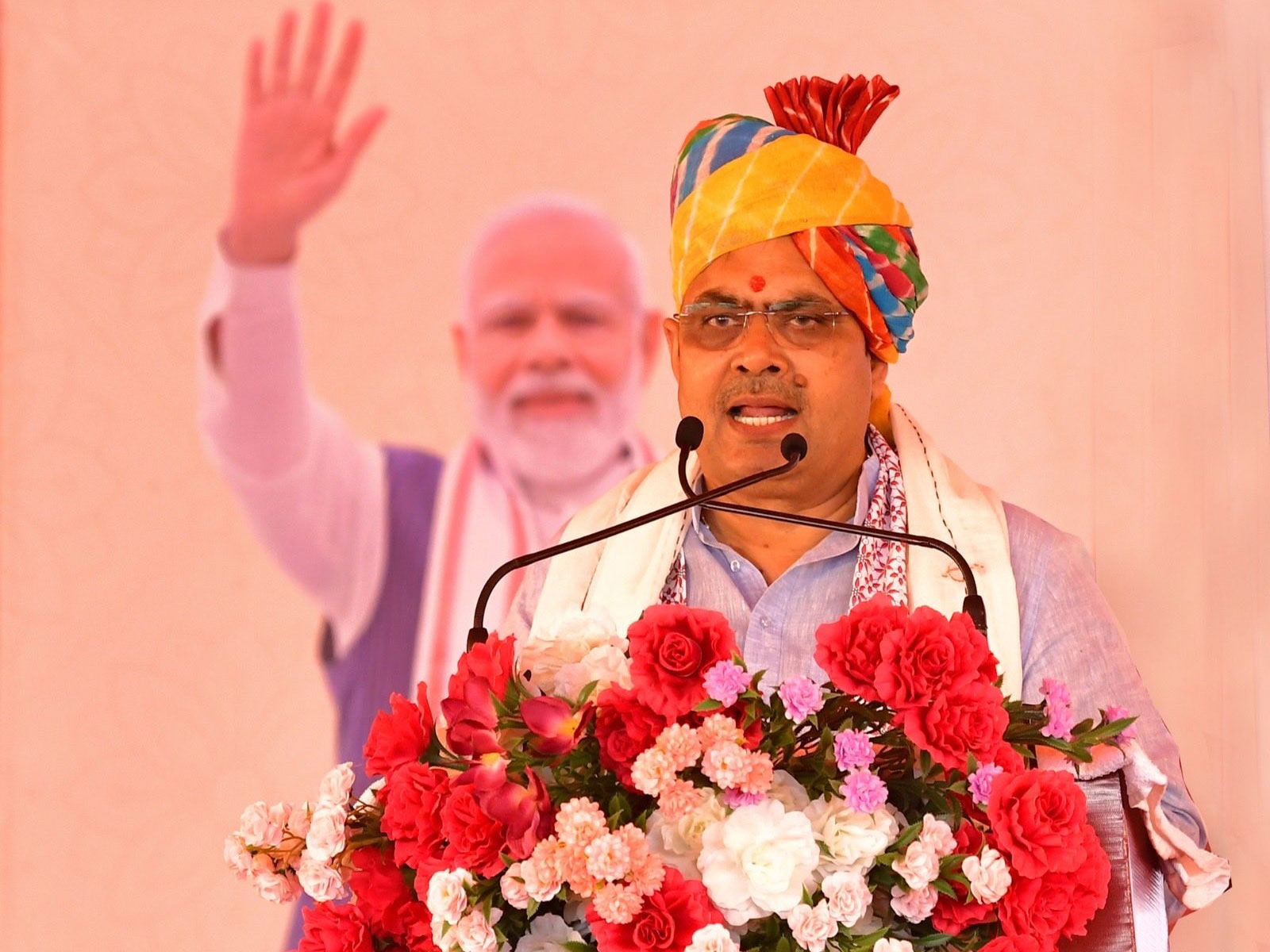
Under the leadership of Chief Minister Bhajan Lal Sharma, the state has intensified efforts over the past two and a half years to address the crisis, with emphasis on cooperation between the Centre and the state government, officials said.
A key development is the upcoming signing of a Memorandum of Understanding (MoU) between Rajasthan and Haryana on the sharing of the Yamuna River water. The agreement, finalised on June 23, will be signed in the presence of Union Home Minister Amit Shah.
Under the pact, Rajasthan will receive its allocated share of water from the Hathnikund Barrage as per the 1994 agreement. To transport water to drought-prone regions of Shekhawati–covering Sikar, Jhunjhunu and Churu districts–a 265-kilometre underground pipeline is planned. The Detailed Project Report (DPR) for the project was finalised by May 2026, with work currently underway, officials said.
The estimated cost of the project is around ₹32,000 crore, and it is being implemented on a fast-track basis.
Alongside this, Rajasthan is also advancing work on the Renukaji, Lakhwar and Kishau multipurpose dam projects. On June 16, six states signed an MoU in New Delhi for the long-pending Kishau Dam project under the mediation of the Union Home Minister. The Centre is expected to bear 90 per cent of the water-related expenditure for the project, while Rajasthan has already approved its share of funding. Once completed, the project is expected to provide an additional 201 million cubic metres of water to the state.
The government also highlighted progress on the Eastern Rajasthan Canal Project (ERCP), now renamed the Ram Jal Setu Link Project. Conceived in the 1980s and long delayed, the project gained momentum after the foundation stone for works worth ₹46,300 crore was laid in Jaipur in December 2024.
The project aims to provide drinking water to nearly 30 million people across 17 districts in eastern Rajasthan and irrigate around 4 lakh hectares of land. Major structures, including a 2,280-metre-long aqueduct over the Chambal River between Kota and Bundi, are currently under construction and targeted for completion by 2027-28.
Officials said the project is also expected to support industrial development in regions linked to the Delhi-Mumbai Industrial Corridor.
In addition to large infrastructure projects, the state government is promoting water conservation at the grassroots level through initiatives such as the Chief Minister Water Self-Reliance Campaign 2.0, Vande Ganga Water Conservation Campaign, and Amrit Sarovar scheme, under which at least 125 water conservation structures are being developed in each district.
Restoration of traditional water bodies such as stepwells, johads and ponds is also being undertaken alongside expansion of piped drinking water supply under the Jal Jeevan Mission.
The government said the combined efforts reflect a long-term strategy for “water security” in Rajasthan, moving beyond short-term measures towards sustainable management of water resources for future generations. (ANI)
Related reading