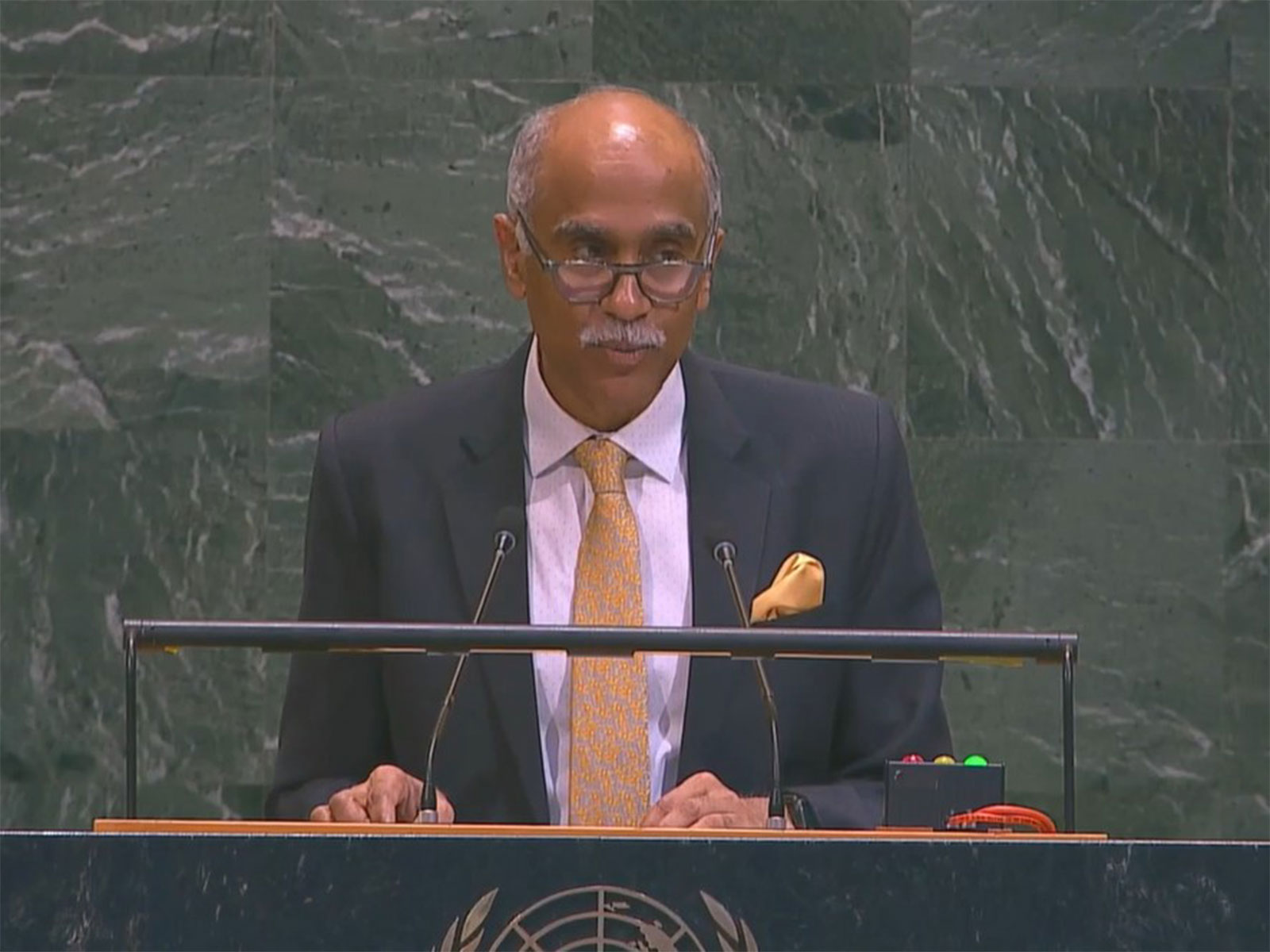
New York [US], June 26 (ANI): Ambassador Harish Parvathaneni, India’s Permanent Representative to the United Nations, addressed the UN debate on “Peacebuilding and Sustaining Peace” on Thursday (local time), emphasising that long-term success in conflict-affected regions depends on prioritising national ownership and institutional resilience.
In a post on X, the Permanent Mission of India to the United Nations, New York, stated that Ambassador Parvathaneni attended the PBC Annual Session marking 20 years of the UN Peacebuilding Architecture during the inaugural Peacebuilding Week and highlighted that “peacebuilding must be demand-driven & anchored in national ownership; Partnerships should rest on trust, dignity & equality, and move beyond donor-recipient approach; True test of peacebuilding: building national capacity & institutional resilience; India emains committed to the Women, Peace and Security Agenda especially in Peacebuilding.”
https://x.com/IndiaUNNewYork/status/2070332063010431372
During the General Assembly debate, Ambassador Parvathaneni commended the progress made during the 19th Session of the Peacebuilding Commission, noting the successful completion of the fourth review of the peacebuilding architecture and the presentation of the first national peacebuilding strategy. He also welcomed the General Assembly’s approval of a $50 million assessed contribution to the Peacebuilding Fund.
However, the Ambassador expressed deep concern regarding the financial health of the UN’s peacebuilding efforts. Pointing to a report from the Secretary-General, he highlighted a three-year decline in voluntary contributions and noted that the organisation’s ongoing liquidity crisis has further constrained the availability of funds.
To maximise impact under these fiscal limitations, he urged that resource prioritisation be firmly directed toward “post-conflict settings.”
“The Secretary General’s report on the Peacebuilding Fund notes a decline in voluntary contributions over the past three years. At the same time, the Organization’s ongoing liquidity situation has constrained the availability of assessed contributions for peacebuilding activities. This is a concerning pattern. To ensure greater impact within reduced resources, resource prioritization should be directed to post-conflict settings. We would like to see further progress on this front during the development of the Fund’s next Strategy,” he said.
Addressing the theme of “UN Peacebuilding@20: Partnerships for Innovation, Inclusion and Impact,” Ambassador Parvathaneni stressed that effective peacebuilding must move beyond the traditional donor-recipient model. He argued that the process should be demand-driven, reflecting the specific priorities and needs defined by national governments, while the international community provides necessary financial and technical support.
The Ambassador underscored that building institutional resilience and national capacity must be the cornerstone of these efforts. He reaffirmed that fostering trust-based partnerships is only possible if national ownership remains the central principle of all peacebuilding activities.
“We recognize the importance of fostering trust-based partnerships to advance peacebuilding and sustain peace. Such partnerships can be built provided national ownership remains the central principle across all peacebuilding activities,” he said.
“Moreover, peacebuilding must move beyond the traditional donor-recipient approach. It should be demand-driven, reflecting the needs and priorities of national governments, with the international community playing a supportive role by providing financial and technical assistance. Additionally, peacebuilding should prioritize building institutional resilience and national capacity in post-conflict settings,” he added.
Closing his remarks, Ambassador Parvathaneni highlighted India’s active role in the Women, Peace, and Security agenda. He noted that the recognition of India’s Major Abhilasha Barak as the 2025 Military Gender Advocate of the Year reaffirms India’s commitment to these goals.
He concluded by reiterating India’s readiness to collaborate with all international partners and share its unique experience in nation-building to advance the cause of sustainable peace.
“Earlier this month, India’s Major Abhilasha Barak was named the 2025 Military Gender Advocate of the Year. It reaffirms our commitment to the Women, Peace, and Security agenda, especially in peacebuilding. We stand ready to work with all partners on peacebuilding and to share our unique experience in nation-building,” the Ambassador affirmed.
The first annual UN Peacebuilding Week (June 22 – 26) serves as a dedicated platform to advance dialogue, share experiences, and strengthen partnerships across the global peacebuilding community. The primary purpose of this inaugural event is to commemorate the 20th anniversary of the UN Peacebuilding Commission and the Secretary-General’s Peacebuilding Fund, both established in 2006. (ANI)
Related reading