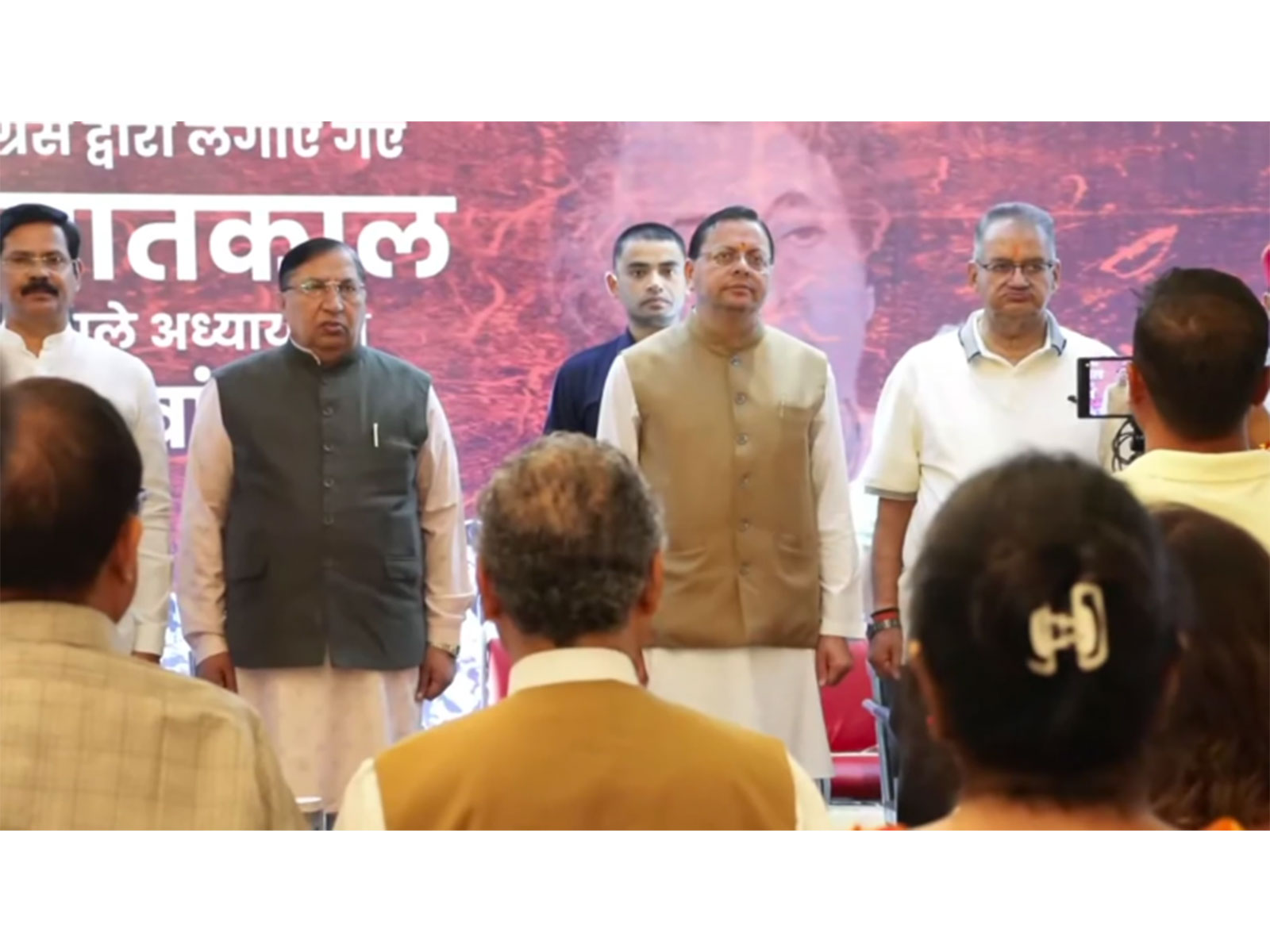
Dehradun (Uttarakhand) [India], June 25 (ANI): Uttarakhand Chief Minister Pushkar Singh Dhami on Thursday participated in the Samvidhan Hatya Diwas (Constitution Murder Day) programme held in Dehradun.
The event marked the anniversary of the Emergency imposed on June 25, 1975, during which fundamental rights and freedom of expression were curtailed.
Addressing the gathering, the Chief Minister said that this dark chapter in India’s democratic history can never be forgotten and serves as a reminder of the importance of safeguarding democratic values and constitutional principles.
“This day is not just an occasion to remember a dark chapter, but also to reaffirm our collective commitment to the protection of democracy and its values… It is only because of the sacrifice, courage, and dedication of the fighters for democracy that democracy has been restored in India,” said Dhami.
The Emergency, which is considered to be one of the most controversial periods of independent India’s history, was imposed by former Prime Minister Indira Gandhi from June 25, 1975, to March 1977.
It brought significant changes to India’s constitutional, legal and administrative systems. There were political arrests, mass forced sterilisation and beautification drives, among others, during the period.
Following its withdrawal, an inquiry was set up, and legal provisions were amended to regulate future use of Emergency powers.
The Government of India officially designated June 25 as Samvidhan Hatya Diwas (Constitution Murder Day) to commemorate the historic event and reaffirm the nation’s commitment to democratic values.
On June 25, 1975, the then-President Fakhruddin Ali Ahmed issued the Emergency Proclamation under Article 352, citing “internal disturbance.”
The then Prime Minister Indira Gandhi is widely criticised for the suspension of fundamental rights during the period, and for arresting opposition leaders, including Jayaprakash Narayan, under the stringent Maintenance of Internal Security Act (MISA).
In the early 1970s, opposition to the then-government intensified. Protests led by Jayaprakash Narayan gained momentum in Bihar and Gujarat. Student-led agitations, unemployment, inflation, and perceptions of corruption fuelled dissatisfaction.
As per the Shah Commission reports, the period witnessed mass detention, a sterilisation drive, and censorship of the press.
The BJP had marked the 50th anniversary of the Emergency last year as “Samvidhan Hatya Diwas”. (ANI)
Related reading