Thiruvananthapuram (Keralam) [India], June 19 (ANI): The Congress-led United Democratic Front (UDF) government on Friday unveiled its first State Budget since returning to power, presenting an ambitious roadmap for a “Puthuyuga Keralam” (New Age Kerala) built on technology, infrastructure, welfare, investment and employment generation, while simultaneously accusing the previous Left Democratic Front (LDF) administration of leaving behind a severe fiscal crisis.
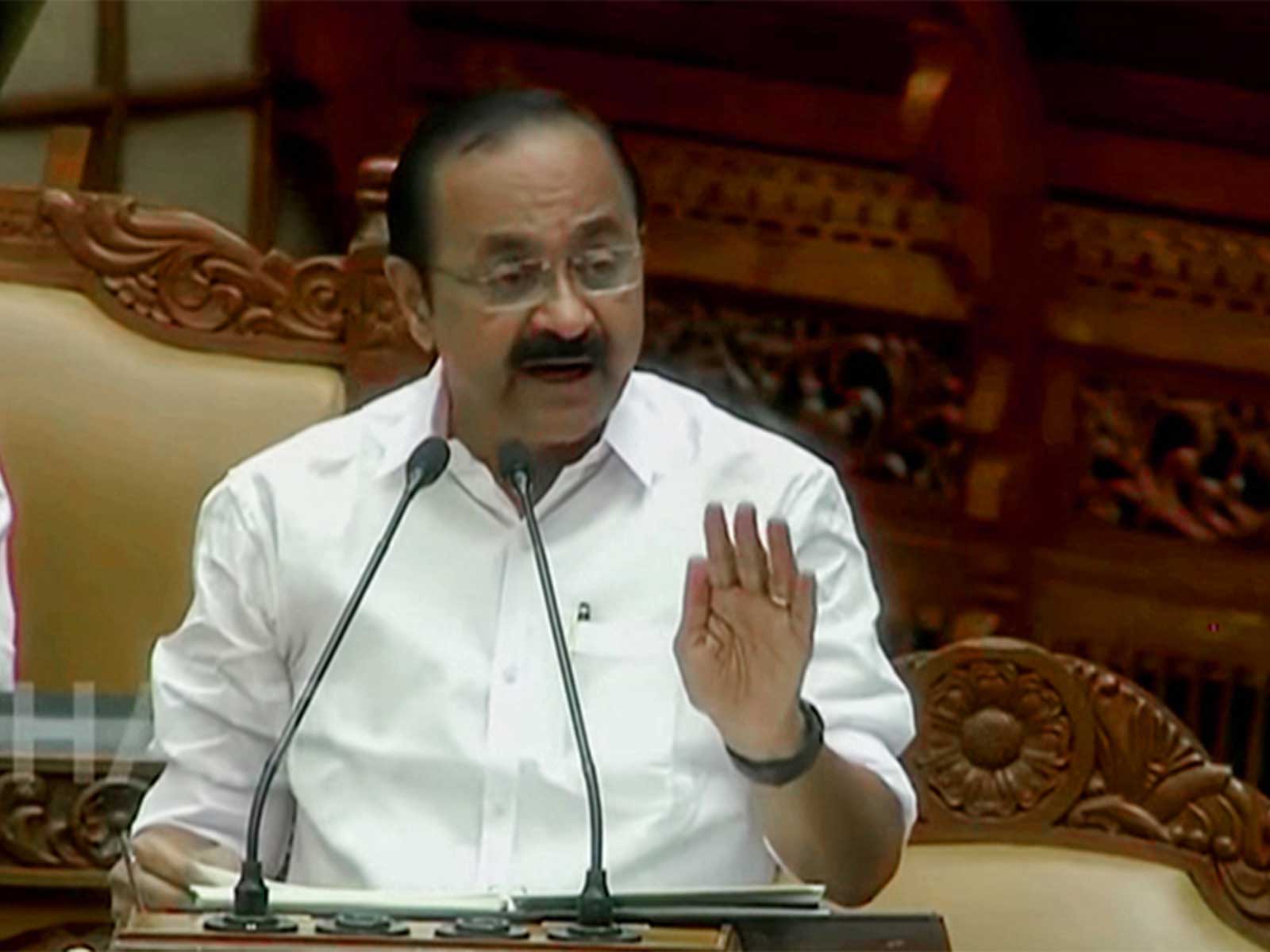
Presenting the revised 2026-27 Budget in the Legislative Assembly, Chief Minister and Finance Minister VD Satheesan outlined a five-year development blueprint aimed at transforming Keralam into a knowledge-driven, investment-friendly and socially inclusive economy.
“Our State’s globally acclaimed public health, educational, and social sectors have recently been confronting severe challenges and unprecedented strain. Keralam’s social development indices, once a beacon of progress, have stagnated over the past few years. Compounding this crisis is the alarming spectre of youth unemployment,” Satheesan said.
The revised Budget estimates revenue receipts at Rs 1,69,646.37 crore and revenue expenditure at Rs 2,05,001.67 crore.
Launching a sharp attack on the former Pinarayi Vijayan-led government, Satheesan alleged that the state had been pushed into a debt trap through financial mismanagement and inflated budget projections.
The government cited a recently released White Paper that estimated Keralam’s total debt burden at Rs 5.07 lakh crore, while noting that nearly 77 per cent of the state’s revenue is consumed by salaries, pensions and interest payments.
The Budget stated that capital expenditure has fallen to just 1.3 per cent of Gross State Domestic Product (GSDP), among the lowest levels in the country.
The UDF government further alleged that the previous administration had overestimated central grants and tax transfers, creating a revenue gap of Rs 20,500 crore that the new government must now bridge.
Satheesan also flagged concerns over the Kerala Infrastructure Investment Fund Board (KIIFB), saying off-budget borrowings had contributed significantly to fiscal stress. An expert committee will be formed to improve KIIFB’s functioning, while the government will have to raise funds to complete projects worth Rs 35,000 crore currently being implemented through the agency.
Despite financial constraints, Satheesan said the government remains committed to creating a “New Age Kerala” that combines economic growth with social justice and sustainable development.
“My Government is steadfastly committed to ushering in a ‘New Age Kerala’–an era that harmonises economic growth driven by social justice backed by modern, environmentally responsible infrastructure development,” he said.
The government said it would focus on healthcare reforms, modernising education, employment generation, welfare measures, technological innovation and infrastructure expansion over the next five years.
One of the Budget’s headline announcements was the launch of a pioneering Malayalam AI Initiative.
The government allocated Rs 10 crore to create an open Malayalam language dataset and support indigenous artificial intelligence models, to ensure Malayalam remains relevant in the AI era.
The Budget also announced a dedicated Rs 50 crore Gen-Z Startup Fund aimed at integrating young innovators into Keralam’s startup ecosystem and promoting emerging technologies such as Artificial Intelligence, Robotics, Internet of Things (IoT), Data Science and Virtual Reality.
“This generation will become an important driving force of the future economy and industries,” Satheesan said.
Under Mission Geo Keralam, the state plans to mainstream geospatial governance through artificial intelligence and real-time analytics.
The Kerala State Remote Sensing and Environment Centre (KSREC) will be transformed into the state’s primary geospatial governance institution, while an integrated Kerala Geospatial Intelligence Platform (KGIS) will be created.
The government also announced a major upgrade of Cyberpark Kozhikode, which will be developed on par with Technopark Thiruvananthapuram and Infopark Kochi.
To drive economic growth, the government announced the creation of a Southern Kerala Economic Corridor and a Rare Earth and Critical Minerals Corridor.
The districts of Thiruvananthapuram, Kollam and Alappuzha will be integrated into a unified economic zone.
Under the plan, Thiruvananthapuram will become a Knowledge and Space Technology Hub; Kollam will serve as the centre for rare earth processing and mineral industries; and Alappuzha will be developed as India’s Blue Economy Capital.
The Budget earmarked Rs 100 crore for the Rare Earth and Critical Minerals Corridor and Rs 50 crore for the Southern Kerala Economic Corridor.
The government unveiled Mission Samudra, allocating Rs 400 crore to transform Keralam into a major maritime economy within five years.
The initiative aims to leverage Keralam’s 600-km coastline, Vizhinjam International Port, Kochi Port and inland waterways.
Key projects include accelerating the Balaramapuram-Vizhinjam rail link; developing the Vizhinjam-Navayikulam Outer Ring Road; establishing dry ports and stuffing centres; creating India’s first green bunkering facility at Vizhinjam; setting up shipbuilding and ship repair hubs; and formulating a Kerala Maritime Policy.
An additional Rs 50 crore has been allocated for the first phase of expanded water transport connectivity.
The Budget proposes transforming Keralam into a Knowledge Valley through higher education reforms.
The government plans to enact special legislation to attract leading foreign universities and strengthen global academic partnerships.
A total of Rs 100 crore has been allocated for the initiative.
Other education and research announcements include: Rs 50 crore for Wayanad Tribal University; Establishment of a national-level Research Park; Rs 5 crore to support private space-tech startups; Creation of a Global Job Watch Tower; Formation of an Invest Kerala Cell and Investment Advisory Council; and the target of establishing 10,000 new MSMEs.
The government announced several welfare and healthcare initiatives.
A flagship announcement was the Oommen Chandy Health Insurance Scheme, which promises health coverage of up to Rs 25 lakh per family.
An initial Rs 10 crore has been allocated for the scheme.
Other measures include: Launch of the One Kerala Care Mission; Rs 10 crore for the newly established Department for Senior Citizens; Introduction of caregiver certification courses; Continued implementation of free KSRTC travel for women and transgender persons; and Rs 600 crore allocated to compensate KSRTC under the Priyadarshini free travel scheme.
The government highlighted that it had already fulfilled two of its six “Indira Guarantees” through free bus travel and the creation of a senior citizens’ department.
Honorariums for ASHA workers, Anganwadi workers, helpers, pre-primary teachers and school meal workers have also been increased.
The Budget allocates: Rs 1,534.98 crore for agriculture; Increase in the rubber minimum support price to Rs 250 per kg; Rs 243.80 crore for forest and wildlife conservation; and Rs 192.20 crore for tackling human-wildlife conflict using advanced technologies and rapid response teams.
Tourism received an allocation of Rs 325.36 crore.
Major tourism initiatives include: Pilgrimage Tourism Circuit connecting Arthunkal Basilica, Ambalappuzha Temple, Kakkazham Mosque, Mannarasala, Krishnapuram Palace, Mata Amritanandamayi Math and Ochira Temple; Expansion of the Muziris Tourism Project with live museums, heritage centres and boat tourism, supported by Rs 19 crore.
Infrastructure and cultural projects include: Rs 200 crore for an Aviation Logistics Hub; Rs 100 crore for JC Daniel International Film City in Kochi; Rs 50 crore for MT Vasudevan Nair Cultural Park in Kozhikode; Rs 5 crore for the Johnson Master Music Academy in Thrissur; Rs 72 crore for a Culinary Institute; International Maritime Museum; and Global Convention Centre at Kochi Airport.
Addressing concerns about private sector participation, Satheesan clarified that the Budget contains no proposal to privatise public sector enterprises.
“There is no mention in the budget that we are going to privatise any public sector, but the government’s fiscal situation is very vulnerable,” he told reporters. “We only have 23% of the money for development and welfare activities,” he added.
The Chief Minister argued that attracting private investment was essential for economic revival.
“For better financial management and stimulating the economy, we will welcome private investment,” he said.
Meanwhile, Leader of Opposition in Keralam Assembly Pinarayi Vijayan strongly criticised the Budget, accusing the UDF government of embracing privatisation under the guise of development.
“By accepting the central government’s ideas, there is an attempt toward privatisation. There is a move to hand over Keralam’s coastline to the private sector. The Southern Kerala Economic Corridor and Rare Earth and Critical Mineral Corridor are part of this,” Vijayan alleged.
He also questioned proposals related to coastal development, land reforms and the proposed Health and Life Science City.
“There is suspicion that the declaration of the Health and Life Science City was made for the sake of privatisation. International giants like KKR are trying to take control of Keralam. There is a move to give all of them the green signal,” he said.
The former Chief Minister rejected the government’s claims of a severe fiscal crisis.
“The claim that the state’s financial condition is poor is merely a political allegation,” Vijayan said, arguing that the Budget itself contained additional spending provisions.
He further criticised reductions in allocations to traditional industries and accused the government of failing to adequately address the impact of central policies on Keralam’s finances.
BJP leader K Surendran also attacked the Budget, describing it as “high on publicity and low on credibility.”
“The Chief Minister has changed, but there is no change in the thinking regarding the economy. There is no money-generating avenue. There is no clear roadmap regarding the fiscal debt; a debt of more than Rs 5 lakh crore exists,” Surendran said.
He also questioned the viability of the Oommen Chandy Health Insurance Scheme.
“Look at the Pradhan Mantri Jan Arogya Yojana and Ayushman Bharat schemes, where Rs 10 lakh can be accessed by the new generation. This government is not implementing them; instead, they are vocal about this Rs 25 lakh insurance scheme, for which they have only allocated Rs 10 crore,” he said.
The 2026-27 Budget serves as the first major policy statement of the newly elected UDF government and lays out an ambitious vision centred on technology, infrastructure, welfare and investment-led growth.
Whether initiatives such as the Malayalam AI programme, Mission Samudra, Knowledge Valley, Gen-Z Startup Fund and the Southern Kerala Economic Corridor can be implemented amid severe fiscal constraints is likely to define the political and economic trajectory of the Satheesan government over the next five years. (ANI)
Related reading