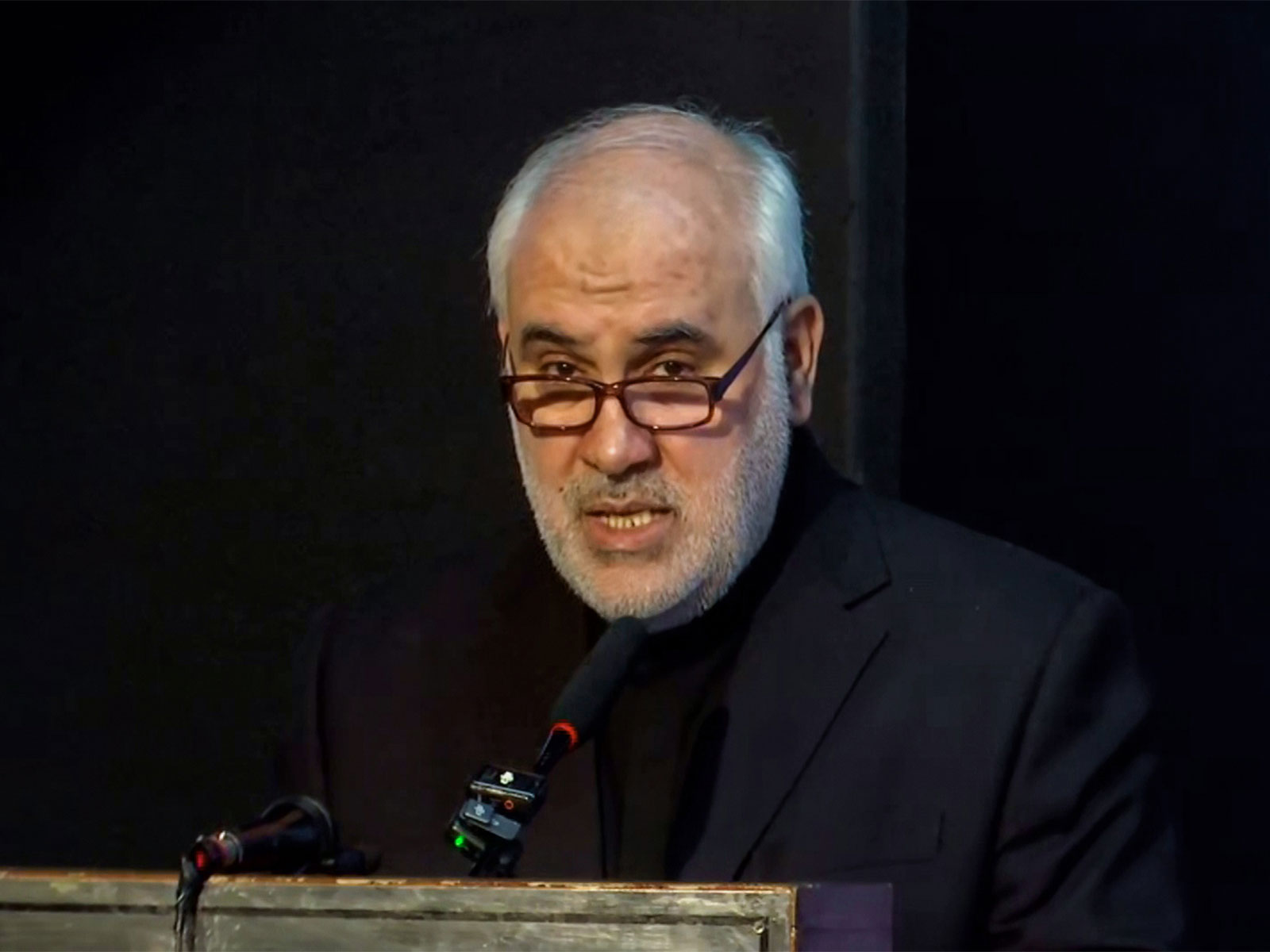
New Delhi [India], June 18 (ANI): Pointing to deep-rooted geopolitical obstacles that block full integration with the international financial community, Iran’s Ambassador to India, Mohammad Fathali, has stated that a significant portion of the challenges restricting Tehran’s international commerce stems directly from confrontational lobbying and destabilising regional policies.
In an exclusive interview with ANI, Ambassador Fathali asserted that Tehran has consistently maintained an open, diplomatic stance aimed at building cross-border economic ties, provided they are established on the bedrock of sovereign parity and mutual respect.
“The Islamic Republic of Iran has consistently expressed its readiness for constructive engagement, cooperation, and the expansion of relations with countries around the world on the basis of mutual respect and shared interests. Iran is an ancient civilisation with thousands of years of history and has always sought peace, stability, and regional cooperation,” Fathali said.
The remarks come amid a highly anticipated diplomatic breakthrough on Thursday, where US President Donald Trump and Iranian President Masoud Pezeshkian signed a historic peace deal aimed at bringing an end to the months-long war in the Middle East. Trump put his signature to the Memorandum of Understanding (MoU) during a dinner with French President Emmanuel Macron at the Palace of Versailles following a G7 summit.
The 14-point US-Iran agreement provides for an immediate cessation of military operations, including in Lebanon, and commits both countries to pursuing a final agreement within 60 days. It also includes provisions for the removal of the US naval blockade, safe passage of commercial vessels through the Strait of Hormuz, phased sanctions relief, the release of frozen Iranian assets, and a US-backed economic development programme for Iran worth at least USD 300 billion. The memorandum also states that Iran has reaffirmed it will not develop or acquire nuclear weapons and envisages future discussions regarding enriched uranium stockpiles under the supervision of the International Atomic Energy Agency (IAEA).
Detailing the structural challenges that historically preceded this breakthrough and still prevent full economic normalisation, the Ambassador explained that outside pressure networks have deliberately manufactured regional instability to disrupt diplomatic avenues and prevent the formation of a collaborative environment.
“If obstacles still exist today to the full normalisation of Iran’s economic relations with the international community, a significant part of the challenge stems from the confrontational and destabilising policies of the Zionist regime, which, over recent years, has sought to prevent the emergence of an atmosphere of cooperation and trust in the region through the creation of insecurity, tension, and crises,” he stated.
Reflecting on the recent military confrontations that the newly signed Versailles accord aims to resolve, the envoy underlined that coercive strategies deployed by foreign decision-makers have systematically failed to enforce compliance, instead imposing vast financial and economic strains across global supply chains.
“The experience of the recent war also demonstrated that certain decision-makers in the United States entered into conflict with Iran under the influence of narratives and provocations promoted by the Zionist regime. Yet that war not only failed to achieve its declared objectives but also imposed substantial costs on the region and the global economy. The reality is that Iran is not a country upon which political will can be imposed through pressure or threats,” the Ambassador noted.
Looking to the future under the framework of the fresh understanding, Fathali expressed hope that a realistic diplomatic shift in Washington would lead to a permanent departure from past policy errors, allowing the global economy to unlock the substantial trade potential offered by unhindered economic cooperation with Iran.
“We hope that today a greater sense of realism and prudence has emerged among American officials, leading them to choose the path of dialogue, mutual respect, and cooperation rather than repeating past mistakes and being influenced by the ambitions and recommendations of warmongering figures such as Netanyahu. Under such circumstances, there would be no obstacle to the expansion of Iran’s economic relations with the world, and all parties would stand to benefit from the resulting opportunities,” Fathali said. (ANI)
Related reading