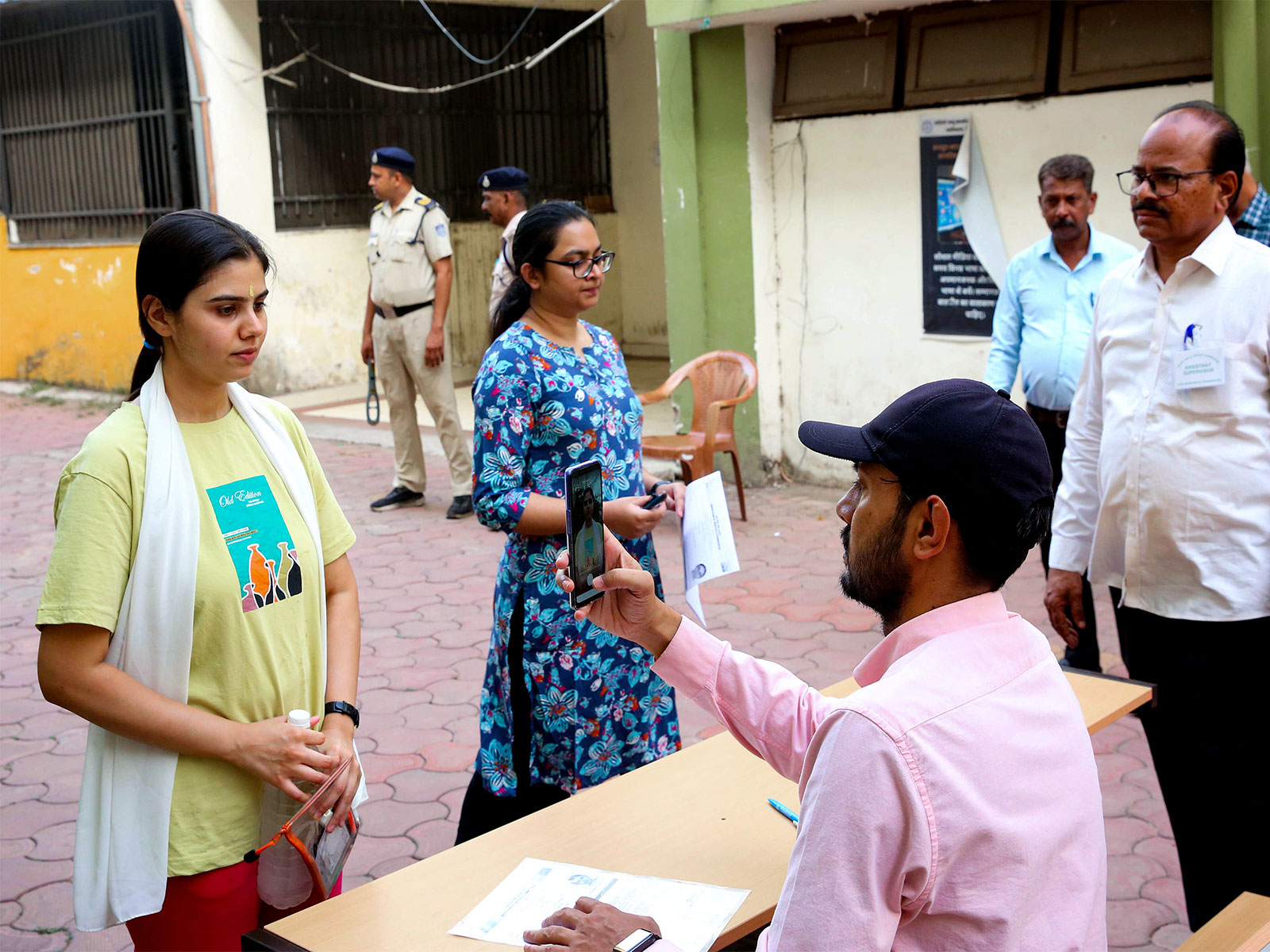
New Delhi [India], June 4 (ANI): In a bid to strengthen the integrity of the civil services examination process and curb impersonation, the Union Public Service Commission (UPSC) has successfully implemented face authentication protocol.
The face-authentication protocol was successfully implemented in the recently conducted Civil Services and Indian Forest Service (Preliminary) Examination, 2026. The protocol ensures that the candidate whose photo was uploaded at the time of filling the application form is the same as the candidate who appears with the admit card to write the exam.
As per the UPSC, the system enabled live, real-time authentication of candidates at examination venues through mobile-phone-based verification by invigilators, ensuring seamless identification and eliminating the possibility of impersonation and malpractice.
The UPSC conducted a real-time face-authentication exercise across all 2,072 examination venues nationwide during this year’s Civil Services (Preliminary) examinations 2026.
The face authentication application has been developed and implemented by the UPSC with technical support from the National e-Governance Division (NeGD) of the Ministry of Electronics and IT.
The UPSC also states that it has developed a business process which requires each candidate to undergo face authentication before he or she is allowed entry to the examination hall.
The UPSC has also devised a detailed Standard Operating Procedure (SOP) as part of this process, which has been shared with all states, all districts and all venues where the examination is proposed.
“Multiple rounds of training were imparted to the invigilators. The beauty of the solution lies in the fact that it does not require any expensive hardware,” mentions the UPSC in a statement.
“It works on any Android smartphone, and invigilators used their own mobile phones for the purpose, thereby reducing hardware costs and easing the logistical burden.”
Another significant feature of the application is its speed, it said, adding “the time required for a typical face authentication of a candidate is only about 6-8 seconds, which ensured smooth entry and prevented queuing at examination centres.”
The application’s scalability was such that it was used by more than 7,000 invigilators simultaneously, and during the peak entry period, the application processed approximately 12,000 authentications per minute.
Speaking about the initiative, UPSC Chairman Ajay Kumar said, “This is a new step taken by UPSC to ensure impersonation-free exams. The technology is fully developed in-house with the help of NeGD. However, the challenge also lay in deploying the solution at scale, leveraging the existing invigilation workforce for face authentication, training them, and accomplishing all this within a short span of time. UPSC, NeGD, and MeitY teams have done a great job in developing and implementing this solution successfully on such a large scale with nearly 5.5 lakhs candidates across 2000 plus venues.”
The successful implementation of real-time face authentication is a significant step towards strengthening the integrity of the civil services examination process and reflects the commission’s continued commitment to transparency, fairness, and technological innovation in public examinations. (ANI)
Related reading